Samsung Unveils Galaxy XR Headset at Half the Price of Apple’s Vision Pro

22 Oct 2025 11:37 AM IST22 Oct 2025 11:37 AM IST
The new Galaxy-branded headset is the first in a wave of wearables running Android XR
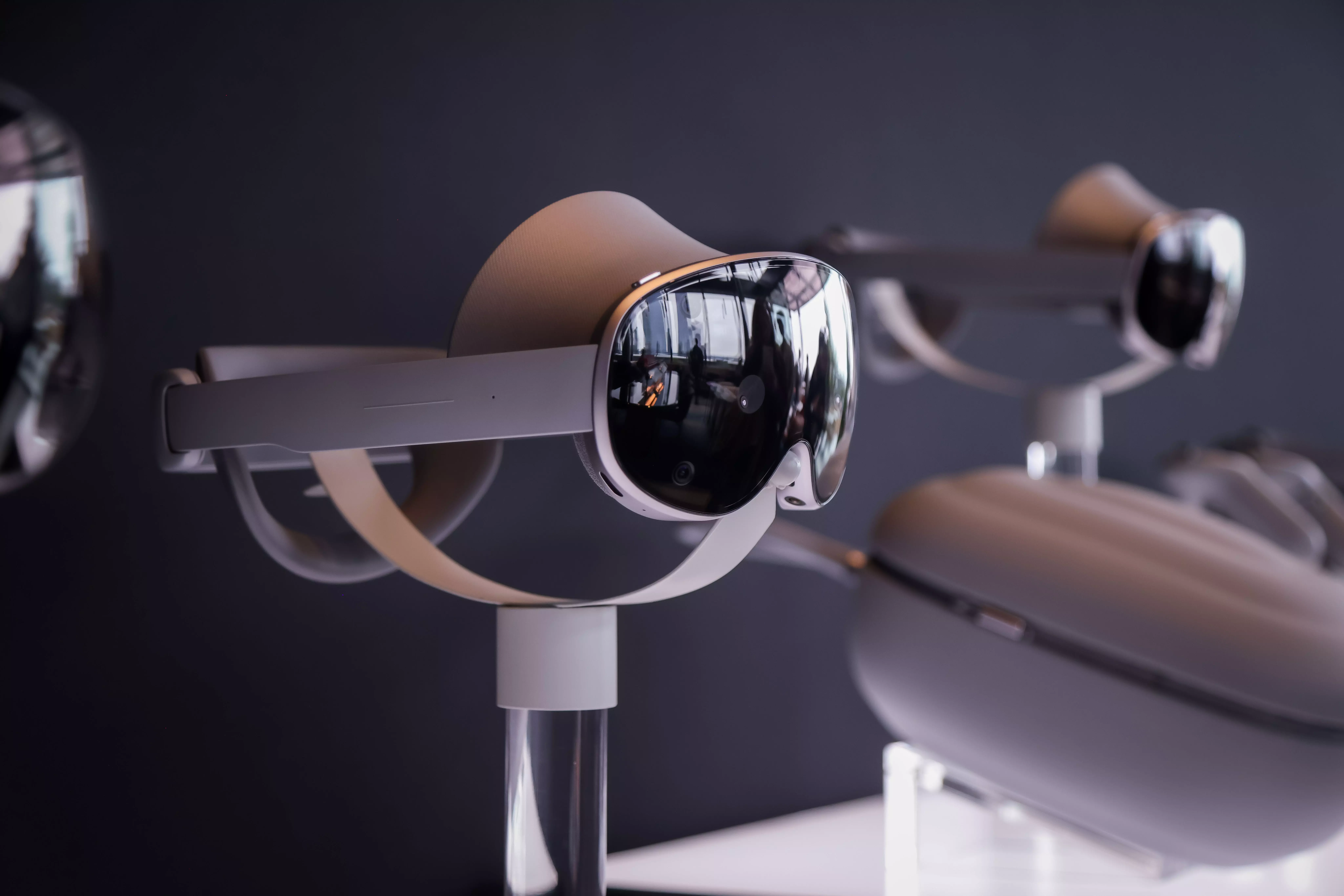
Samsung's Galaxy XR headset. (Photo: Bloomberg)
A new mixed-reality headset developed by Samsung and Google has hit the market for about half the price of Apple’s $3,499 Vision Pro — the product it mostly closely resembles and will directly compete against.
The $1,800 device, called the Galaxy XR, marks a bold attempt to draw interest around a product category that has so far failed to resonate with ordinary consumers. The companies first teased the gadget last December, referring to it by a codename: “Project Moohan.” On Tuesday, the companies revealed its final name, price and full capabilities.
The Galaxy XR’s official launch comes less than a week after Apple upgraded the nearly two-year-old Vision Pro with a redesigned headband and the company’s M5 chip. But the iPhone maker has shelved a cheaper and lighter version of the device for 2027, Bloomberg has reported, in an effort to prioritize lighter, sleeker smart glasses that have garnered far more interest among consumers than bulky headsets.
Samsung is entering a market dominated by Meta, which held 71% of the global mixed-reality market in the second quarter, according to Counterpoint Research. The social media giant has also had recent success with smart glasses, made in partnership with brands like Ray-Ban and Oakley. It's been selling fully enclosed headsets for years but recently backed off Samsung's price range, having discontinued its-once $1,500 headset late last year. Its current headsets top out at $500.
Samsung is mum on sales expectations for the Galaxy XR, but admitted that the category remains nascent. It’s “difficult to tell” how the device will sell, said Kihwan Kim, executive vice president of immersive solutions at Samsung Electronics.
The new Galaxy-branded headset is the first in a wave of wearables running Android XR, a new operating system from Google optimized for mixed-reality devices. Samsung and Google are also working together on smart glasses that, like the Galaxy XR, will incorporate Google’s Gemini artificial intelligence assistant. Google is collaborating on similar glasses with other brands, too, including Warby Parker and Gentle Monster.
Glasses from the two companies are coming "pretty soon," said Kim in an interview, adding the firms are "really building and laying the foundation for our roadmap of Google and Samsung working together."
Shahram Izadi, Google’s vice president and general manager of Android XR, likened the strategy to consumers using a mix of laptops, phones and wearables to meet their needs, saying he believes users will want both immersive headsets and glasses.
“It’s not a conflict between these devices,” said Izadi. “They’re very complimentary and you’ll use different devices throughout your day depending on the task at hand. So if you want to watch a movie, you’ll do it on the headset. If you want to have an assistant with you all day, you'll use the glasses.”
Galaxy XR
Like the Vision Pro, the Galaxy XR is equipped with a high-resolution 4K Micro-OLED display for each eye and has passthrough cameras so users can see their surroundings. There’s also a fully immersive mode optimized for tasks like gaming or watching videos. Under the hood, the headset is powered by Qualcomm’s Snapdragon XR2+ Gen 2 chip.
Battery life is rated at 2.5 hours per charge. That run time is on par with the Vision Pro, but still isn’t enough to make it through longer movies like Mission: Impossible — The Final Reckoning.
Izadi said the companies set the price below rivals to make it “as accessible as possible.” Aside from cost, Samsung also sought to address another frequent criticism of the Vision Pro: weight. The Galaxy XR weighs just 545 grams (1.2 pounds), while Apple’s headset tops out at 800 grams (about 1.8 pounds) following the addition of its new, more ergonomic headband.
To help boost what’s been a slow-going category, Google and Samsung are offering a free “Explorer Pack” to early adopters through this year. The bundle includes:
12 months of Google AI Pro (normally $20 per month).
A full year of YouTube Premium (normally $140).
YouTube TV trial that drops the $82.99 service to $1 per month for the first three months.
Access to the 2025-2026 season of NBA League Pass in the US, or 12 months of the Coupang Play Sports Pass in Korea.
Access to Status Pro’s NFL PRO ERA, Project Pulsar from Adobe, Asteroid and Calm.
Optional accessories for the Galaxy XR include a travel carrying case and handheld controllers, both of which cost $250. Apple's similar Vision Pro case costs $199. The Apple Store also sells the $130 Logitech Muse and, starting next month in the US, the $250 PlayStation VR2 Sense controller.
The Galaxy XR will be available exclusively at Samsung stores and online — at least initially. Major retailers like Best Buy aren’t planning to offer the device at launch.
Samsung is working to expand the headset’s retail presence in the coming months, the executives said, but logistical complications like accommodating prescription lenses could limit that effort. (Best Buy has thus far refrained from selling the Vision Pro for similar reasons.)
Like Apple before it, Samsung is touting the Galaxy XR as a first-rate entertainment consumption device. But unlike Apple, the Korean company has two key native app partners in Netflix and YouTube.
Even when app developers don’t choose to release an app specifically for Android XR, many regular Android applications designed for phones and tablets will still be able to run on the Galaxy XR in some form, Google said. Apple offers a similar compatibility option.
Beyond movies and TV, many of the Galaxy XR’s features are designed to showcase Gemini’s latest AI tricks. Some of them are promising: While wearing the headset, you can draw a circle with your finger around real-world objects (or anything on your screen) to pull up information about them, including in some cases a shopping page.
First Impressions
In a demo, the headset immediately stood out for feeling lighter than the Vision Pro. It was comfortable enough to wear for extended periods without the usual adjustment phase or fatigue. The device also comes with nose cushions and removable light seals to enhance immersion. (The seals are optional on the Samsung headset while they’re required on the Vision Pro). Much like Apple’s offering, the Galaxy XR relies on an external battery pack. There’s also an adjustment knob used to tweak the fit.
Unlike the Vision Pro, though, it doesn’t mimic your eyes on the face of the headset to let bystanders know that you can see them. And whereas Apple lets you dial in the amount of immersion — blending the virtual and real worlds — Samsung makes you choose one of the two modes.
Using the device is straightforward: Point to the app you want and tap your thumb and forefinger together to open it. Navigating apps is generally smooth, but within certain apps, including Google Maps, specific functions can be clunky and unintuitive.
Navigating Google Maps and Street View is an entertaining new way to experience familiar apps. You could, for instance, dip into a restaurant to get a feel for the place before booking a reservation. However, there were times when maneuvering inside these smaller spaces was challenging: At one point, we got “stuck” between a wall and the front door inside a restaurant.
Multitasking on the Galaxy XR is seamless and similar to Apple’s visionOS, allowing users to have apps like YouTube or Netflix open while browsing the web or playing a game. Some features, like Google’s ability to animate still photos of, say, dead relatives — have the potential to make some consumers feel uneasy about where AI is headed.
“We definitely don’t want to create something that's creepy,” Izadi said. “We’re trying to build content that makes people emote and enjoy the experience.”
But Samsung and Google still face the challenge of convincing people to buy a product in a category that remains largely niche. For now, Samsung is hedging its bets. The company continues to assess its product roadmap, Kim said, and is currently considering the concept of earbuds with built-in cameras. “We are just trying a lot of different opportunities,” he said. “We are going to keep moving on.”
( Source : Bloomberg )

Next Story