Lenovo Teases Modular Laptop, Foldable Gaming Handheld Concepts

2 March 2026 1:08 PM IST2 March 2026 1:08 PM IST
The devices, announced to coincide with the start of the MWC Barcelona conference in Spain on Monday, are not final and do not have a confirmed release date
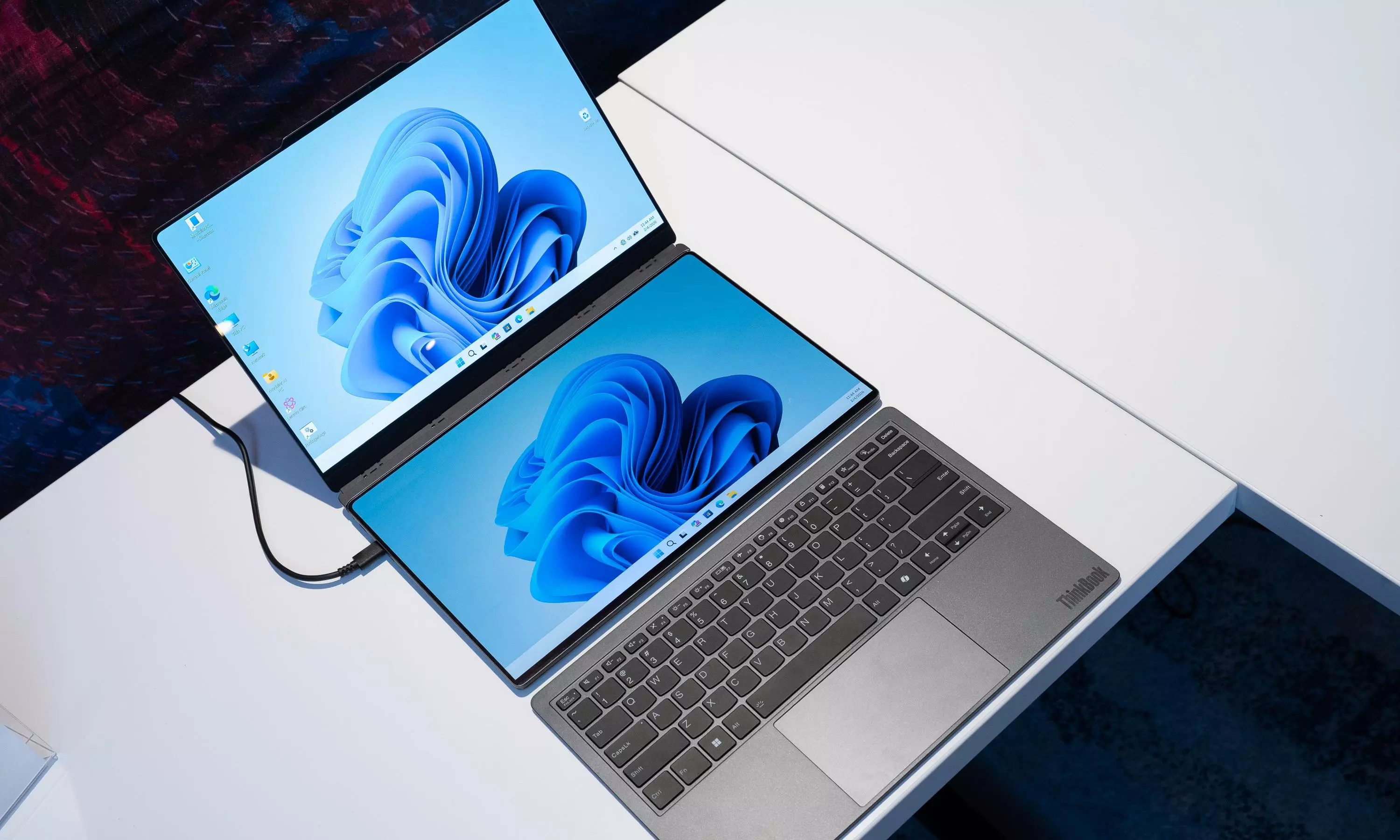
enovo’s modular laptop has multiple detachable components. (Photo: Bloomberg)
Lenovo revealed several new proof-of-concept prototypes, including a “modular” laptop with two displays and detachable ports, along with a portable gaming device featuring a folding display.
The devices, announced to coincide with the start of the MWC Barcelona conference in Spain on Monday, are not final and do not have a confirmed release date. In addition, the company unveiled a concept device resembling an alarm clock with an artificial intelligence-powered assistant built in.
The Chinese company, which also owns Motorola, has a history of showing off concept devices, not all of which have gone on to become commercially available. At CES, in January, it teased a Motorola-branded AI pendant with a built-in camera, smart glasses and a laptop prototype with a display that rolls out sideways. While many of these items never leave the proof-of-concept stage, they offer clues as to how the world’s leading PC maker is thinking about future products.
The idea of dual-screen laptops is not entirely new. Brands such as Asustek Computer have tried selling such models to consumers, making the pitch that double the screen space is a boon for productivity and multitasking. But Lenovo’s “ThinkBook Modular AI PC Concept” goes further by letting users transform the entire machine by detaching and reconfiguring its components.
By default, a secondary screen attaches to the back of the laptop, which would make it possible to show someone a presentation when they’re seated opposite you. That display can also be swapped into the keyboard’s position for a setup similar to Asus’. It could also be used as a conventional external monitor when plugged in with a cable.
On a prototype machine that Lenovo showed during a presentation ahead of MWC Barcelona, ports like the HDMI output could be removed and swapped for different connectors, so users would be able to optimize the laptop for different workflows day to day. Some PC makers, like Framework Computer, are already pushing modularity as a key selling point for their devices.
Legion Go Foldable
The Legion Go Fold Concept builds on the Lenovo’s past gaming handhelds by replacing a rigid display with a flexible one that can unfurl from 7.7 inches to 11.6 inches. Both of the controllers are removable, and the screen can be oriented either horizontally or vertically. When used in portrait mode, a user could theoretically have a game fill one half of the display and a Twitch stream or tutorial in the other.
The Legion Go Fold Concept features a flexible display and removable controllers. (Photo: Bloomberg)
“This proof of concept is designed for gamers who don’t have hours to sit in front of a TV or PC, or who don’t want to juggle both a laptop for work and a handheld for gaming when traveling,” Lenovo said in a statement announcing the concept devices. An included wireless keyboard with a built-in trackpad would let the Windows-powered device pull double duty as a laptop substitute.
Inside, the Fold Concept is powered by a processor from Intel and 32 gigabytes of memory. Its right controller can be used as a mouse — like the Legion Go 2 — and this version even includes a tiny screen that can show performance metrics like frames per second.
Between the two concept devices, the gaming handheld’s hardware felt more polished and further along in a hands-on demonstration. And since it's an extension of a line Lenovo is already pursuing, this prototype has a more obvious place in Lenovo’s road map.
AI Work Companion
The clock-inspired device — dubbed “AI Work Companion” — uses artificial intelligence to sync tasks and schedules from across the user’s devices with a single tap. It also suggests work breaks and monitors screen time to better manage burnout,” the company said in the statement.
This AI-powered companion would also engage in “playful interactions with the user and an end-of-week celebration report of tasks completed” and include a built-in port hub to and programmable buttons, it said.
Lenovo is one of many consumer tech companies, from major players to startups, that are experimenting with different hardware types that offer AI features for consumers. Aside from smart glasses, a burgeoning category made popular by Meta Platforms Inc. and its Ray-Ban line, other brands have recently tried incorporating much of the same technology into devices such as headphones, necklaces, rings and even computer monitors (another concept from Lenovo). Many of these devices are also being framed as prototypes for now without a confirmed release date.
( Source : Bloomberg )

Next Story