What Is the BAT-BMS App That Can Shut Down E-Rickshaws?

Moreover, the lack of conflict in creating chaos in low-wage workers survival exhibited by a big number of people, is concerning
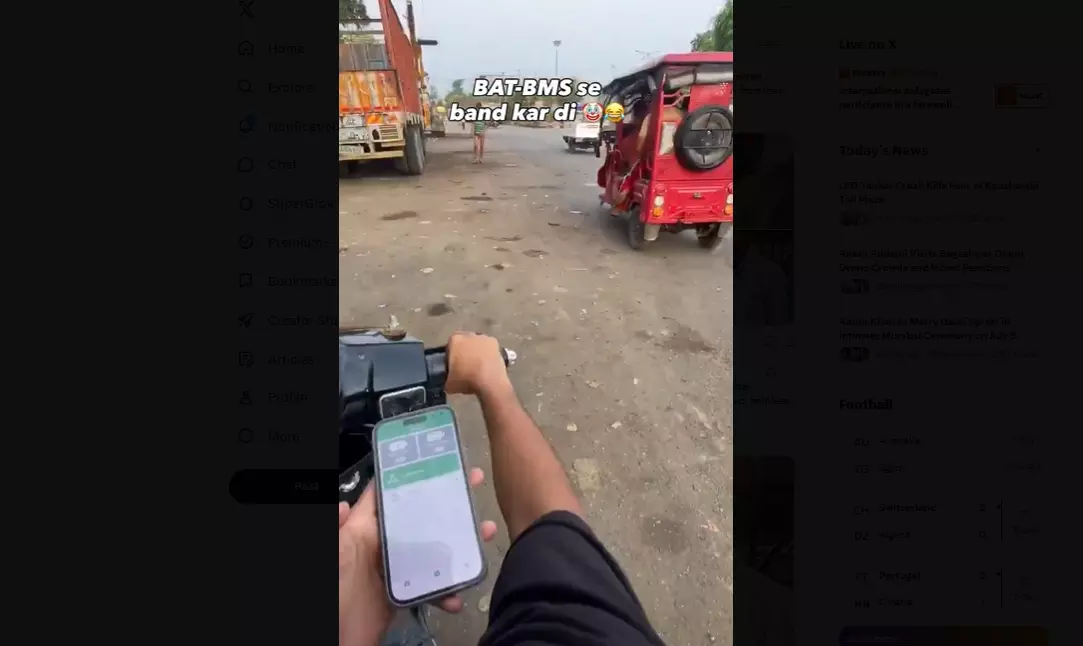
After videos of e-rickshaws being remotely switched off as a "prank" on social media led to an uproar, the government said on Friday that two such apps had come to its notice and have since been removed from app stores. The BAT-BMS app, colloquially known as the “tirri switch off app”, has been removed from Apple's App Store but remains available on Google Play.
What is the BAT-BMS app?
The BAT-BMS app, developed by Shenzhen Grenergy Technology Co., Ltd, is a free Bluetooth battery monitoring tool designed for smart lithium batteries. It lets users check charge level, voltage, current, individual cell voltage, temperature, and cycle life directly from their phones. It can also be used for solar setups, marine batteries, off-grid energy storage, golf carts, and other lithium battery packs using compatible BMS hardware. The official website notes a typical operating distance of up to 15 metres in open space.
The app has no protective system, meaning anyone within Bluetooth range can connect to a compatible battery system and cut its power with a single tap.
The prank, and the backlash
Shot from the prankster's point of view, the viral videos show a moving e-rickshaw abruptly grinding to a halt after someone taps their smartphone. The video shows a confused driver, while viewers can hear laughter by those who are making it.
Some are captioned tirri control, others karma. One widely-shared reel reads: "Bohot pareshan kiya hai tirri walon ne, ab inki rail banegi" (the e-rickshaw drivers have caused enough trouble, now they'll suffer) posted with the caption "Time for revenge."
The videos, clearly cashing in on the frustration against auto-drivers as many supporting comments exhibit, have gone viral on multiple social media platforms.
However, they have also come under fire for being insensitive to the auto drivers’ plight. Many drivers do not have smartphones and are unaware of the issue, meaning they have to push their vehicle for miles before getting it restarted.
Police authorities have also alerted that scamsters are also using the situation to earn money by making the drivers pay them to switch it back on. One driver in a viral clip says he had to pay Rs 100-200 to strangers just to have his e-rickshaw switched back on.
“We never know what’s the circumstances of person. Not letting them do their work and earn livelihood that too just for “fun.” Is extremely inhumane and classist,” wrote on Reddit user. Many other comments echo the same sentiment.
Few other videos show bystanders confronting those they allege used the app to stop a nearby e-rickshaw.
Not one app
While the government has taken cognisance of the issue, the app makers have asserted that it is not a flaw in the app itself but a configuration issue: many low-cost e-rickshaw battery packs use Bluetooth-enabled BMS hardware that dealers leave unsecured, with no password set. Any compatible app, including BAT-BMS, can connect to an unsecured unit within Bluetooth range and trigger its discharge cut-off.
This means removing two apps from stores does not close the underlying vulnerability. Considering that there could be any number of apps that could do similar functions, the videos have sparked widespread concerns over the cybersecurity risks posed by such internet-connected vehicle management systems.
Moreover, the lack of conflict in creating chaos in low-wage workers survival exhibited by a big number of people, is concerning.
Vehicles using lead-acid batteries or proprietary, password-protected BMS systems are unaffected. Drivers whose vehicles are at risk can reconfigure either the password or Bluetooth settings on their battery systems.