India Tests Beyond Visual Range Air-to-Air Missile (BVRAAM) Astra

Astra is equipped with indigenous Radio Frequency (RF) seeker from Su-30 Mk-I
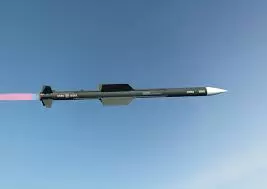
New Delhi: Defence Research and Development Organisation (DRDO) and Indian Air Force (IAF) on Friday conducted the flight-test of beyond visual range air-to-air missile (BVRAAM) ‘Astra’ equipped with indigenous radio frequency (RF) seeker, from a Su-30 Mk-I fighter aircraft off the coast of Odisha.
The Astra has a range exceeding 100 km and is equipped with state-of-the art guidance and navigation system.
A radio frequency (RF) seeker is a guidance system that uses radio frequency signals to detect, track, and home in on a target. It is a critical component of active radar-guided missiles, enabling them to autonomously locate and engage targets.
The RF seeker emits its own radio waves and listens for the reflected signals (echoes) from the target. It allows the missile to track targets independently after the launch from fighter aircraft, enabling "fire-and-forget" capability.
During the tests, two launches were carried out against high-speed unmanned aerial targets at different ranges, target aspects and launch platform conditions. In both the cases, the missiles destroyed the targets with pin-point accuracy.
All subsystems performed as per expectations including the RF seeker which has been indigenously designed and developed by DRDO. "The flawless performance of the Astra weapon system was validated through flight data captured by range tracking instruments deployed by Integrated Test Range, Chandipur," said defence ministry. These successful flight tests have re-established the accuracy and reliable performance of Astra weapon system with indigenous seeker, it said.
In addition to various laboratories of DRDO, more than 50 public and private industries including Hindustan Aeronautics Limited have contributed towards successful realisation of the weapon system.
