Home Security Needs To Move From Add-on To Design Priority:pushkar Gokhale

Godrej Enterprises Group is working with the Bureau of Indian Standards to develop standards for electronic and digital locks, as the absence of quality benchmarks leaves consumers navigating a market with products ranging widely in price
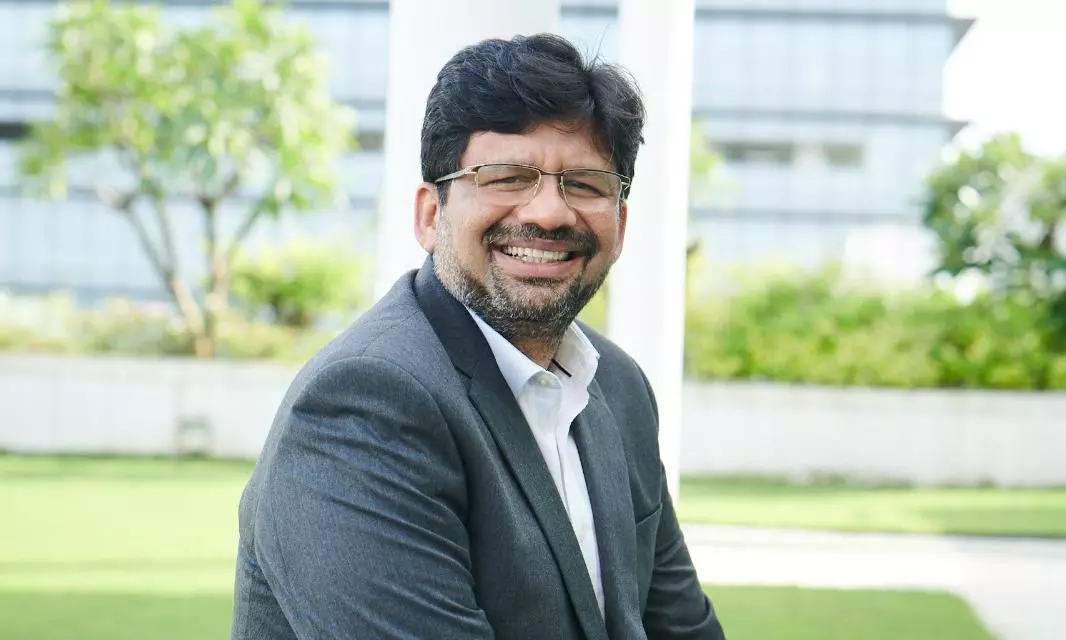
Godrej Enterprises Group is working with the Bureau of Indian Standards (BIS) to develop standards for electronic and digital locks, as the absence of quality benchmarks in the segment makes it difficult for consumers to assess product quality and raises the risk of substandard products entering the market.
“There are no standards as such in India. There is no BIS standard for an electronic lock or a digital lock,” said Pushkar Gokhale, Business Head, Security Solutions Business, Godrej Enterprises Group. He said the company is working closely with BIS on standardisation, with both him and members of his teams participating in technical committees.
The market currently offers digital locks across a wide price spectrum, from around Rs 3,000 to Rs 80,000. Gokhale said the lack of standards makes it difficult for customers to decide which products to buy, particularly when cost considerations take precedence in large residential projects.
“When developers are talking about multiple apartments, say 500 or 800 apartments, every penny counts. Many times, this compromises the quality of products, and more so even on the safety part of it,” he said.
Standardisation, he said, would act as a filter and help prevent substandard products from being sold. He also expects the government to eventually introduce tighter requirements through Quality Control Orders (QCOs), making BIS approval or labelling mandatory for products in the category.
Drawing a comparison with pressure cookers and electric irons that require the ISI mark, Gokhale said a similar framework could help bring greater accountability to the digital lock market. “We believe that, as a leader in the industry, with the knowledge and experience we carry, we would definitely be able to work closely with the government to set standards that can act as a filter to ensure that no substandard products are getting sold,” he said.
The push for standardisation comes at a time when technology-led home security is gaining acceptance among consumers. For Home Safety Day 2026, the Security Solutions business of Godrej Enterprises Group commissioned Secure by Design, The Secure Living Report 2026. Conducted by Hansa Research Group, the study surveyed more than 1,500 urban homeowners across six Indian cities. It found that 90% consider technology-led home security a necessity rather than a luxury, while 65% worry about burglary, theft or break-ins when their families are away.
Gokhale said connected homes are becoming more secure because technology enables a more proactive approach to safety. However, he pointed out that security continues to be treated as a post-construction purchase rather than being incorporated into architectural planning.
Home security continues to be treated as a post-construction purchase, rather than a fundamental consideration in architectural design. According to him, homeowners often prioritise aesthetics, interiors and elegance over security, partly because of the belief that an incident is unlikely to happen to them.
He said this attitude tends to change only after an incident occurs in the neighbourhood, prompting residents to look for security solutions. The industry, therefore, needs to focus on education and awareness, in addition to making products available.
“There are enough and more security solutions in the market. I think what needs to be done is more about education and awareness. It is also the responsibility of vendors and companies like us to create that awareness. We feel it is our moral responsibility as well,” he said.
Gokhale also called for developers to adopt an end-to-end approach to security instead of offering isolated products. This should cover access to the residential premises, entry points near lifts and individual apartments, with video door phones, face-recognition systems, Wi-Fi cameras, digital locks and home lockers forming part of an integrated system. CCTV monitoring, recording facilities, security guards and a control room should also be part of the overall arrangement.
He said homebuyers should evaluate properties on the basis of whether security has been addressed across the premises, rather than looking only at the security arrangements within individual apartments.
With connected devices also raising concerns around data privacy and cyber security, Gokhale said companies must be transparent about where customer data is stored. He said data should be protected through secure data centres with servers based in India, and that companies should disclose the location of their servers.
As technology becomes more central to home security, Gokhale said the industry would need to address both product quality and the regulatory framework governing it. Standardisation, he said, is an important step towards ensuring that the growing adoption of digital security solutions is supported by reliable products.