India's Smart Cities Embrace AI-Powered Surveillance, Ushering a New Era of Public Safety

Gradually but surely, Artificial Intelligence (AI) based surveillance is beginning to assist, not as science fiction fantasy, but as a practical solution to redefine the way we provide safety to cities.
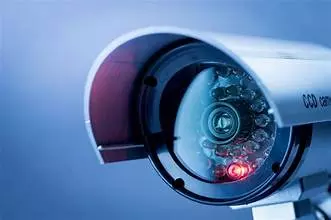
As our cities grow more urban and denser, public spaces such as malls, parks, train stations, and busy roads are witnessing more traffic and safety problems. Overcrowding-induced stampedes, lost baggage leading to panic, petty thefts are not unusual occurrences, and the call for more security measures becomes extremely relevant. Gradually but surely, Artificial Intelligence (AI) based surveillance is beginning to assist, not as science fiction fantasy, but as a practical solution to redefine the way we provide safety to cities.
AI Surveillance: What's It All About?
Those were the times when security guards spent hours crouched in front of a row of CCTV screens waiting to spot something unusual. The AI video surveillance system today employs computer vision, deep learning algorithms, and neural networks to "see" more reliably and respond faster than a human would ever be able to.
These computer vision cameras not only capture video, but they also analyze the video in real-time.
They can identify someone loitering around a restricted zone, track the number of individuals in a crowd at a fair, or find a lost object in a busy marketplace. These systems respond very rapidly and alert control centers in seconds.
By using AI cameras in urban surveillance systems, municipalities and private entities are establishing networked systems that capture images, but also learn patterns. They are able to identify faces, identify unusual behavior, and even compare people against criminal records in real time, assisting the police in tracking repeat offenders or potential frauds in various areas.
When AI Watches, It Acts Fast:
When we talk about the actual limitation of surveillance with AI, it will really only come into play when we are talking about mass gatherings of people at public events (i.e. political rallies, concerts, religious events). AI surveillance is imperative as it allows for real-time crowd dynamics, or crowd observations.
These technologies use predictive analytics and pattern analysis to ward off the drug event from bottling in congregation venues to threat levels.
This assists in adjusting the flow of individuals or dispatching aid in a timely manner. A pilot Smart City in Pune employed AI for crowd control and experienced a 42% reduction in emergency cases at public events. The post was edited to provide a revised version.
In airports and bus terminals, for example, AI cameras can locate missing children, detect illegal behavior, or follow lost bags. These intelligent systems use motion detection, object detection, and audio detection (i.e. sounds such as breaking glass to aggressive crowds) to help quickly identify areas of possible danger.
Halting Crime, Not Merely Discovering It:
One of the primary functions of AI surveillance systems is aiding in lowering crime rates. Cities such as Hyderabad and Bengaluru employing AI surveillance technologies to monitor public spaces (for spotting criminals) have seen a reported 30% reduction in serious events, such as chain snatching, property damage, and ATM theft (also referred to as tampering). These systems do not just respond to crimes; they are trained on the history of past events to identify suspicious activities and alert security teams before anything happens.
AI surveillance systems use technologies like facial recognition, number plate recognition (ANPR), perimeter intrusion detection, and biometric flagging to detect anomalies. Regardless of whether it is a person climbing over the fence at midnight or hanging around the school gate, AI minimizes the potential for human error and accelerates response time.
Planning Cities with Data, Not Speculation:
AI surveillance is useful not only during emergencies. The huge volumes of behavioral and mobility data from such systems are useful for city planning. For example, if parks are empty late in the evening, officials can think about putting up better lighting or patrols. If crowds of people are trapped at a bus stop every Saturday evening, they can focus on enhancing the facilities there.
These are now highly valuable to inform the design and refresh of Smart City initiatives. They eliminate guesswork with actual data and AI-led forecasts.
Discussing Privacy and Legal Matters:
With all its benefits, AI surveillance also causes legitimate worries, above all privacy. Being monitored, even for security, gets individuals anxious. Most contemporary AI systems do utilize anonymized data, however, which means they monitor activity without necessarily observing individuals unless compelled by legislation.
Legally, most of these monitoring systems are undertaken on the basis of regulations provided by local municipalities or law enforcement authorities, typically on the basis of data protection guidelines. The sector is, however, pushing for stricter country-level regulations to govern AI-driven monitoring, in order to balance public security with individual rights.
AI monitoring needs to use data masking, role-based access, and temporary storage of video to prevent exploitation. The use of these measures with regular audits can lead the public to trust the system without violating the law.
A brighter future is already here:
The concept of "someone is watching" has changed. It is not control; it is care. AI surveillance is not arriving to take people's jobs; it is arriving to make public safety smarter and quicker to react. By fusing human judgment with real-time intelligence from AI, our cities will be better equipped to handle common problems like traffic jams, crowd management, emergencies, and crimes.
This article is authored by Mr. Rajasekhar Papolu, Managing Director, Brihaspathi Technologies Limited.
