ByteDance Prepares Muse-Like Agent in Push to Close AI Gap

11 Nov 2026 6:08 PM IST11 Nov 2026 6:08 PM IST
Muse has proven a big hit for its US creator, consolidating Meta’s extensive AI research into a voice-based agent with an animated avatar that helps users with various tasks
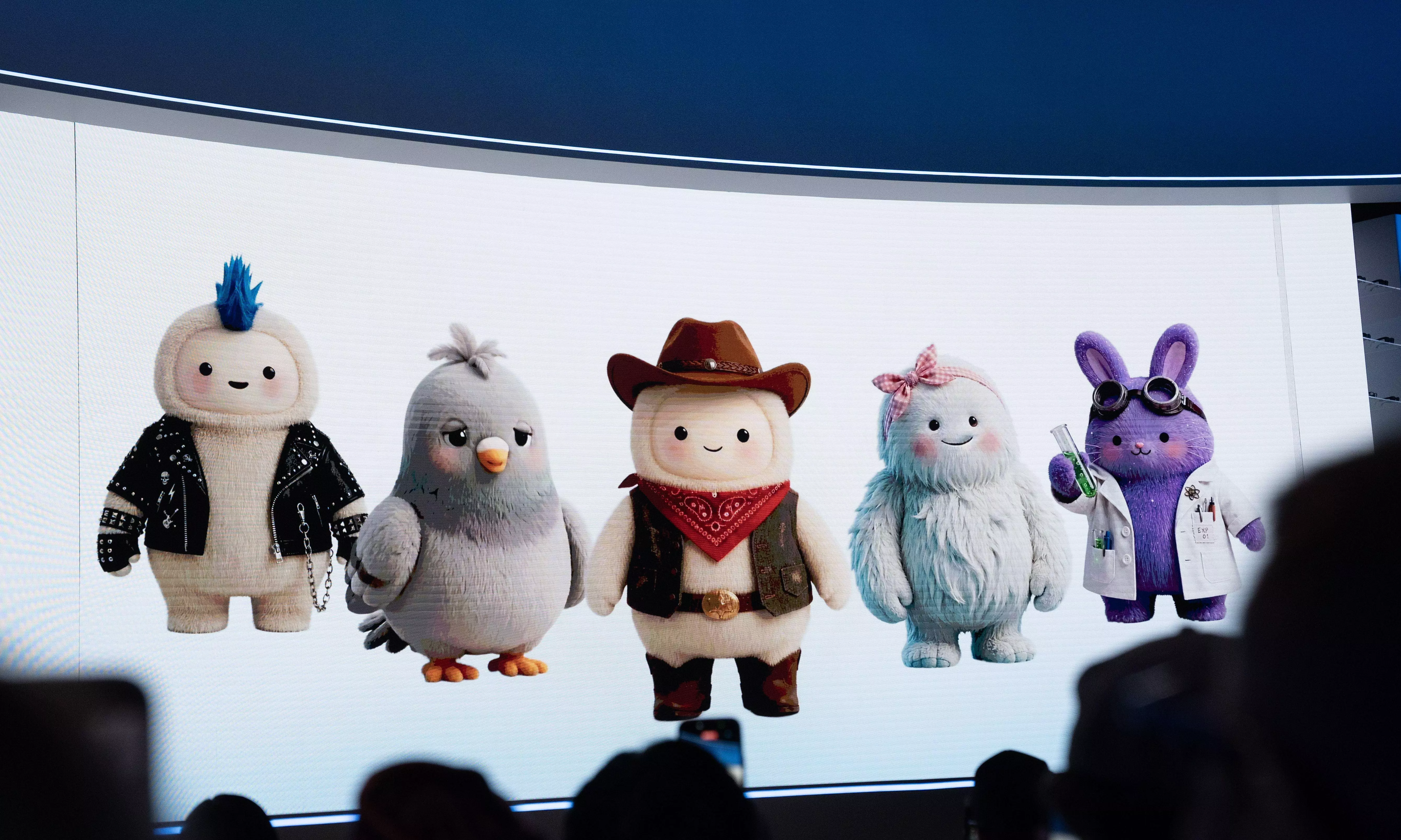
Muse avatars. (Photo: Bloomberg)
ByteDance plans the release of a Muse-like AI assistant in the coming weeks to augment its lead in AI video, a milestone event the company hopes will help close the gap with top US labs in as soon as three years.
Speaking to its AI team in an all-hands meeting recently, co-founder Zhang Yiming told researchers, engineers and supporting staff about the plan and set out key priorities, according to people familiar with the matter. He sees ByteDance able to compete with leading industry names like Anthropic and OpenAI at the cutting edge, though he cautioned it would take until at least 2029 or 2030, the people said, asking not to be named as the meeting was private.
The planned new artificial intelligence agent will serve a similar role to Muse, introduced by Meta this September. Muse has proven a big hit for its US creator, consolidating Meta’s extensive AI research into a voice-based agent with an animated avatar that helps users with various tasks. Meta is distributing Muse across its hardware portfolio that includes various models of smart glasses and an upcoming Muse Charm gadget just for the agent. It’s unclear whether ByteDance also has plans for accompanying hardware.
Top of mind for Zhang, who now spends much of his time working behind the scenes to shape ByteDance’s AI strategy, is data. Zhang, 43, said ByteDance’s Seed large language models are pre-trained on datasets that are orders of magnitude smaller than those used by frontier rivals, according to the people.
Zhang’s comments, which haven’t previously been reported, offered a rare glimpse into the thinking of the entrepreneur behind TikTok and China’s most popular ChatGPT-like bot, Doubao.They reflect his resurgent ambition to dominate an AI arena that China’s most valuable startup pioneered, but then ceded to the likes of DeepSeek. Central to those endeavors is a plan to spend as much as $70 billion and build Seedance into the country’s preeminent video AI platform.
A ByteDance spokesperson did not respond to an emailed request for comment.
In his meeting, Zhang reiterated his view that ByteDance should not lean on distillation — the practice of exploiting outputs from bigger models to train and improve smaller ones — and must focus on playing the long game. As rivals from Alibaba to Moonshot AI and Z.ai advanced their capabilities, they’ve come in for criticism from White House officials and Anthropic CEO Dario Amodei for distilling leading US models to build up their own products.
Seed is now the only major contender in China’s AI sector that hasn’t yet released an LLM touching the upper reaches of global benchmarks or made its model’s weights — the parameters for steering a model’s responses — available for developers to build on.
The one segment of AI where ByteDance enjoys a meaningful lead is in video generation. The company has leveraged its massive video pool to deliver and monetize a top-tier video-generation model with its Seedance series, filling a void left after OpenAI shuttered Sora.
ByteDance’s last major LLM update was Seed 2.1, rolled out in June. “There remains room for improvement in the most challenging open-ended tasks and cutting-edge research problem-solving,” the Seed team said at the time. The Financial Times reported in August that the company was training a model with as many as 10 trillion parameters, comparable in scale to Claude Mythos, Anthropic’s top-tier product.
ByteDance is among the most aggressive firms in recruiting and retaining AI talent in China. It offers Seed researchers and engineers preferential equity arrangements that set them apart from the rest of the company.
Seed’s team of roughly 1,000 researchers and engineers is led by Wu Yonghui, whom Zhang poached from Google DeepMind in 2025. Beyond language, video, and image models, the team is also developing AI for robotics, virtual reality and other hardware. In October, Seed became the first major Chinese AI lab to establish a standalone safety and alignment unit, hiring around 10 key researchers.
( Source : Bloomberg )


Next Story