Apple Unveils HomeView Hub, Apple TV 4K and HomePod Mini 2

13 Oct 2026 7:57 PM IST13 Oct 2026 7:57 PM IST
The product, which will be available Nov. 13, relies mainly on hands-free voice commands and uses facial recognition to provide a personalized software experience for each member of the household
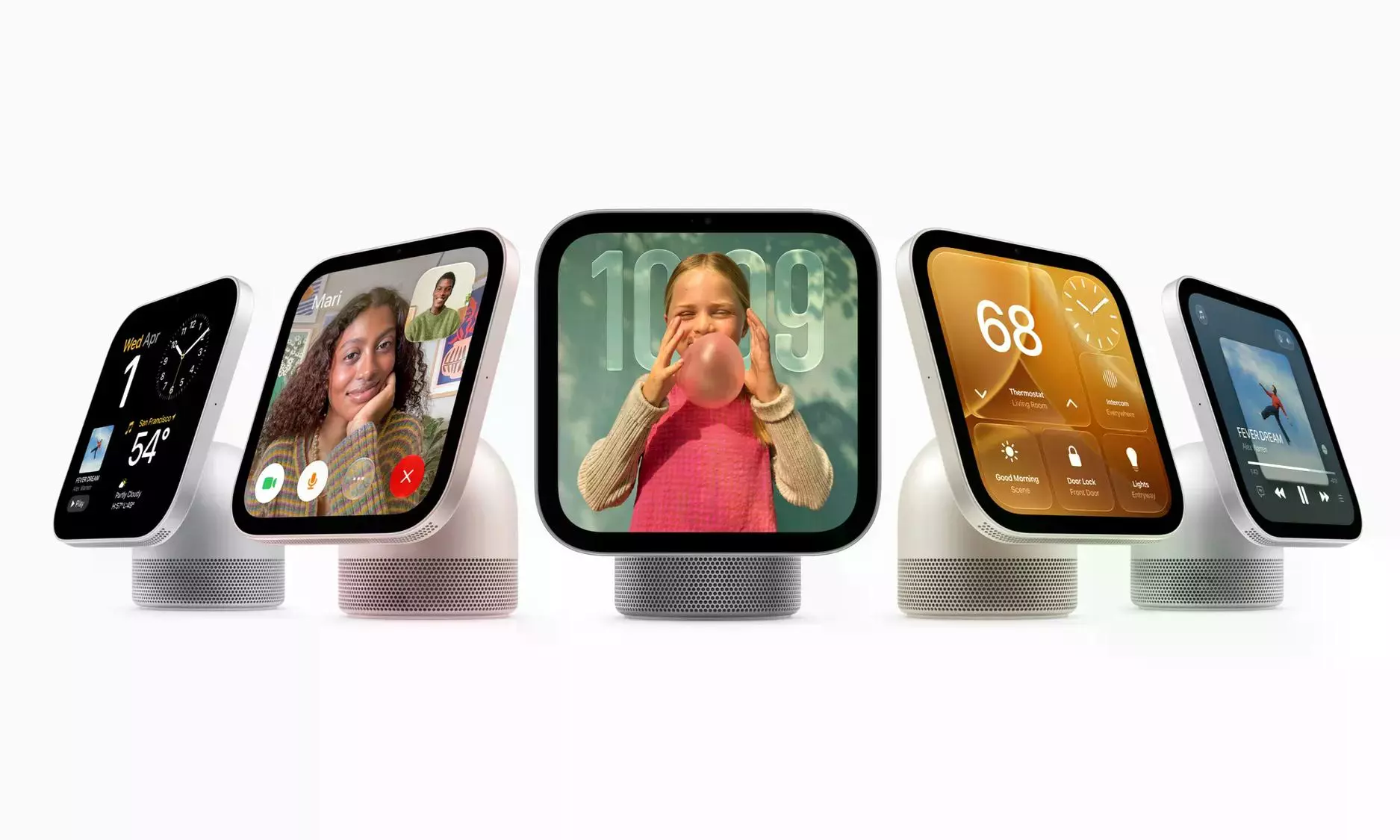
The HomeView will feature a 7-inch touch screen. (Photo: Apple)
Apple introduced a new device called the HomeView, a $299 display that serves as the centerpiece of its push to challenge Amazon and Google in the smart home market.
The product, which will be available Nov. 13, relies mainly on hands-free voice commands and uses facial recognition to provide a personalized software experience for each member of the household. There are no physical buttons on the HomeView, though its 7-inch touch screen has a grid of apps that will instantly feel familiar to iPhone and iPad users.
Apple is framing the HomeView as the ideal showcase for its Siri AI assistant: Using a built-in camera, the device can instantly recognize up to six different users and give personalized responses for each individual, whether they’re using it as a cooking companion, videoconferencing with a relative or just listening to music through its speakers.
To help rapidly expand its presence in the smart home, the company is partnering with LG Electronics and Schneider Electric SE to release a lineup of “Apple Home Collection” accessories, such as indoor and outdoor cameras, a video doorbell, thermostats, and door locks. Apple codeveloped the hardware, which will begin shipping in December at prices ranging from $199 to $399.
Alongside the HomeView, the company also announced an upgraded Apple TV 4K set-top box — now with built-in microphones and an easier-to-find remote control — and the HomePod mini 2 speaker, which comes in a new batch of colors and has lighting animations that match the album art of whatever song is being played.
Both of those products have increased in cost compared with their predecessors, part of a broader wave of price hikes fueled by the shortage of memory chips and other components. The $149 HomePod mini 2 will be available Oct. 30, and the $299 Apple TV 4K will follow on Nov. 13. That compares with a starting price of $199 for the previous TV box and $129 for the HomePod mini. Both new devices can be preordered Tuesday, along with the HomeView.
HomeView
Apple is offering two different styles of its first-ever smart display. The one most consumers will purchase is a tabletop design with an aluminum base and an adjustable stainless steel hinge that lets users freely tilt the display on counters or nightstands.
The company will also sell another version of the HomeView, at the same $299 price, that’s designed to be placed on the wall. The tabletop version is powered with a standard USB-C cable, while the wall-mounted product will support a range of different options, including power over Ethernet, or PoE, which could ease installation.
The 7-inch screen is square in shape — a design Apple chose to help distinguish it from the wider displays of TVs and monitors — and automatically adjusts its brightness and color balance to match the HomeView’s environment. The screen has a maximum brightness of 500 nits and can dial all the way down to 0.3 nits, the lowest level of any display the company has ever manufactured. That will prevent it from being a distraction at night on a bedside table.
The software experience is identical across both models, with the ability to show various clock-like “faces” whenever HomeView is idle. There’s a Photos Face, an Apple Watch-like Modular Face with four customizable widgets, a Snoopy Face with playful animations of the Peanuts comic character, and several more traditional clock faces.
Some faces, like one called Flow, can shift colors and patterns based on movement detected in front of the device’s 12-megapixel Center Stage camera. Alternatively, users can choose to have HomeView serve as a smart home command center, showing controls for door locks, lights and other gadgets, or provide a live feed of connected video cameras.
Whenever HomeView recognizes household members, it will display their personalized home screen of applications, widgets and calendar appointments. Siri AI, Apple’s recently upgraded digital assistant, is able to leverage its database of knowledge about each specific user when answering requests or sending messages. The HomeView always relies on a nearby iPhone for personal context; that data isn’t stored directly on the device.
Apple has adopted several privacy safeguards to prevent one family member from seeing another’s private data. If a known user leaves the camera’s view, HomeView will revert to its default shared household mode in just a few seconds. Additionally, each person’s iPhone must be on the same Wi-Fi network as the HomeView in order for Siri AI to tap into personal data. The phone also must have recently been unlocked.
Apple said it wants HomeView to be useful when someone first wakes up in the morning — without requiring them to authenticate — so this “recent” window stretches several hours, and the company may further adjust it based on customer feedback.
If HomeView can’t identify who’s standing in front of it, the device will show a generic screen with less extensive smart home controls: Guests can adjust a thermostat or toggle lights, but they’re unable to control smart locks or access a security camera’s video history, for example.
HomeView includes versions of the company’s popular apps, like Apple TV, Music, Calendar, Podcasts, Safari and more, but there’s no App Store on the device. According to the company, third-party audio and video software that supports Apple’s CarPlay architecture will appear on the smart display just as they would on a vehicle dashboard. This will let services like Spotify work on the HomeView even without a conventional app marketplace.
By bringing an iPhone close to the HomeView, you can “hand off” music playback, FaceTime video calls and Safari web browsing sessions to the new device. Apple has also created a special cooking mode that converts recipes into step-by-step guides optimized for the screen. Whenever a cooking time is mentioned, you can simply tap it to create a timer for the specified length.
Apple Home Collection
The various devices that Apple developed with LG and Schneider Electric include:
LG Indoor Camera Plug-In: $199.95
LG/Schneider Smart Thermostats: $199.95
LG Video Doorbell Wired: $249.95
LG Outdoor Camera Plug-In: $299.95
LG Floodlight Cam: $399.95
LG Smart Door Lock: $349.95
These products, known as the Apple Home Collection, will start shipping in December. Availability will be limited to Apple’s own stores before expanding to other retailers in the coming months. All of the gadgets can be set up using an iPhone without requiring any extra apps or separate accounts, and they integrate seamlessly into Apple’s ecosystem.
Apple TV 4K
The latest Apple TV 4K now has microphones built into the set-top box itself. That allows for hands-free Siri AI voice commands from your couch, even when the remote is out of reach. On the TV screen, Apple’s assistant replies with text overlays rather than speaking aloud. But it will be useful for asking to play a TV episode or show that a friend recommended when the actual name escapes you.
The aluminum remote’s design is unchanged, but it can now emit a sound when lost in the cushions to make it easier to find. Users can even activate precision finding on an iPhone to pinpoint the remote’s exact location if needed.
Apple is giving the new box one other exclusive feature: You can group up to four HomePods for immersive front and rear surround sound. Previously, they could only serve as front speakers. But now you can combine pairs of the second-generation HomePod and the HomePod mini 2 — or four of the same speaker — for a much more engrossing audio experience.
Even with its newfound functionality, the Apple TV 4K’s increasingly steep price might dissuade all but the most hardcore home theater enthusiasts from upgrading.
HomePod mini 2
Apple’s small wired speaker, now $20 more expensive, looks identical to its predecessor save for fresh colors. The new choices include green, pink and blue, along with more neutral white and midnight options. The chipset inside has been upgraded to the S10 for faster processing, and a new “Sound Glow” feature makes the touch surface on top illuminate in different hues. It can show the same color palette as album artwork or match ambient soundscapes like rain or forest sounds.
And for recent Macs with Wi-Fi 6E, the HomePod mini 2 can be used as a default external speaker with low-latency audio when playing games or joining video calls.
Siri AI will eventually come to the device, but not until a “later” software update, according to Apple.
The company is unveiling this wave of smart home hardware just days before the arrival of its long-awaited iPhone Duo foldable phone. Consumers can place orders for that device on Oct. 16, a week before it hits stores.
Apple is also planning to unveil a touch-screen MacBook Pro and an updated iPad mini — both with sharper OLED screens — at the end of this month, Bloomberg News has reported. It’s all part of a record-setting surge of new products under Chief Executive Officer John Ternus, who took the helm last month.
( Source : Bloomberg )


Next Story