Women, the Driving Force of CEC Protest

Detained and defiant, young women from all walks of life have been on the frontline of the CEC and SIR protests across India
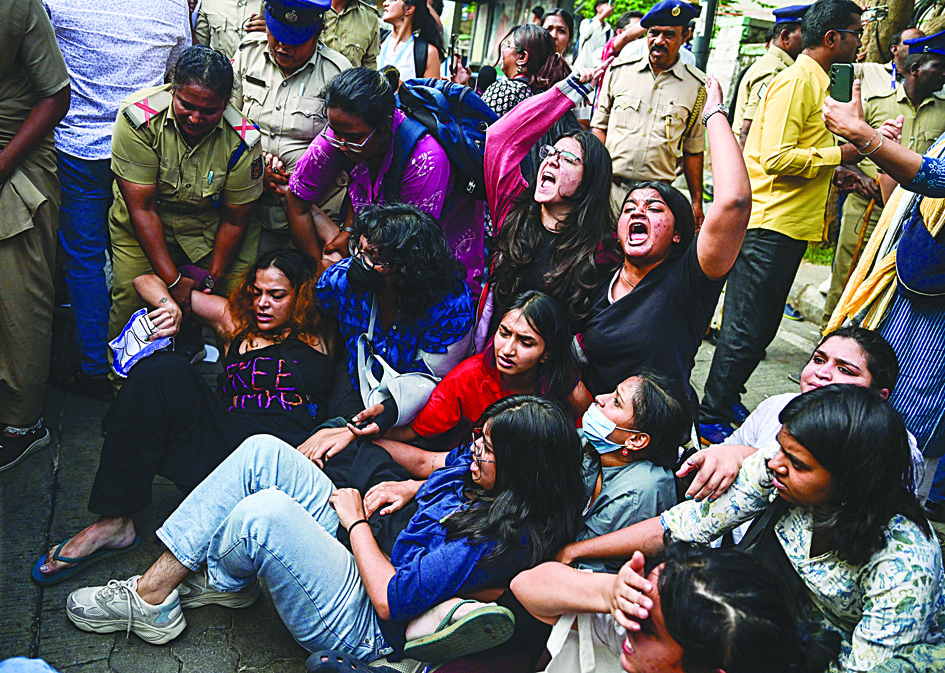
Undeterred by mass detentions, police brutality, political pressure, and sexual harassment (both online and on the ground), many fearless women, non-binary persons and Gen-Zers have emerged as the main driving force behind the protests against Chief Election Commissioner (CEC) Gyanesh Kumar and the Special Intensive Revision (SIR) across the country.
Some BJP-government leaders claim that “western forces”
are behind the protests. Others say the Opposition is putting women in the front to create “disorder” and “unrest” in India. However, the protesting women have rubbished these allegations as baseless.
Woman Of Steele
Kahkasha Thakur, CJP spokesperson rejects the idea that women are being put forward for show at the ongoing CEC and SIR protests. “It was never about putting women at the forefront for optics. Women are leading because they are equally angry, equally concerned about this country’s democracy, and equally entitled to be heard,” Thakur says. However, ground-level organisers say that this time around, women are among the people running the CEC protest movement. Thakur argues that women’s participation does not need a special explanation. “We are citizens of this country, not spectators in its democracy.”
Detained, Yet Defiant
Bundled into police buses, hauled to detention centres and targeted online, young women at the CEC protests say they will not be scared off the streets. Firebrand student leader, Neha Bora (29), AISA national president and doctoral scholar at JNU was detained several times since October 4 for protesting at Jantar Mantar. She was allegedly taken away in an unmarked vehicle, with no female officer inside, and later released at the Narela Industrial Area police station. On October 10, when Bora was detained again near Dilli Haat, she shared a message on social media saying: “I am in detention. The movement is not.”
The protesters have been demanding Gyanesh Kumar’s resignation and raising slogans of “regime change.” Bora rues, “Or-dinary citizens are being treated as if they are hardened criminals.” The Delhi police issued a “peace bond notice” to Bora. But her lawyer senior advocate Gopal Sankaranarayan argued before the Delhi High Court saying: “There is nothing wrong in regime change in a democracy.”
A fight for rights
Ritu Barala, a NSUI leader, and an international Taekwondo player, scuffled with a female Delhi police officer inside a moving police bus during CEC and SIR protests. The viral video is rather disturbing and ironic. It shows Delhi Police woman constable (Chanchal Yadav) wearing a (Delhi Police Women Helpline 1091) pink vest, grabbing Ritu by her neck, pulling her hair and clothes, slapping, punching and kicking Ritu’s private parts, while the latter tries to defend herself. Ritu alleges that after detaining, the protesters were kept in separate rooms and beaten more by the cops. “We were protesting peacefully. They cannot silence our voices like this. The protest will continue,” she told media persons, while preparing for a sit-in outside the Jaipur Police Commissionerate to demand justice.
Breaking barriers
Anjali (24), AISA secretary, DU, does not know whether the caged bus that protesters were manhandled and pushed into was built for animals or for prisoners. On 10 October, she says several women were shoved in first, and at least 12 to 15 men were put in afterwards. Women have been among the most visible faces on the streets and in custody. Was it planned that women would lead? “It’s not planned in that way,” says Anjali, adding, “AISA makes room for leaders from marginalised backgrounds, but the prominence of women at the protests also developed organically.” Anjali’s path into politics began when as a student from a village in Bihar, she joined a protest against a 39-storey commercial building near the university where students struggled to secure hostel places. Her family is pro-BJP and opposes her activism. “They see me in the newspaper, they see me on TV and they know,” she says. They tell her the regime will crush the movement.
No moving back
The CEC protests began on October 2. So far, the Delhi Police have detained more than 8,000 people across various waves of protests. In Mumbai, around 200 people were detained at August Kranti Maidan, the Quit India site, at a solidarity protest. A majority of the detainees are women. Nadia, president of Students’ Federation of India (SFI) Delhi, offers another explanation for women’s prominence. “The broader left is the only political force where women (and other minorities) play an equal role in leadership,” she says. She points to the recent mobilisation of women against sexual violence in Delhi. It is interesting to note that a good 50% of SFI activists come from BJP families. A protester’s BJP-supporting family stopped sending her money after a video of her raising slogans went viral. Another was pressured by her father, a BJP politician, to stop protesting because it was affecting the family’s image.
Free speech warrior
Many women protesters complained that they received a stream of sexualised abuse, with comments sometimes targeting their religion or caste. Some activists have also faced pressure at home. Pointing to the massive deployment of security forces on the ground by the government, Gurmehar Kaur, National Students’ Union of India (NSUI) activist and youth leader believes “that in itself is an admission of guilt.” She feels it is “The collective anger of people is driving this movement.” Several academicians and legal experts, both national and international, have termed the detention of peaceful protesters as “deeply unlawful” and “unacceptable.” However, the detentions continue. Women, non-binary individuals, students and ordinary people are at the centre of the protests. They are not ready to step back. They have made the ‘femininomenon’ visible on the streets.