Witnessing Violence Can Leave Lifelong Scars

Experts say that secondary trauma can leave a damaging effect on a person’s life, timely help and therapy are very important
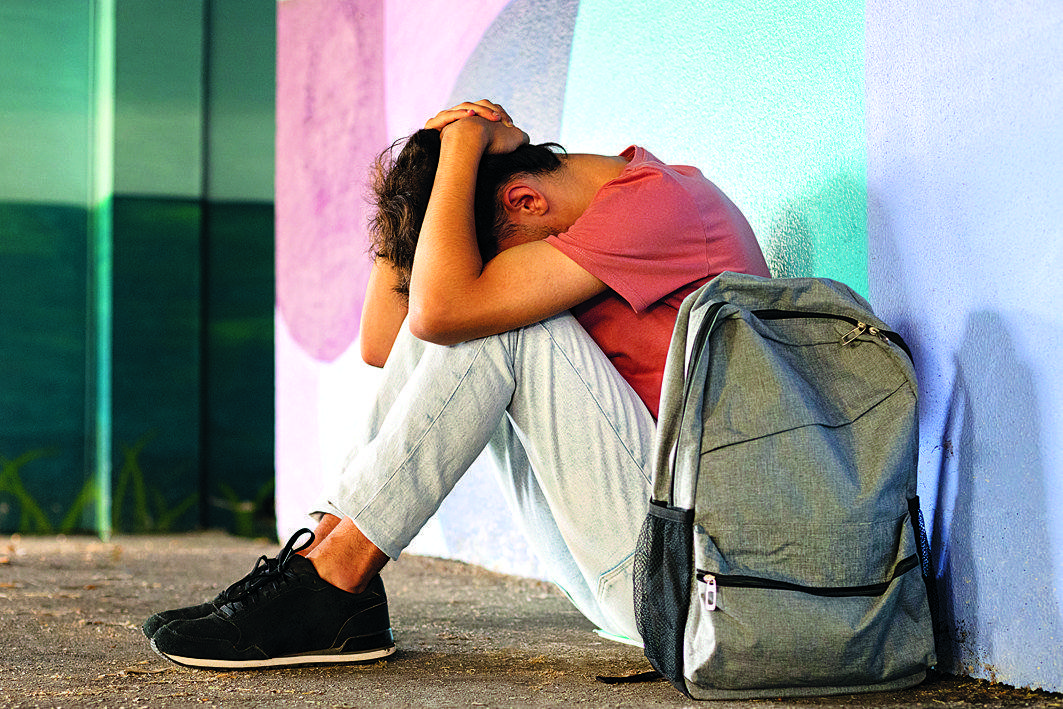
Witnessing violence can be traumatic – domestic violence, street brawls, mob attacks, accidents and terror attacks. For some individuals, it can leave lifelong scars. It could lead to sleepless nights, living in constant fear, or obsessively turning a traumatic event over and over. Could witnessing violence leave scars as lasting as suffering violence directly? The answer is “YES.”
Unforgettable Violence
Arushi Ralli, a trauma-focused psychotherapist, says, “The experience of witnessing violence is like peeling an onion. There are many layers to its psychological impact.” She points to the image of a child growing up in a home where one parent repeatedly harms the other. “The child may never be physically harmed, but they are living in a house whose foundations shake every day. The walls may never collapse onto them, yet they grow up believing that the ground beneath them is never safe.” Growing up in such an environment, children anticipate danger and constantly monitor their emotional climate. They may come to believe that love is intertwined with fear, that relationships are unpredictable, or that staying alert is the only way to remain safe. “These experiences become woven into their inner world and can continue to shape their emotional life long after the violence.”
Secondary Trauma
Psychologists describe this as secondary trauma: the nervous system responding to what we witness happening to others. Sakshi Singh (23), a student who witnessed the police wielding batons to disperse CJP protesters at Jantar Mantar on July 20, still shudders when she thinks of it. “I am unable to sleep. The images of young students with bleeding heads, broken limbs and the screams keep flashing before my eyes,” she says.
Ahmed Mir, a journalist from Poonch, J&K, says whenever someone shouted outside his house, he would rush out to see if someone had died. Ahmed had spent his childhood doing this. For him, “The bursting of crackers evokes a sonic imagery of shelling or bombing.” He remembers the Amarnath Land Row of 2008. Ahmed and his elder brother were returning from tuition when they witnessed stone pelting. People were pelting stones from the market and rooftops. “That was the first time I saw violence. Incidents of violence are very common near the border.”
When Operation Sindoor happened, Ahmed was in Delhi, but he constantly feared for his family’s safety. Violence reorganises our sensory universe. Arushi explains that trauma alters the nervous system's relationship with the world. “Hearing crackers during Diwali may not simply register as a sound,” she says. “Having grown up near a border and being exposed to gunfire, the nervous system may have learned to associate similar sounds with danger.”
Her understanding mirrors psychiatrist Bessel van der Kolk's The Body Keeps the Score. He writes: “Instead of being focused on what is going on right now, your mind stays on the alert for threat, while you basically feel helpless to do anything about it.”
The sound can act as a trigger, allowing the past to enter the present. It may activate memories, emotions and bodily sensations connected to experiences that were frightening or overwhelming and difficult to process at the time.
Manifestation of Trauma
Trauma does not manifest in the same way for everyone. For some, it reshapes the way they respond to conflict: choosing aggression over retreat. For others, it leads to avoidance. Childhood experiences can fundamentally shape the way people understand conflict. “Witnessing violence may influence how a child understands safety, conflict, power and relationships,” Arushi says. “However, I would not say that childhood exposure to violence creates a pathway toward becoming violent. Rather, it can influence the way a person understands safety, conflict and how they show up in relationships.”
“Violence affects me differently,” says Donnie Kamki, who attributes it to insecurity. As a child, Donnie was bullied and could not stand up for himself. “I promised myself I'd rather get beaten up than walk away.” He describes himself as more of a retaliator than a perpetrator. “I can escape, but I choose to fight.”
Sometimes, a terrifying accident can leave the body responding long after the danger is over. Rahul Chauhan recalls a journey to Chandigarh with his brother. “The driver was constantly on his phone. While trying to plug his phone into a charger, the driver lost control of the vehicle. We crashed so badly that our car landed on top of another one.” As a crowd gathered around the wreckage, Rahul says, they feared being assaulted by the mob and left the scene. “I’ve never gone to Chandigarh since,” he says.
The Healing Process
Witnessing trauma or violence is like a cut. The skin heals, but the scar stays. “It will come back from time to time,” Ahmed says. Arushi resists reducing recovery to forgetting. Recovery is allowing the experience to be integrated into a life that extends beyond it through therapy, safe relationships, community, creativity, spirituality or simply through the slow rebuilding of a sense of safety.
Healing is different for everyone. For one person it may mean sleeping peacefully through the night. For another it may mean no longer flinching at the sound of fireworks: rebuilding relationships, reconnecting with their own body, or simply believing that tomorrow can be ordinary and there is no accident waiting to happen on the road.
VIOLENCE AT HOME
There is also violence that happens between people in love. Violence inside the home, Arushi says, is psychologically different from violence outside it. A brawl may be frightening, she explains, but the threat is external. Domestic violence is different. “The threat comes from someone who we expect will love, care, protect and provide emotional security,” Arushi explains.
An individual who prefers to remain anonymous says, “I was drunk. I couldn’t think clearly… I wound up choking my partner. It was a very rage-fuelled moment. I don't know what was going through my mind very well.” The couple is still together.
Love and abuse begin to coexist in such instances where fear, loyalty, shame, anger and helplessness all occupy the same space. Arushi cautions that a case like this should not be mistaken for evidence that the violence has been resolved psychologically.
In public violence, the boundary between danger and safety is clearer. Within intimate relationships, that boundary blurs. Survivors may begin asking themselves: If the person who is supposed to love and protect me is also the person who harms me, what is love, really?
Helplines
• Tele-MANAS is a government initiative providing round-the-clock help. Call: 14416 or telemanas.mohfw.gov.in
• Aasra is a crisis intervention centre for the lonely, distressed and suicidal. Call: 91-9820466726
• Vandrevala Foundation crisis intervention helpline Call: 91 9999 666 555
• KIRAN - Call: 1800-5990019
• NIMHANS Helpline Call: 080-46110007