
From Timothée Chalamet comparisons to ‘Gen-Z baba’ edits — the algorithm is crushing and how!
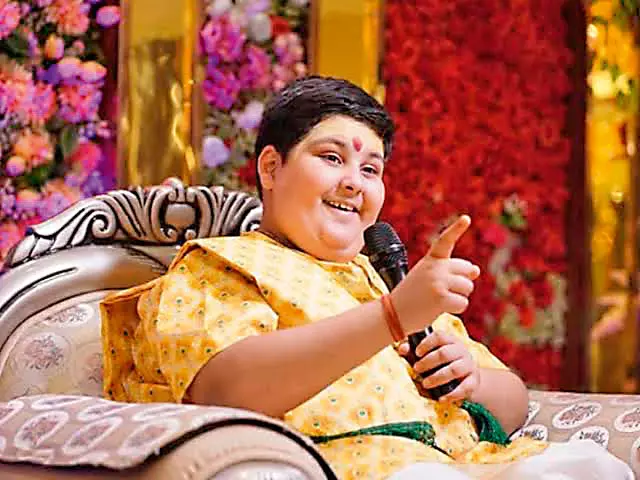
Forget six-pack gym influencers and brooding heroes. Gen Z has found a new crush and he comes with flowing robes, soulful eyes and a sermon on karma. This is the era of digital spirituality. Leading this divine glow-up is a 19-year-old curly-haired sensation Shri Shashwat Acharya ji, whose soft-spoken Katha and shy smile have earned him the ultimate Gen Z title — “Gen Z Baba”.
Fans online are already calling him ‘Vrindavan’s Timothée Chalamet’. One reel he’s explaining the laws of the universe, the next he’s smiling shyly while the entire comment section collectively melts: “Baba, please look this way.” And he’s not alone. From little Abhinav Arora, the child orator who became a spiritual meme-star, to a whole explore page full of good-looking gurus — spirituality is suddenly aesthetic, aspirational and oddly... crush-worthy. In fact, Dhirendra Shastri recently said, “Aajkal bhagwan ka bhi trend chalta hai. Kabhi Sai Baba ka darbar chalta tha, kabhi Khatu Shyam Baba ka craze tha aur ab Neem Karoli Baba ki jai jaikaar ho rahi hai.” But what’s really behind this viral god-glow?
Jo dikhta hai, woh bikta hai?
Internationally recognised spiritual healing expert Dr Amruta Amberkar says, “Yes, definitely! An attractive, well-presented personality does help spiritual content gain attention,” she laughs. According to her, in 2026, personality is as powerful as ‘pravachan’! “Confidence, a powerful voice and the ability to present yourself naturally in front of the camera — all of this can easily capture people’s attention.” And who is buying it the most? Gen Z. “Especially Gen Z. They are heavily influenced by visual presentation. Sometimes, even if a guru is highly knowledgeable, they may struggle to reach an audience if they are shy! So, jo dikhta hai, woh bikta hai — this principle is clearly visible on social media today.” But she draws a line between virality and credibility. “An attractive personality can give someone an advantage in making content popular but building trust requires genuine knowledge.”
Follow for face? The two types of bhakts
She continues that there are only two kinds of followers on spiritual Instagram. “The first gets influenced by Instagram aesthetics — personality, hairstyles, spiritual outfits, soulful expressions and how the content is presented.
The second category genuinely values knowledge. They are more interested in understanding concepts behind spirituality than just following trends.” And their loyalty is very different! “The first category may follow someone quickly because of their attractive appearance, but they may also unfollow just as quickly when something more attractive comes along. However, people who follow a ‘baba’ because of genuine knowledge develop a long-term connection.” And don’t you dare underestimate Gen Z, she warns. “Gen Z is much more aware than many people assume. They can often recognise difference between genuine and superficial content.” So why is this generation, known for anxiety, hustle culture and burnout, running towards mantras and meditation? Dr Amruta feels it’s not a trend, it’s a need also. “If we look at earlier generations, the joint family system was much more common. People had emotional support within the family. But today, people are becoming more independent, we have to handle our own problems. Gen Z understands this, dealing with their own struggles. They don’t always want to depend on others for emotional support.” That vacuum is being filled by babas online! “That is why even practices like meditation, chakra balancing, Vastu, numerology and other spiritual modalities are also becoming very relevant to them. If these practices help them find peace, they naturally become interested.” And it’s not just healing, it’s also hustle. “I also see this as a very good career opportunity. Young people can enter this field, develop expertise, build their own identities, establish personal brands and create successful careers.”
Pookie or preacher?
But not everyone is comfortable with the “crush” tag. Viral spiritual orator Nityanand Charan Das gave us the most savage take. “We are living in an age of externals: people are getting impressed by externals and trying to impress others by externals. Unfortunately, spirituality is also seen with that vision,” he says. “Good looks may attract eyeballs, but only good wisdom can open eyes. Today spirituality is sometimes judged by the standards of Instagram. But spirituality is not a beauty pageant.” He says we are misreading Gen Z completely. “Young people today are surrounded by endless entertainment, yet many are searching for genuine human connection. They are not necessarily looking for a ‘younger guru.’ They are looking for someone who can understand their questions in a language they relate to! Wisdom doesn’t become outdated because the person delivering it grows old. And foolishness doesn’t become wisdom because the person delivering it looks young.” On the ‘Pookie Baba’ label, he says it depends on whether the label becomes a bridge or a barrier. “If a playful nickname makes someone curious about spirituality, I don’t see any harm. But if spirituality gets reduced to cute expressions, fashionable clothes and viral edits, we have missed the entire point! A guru’s responsibility is not to become everyone’s favourite personality, but to help people become better personalities. There is a danger when we start treating spiritual teachers like celebrities because celebs are expected to entertain us. Spiritual teachers are meant to enlighten us and sometimes that means telling us things we don’t want to hear also. If people remember the nickname but forget the teaching, it has defeated the purpose. Personally, the real success of spiritual content is not how many times it is viewed, but how many lives it transforms.”
Spirituality has always been about ‘influencing’
Bringing a Gen-Z perspective to the debate is Hitesh Mahawar, himself a Gen-Z spiritual creator and founder of a Gurukulam in the heart of the Himalayas. Hitesh says why this sudden ‘bhakti boom’ is gripping the nation. “A decade ago, spirituality was confined to a particular age group for the ‘parents’ generation. Today, a documentary on a Japanese ritual is being watched in a village in UP! Gen-Z today wants to know their indigenous culture, their ‘own story’.” He credits the cultural mood of the country too. “This extraordinary scale of celebration of native culture is something past generations have not seen before. People are not as fanatically aspirational about foreign brands as they were 10 years ago. Everything ‘Indian’ and ‘local’ is what excites Gen-Z.” But he adds a caution. “While this is great to make people collectively embrace culture, it is also important to make sure that spirituality must not become a vehicle for propagating regressive ideas. Not everything old is necessarily wise.” What about comments like “crushing” and “pookie”? “Language is a medium of expression and there is nothing wrong with younger generations choosing their own to learn spirituality. If this new terminology is how younger generations interact with our stories, there is nothing wrong in it. What matters is intention, not mocking or trivialising.” And the line between spirituality and influencing? “Spirituality has always been about ‘influencing’. Whether it was Adi Shankaracharya spreading Advaita Vedanta or Guru Nanak spreading Ik Onkar. The concern is that the meaning of ‘influencing’ has changed. Today anyone on your feed can initiate you into a mantra which may or may not be correct for you. Practices like Kundalini Sadhana or Khechari Mudra which earlier were only given under guidance of a guru, today become part of a ‘2-day retreat’ at a fancy yoga resort! The downside is that social media rewards content that gets the ‘hook’ right or says something sensational without considering repercussions.”
So in the end, is good-looking the new godly? Yes, it may get you the click but only authentic knowledge will get you bhakts.
Dark side of crush
This glow-up has a creepy shadow too. While half of Instagram is busy calling 19-year-old Shri Shashwat Acharya Ji ‘Vrindavan’s Timothée Chalamet’, the other half is getting uncomfortable with how they’re crushing. Scroll through the reels and you’ll find comments that would get a man jailed if the genders were reversed — graphic fantasies, marriage proposals, “Baba, leave katha and look at me” thirst traps. The same Gen Z that cancels everyday misogyny in two seconds, is writing the exact same thing under a teenager in a dhoti and rudraksha. It begs the question that when does bhakti become objectification?
Highlight: But not everyone is comfortable with the “crush” tag. “A guru’s responsibility is not to become everyone’s favourite personality, but to help people become better personalities,” says nityanand charan das.
Today spirituality is sometimes judged by the standards of Instagram. But spirituality is not a beauty pageant. If a playful nickname like ‘gen-z baba’ or ‘pookie baba’ makes someone curious about spirituality, I don’t see any harm. But if spirituality gets reduced to cute expressions, fashionable clothes and viral edits, we have missed the entire point!”
— Nityanand Charan Das, viral spiritual orator
Aajkal bhagwan ka bhi trend chalta hai. Kabhi Sai Baba ka darbar chalta tha, kabhi Khatu Shyam Baba ka craze tha aur ab Neem Karoli Baba ki jai jaikaar ho rahi hai.”
— Dhirendra Krishna Shastri, spiritual leader
A decade ago, spirituality was confined to a particular age group as a subject for the ‘parents’ generation. Today, a documentary on a Japanese ritual is being watched in a village in Uttar Pradesh! Gen-Z today wants to know their indigenous culture, their ‘own story’.”
— Hitesh Mahawar, spiritual creator & yoga expert
“The first gets influenced by Instagram aesthetics — personality, hairstyles, spiritual outfits, soulful expressions and how the content is presented. The second category genuinely values knowledge. They are more interested in understanding concepts behind spirituality than just following trends.”
— Dr. Amrutha Amberkar, spiritual healing expert