When the Body Becomes a Battlefield

Hunger. Power. Conscience
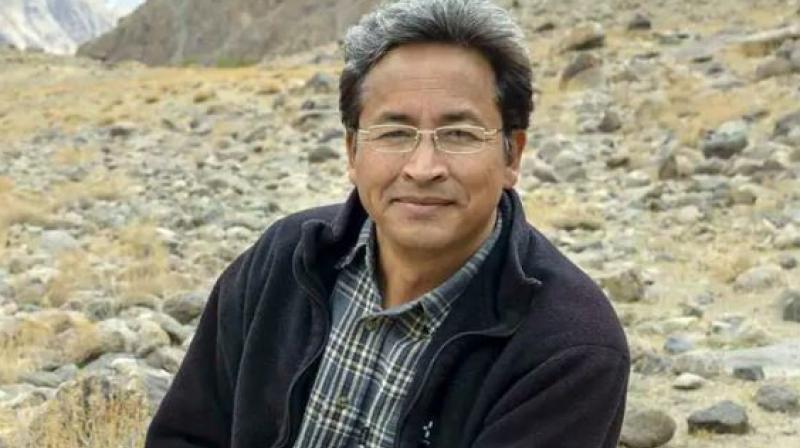
A hunger strike does not begin with shouting. It begins with silence. A plate remains untouched, a stomach empties, and slowly a body starts speaking where words have failed. That is how Sonam Wangchuk's latest protest ended after 26 days. He resumed eating only after the government assured that no legal action would be taken against protesters at Jantar Mantar.
“Sometimes the hardest negotiations
happen not across a table, but across an empty plate.”
India has long understood this unusual language. A hunger strike is more than refusing food. It is a public wager that power still possesses a
conscience. Sometimes that wager changes history. Sometimes it earns only a promise. Sometimes it changes nothing except the person willing to suffer.
Mahatma Gandhi used fasting repeatedly for freedom, communal harmony and the fight against untouchability. In 1952, Potti Sriramulu fasted for 58 days demanding a separate Andhra state. His death forced the government to act, eventually reshaping India's map along linguistic lines. Nearly six decades later, Anna Hazare's 12-day fast shook Parliament and pushed the government towards the Jan Lokpal movement.
Not every sacrifice ends in triumph. Medha Patkar's 1991 fast against the Narmada dam brought assurances but not the outcome she sought. Sunderlal Bahuguna endured 45 days of fasting, and later 74 more, yet the Tehri Dam still rose. Some hunger strikes win policy. Others win only memory. Yet even in defeat, they remind a nation that the human body can become its most powerful argument.
The Fasts That Forced Governments to Bend
Cat and Mouse Act of 1913: Women fighting for the right to vote were jailed in Britain, and many refused food in protest. The prison force-fed them, and the public was horrified. So the government tried something new: release the starving woman until she recovered, then arrest her again with no trial to finish her sentence. People called it the Cat and Mouse Act, like a cat toying with a mouse. It backfired, turning public sympathy toward the women's cause.
The Woman Who Fasted Against Plastic: Diane Wilson, a former shrimp boat captain from Texas, had already won a major environmental battle against Formosa Plastics years earlier. In March 2026, she began a hunger strike outside Dow's Seadrift plant, demanding an end to plastic pellet pollution in San Antonio Bay. She was arrested on the 25th day while delivering a demand letter but continued fasting, completing a 30-day hunger strike.
A Monk's Fast for Peace: During the Vietnam War, Buddhist monk Thich Nhat Hanh became a global voice for peace through nonviolent protest. In 1963, he undertook hunger strike to draw attention to human rights abuses in Vietnam and urge international action. Along with other Buddhist monks and nuns, he showed that peaceful self-sacrifice could become a powerful protest against war and injustice.
The Professor Who Died for the Ganga: Guru Das Agrawal, an IIT Kanpur professor turned Ganga activist, fasted 38 days in 2009 against a hydro project on the Bhagirathi, forcing the government to halt construction. In 2018, he fasted again, demanding legal protection for the Ganga. This time there was no letter, no reprieve. After 111 days, he died at 86, the law he sought still unwritten.
She Spoke Kurdish. Jail and Hunger Strikes Followed.: In the 1990s, Kurdish leader Leyla Zana became the first Kurdish woman elected to Turkey's Parliament. After taking her oath in Turkish, she added one sentence in Kurdish, a language then banned in public life. She was jailed for 15 years. Later, coordinated hunger strikes by Kurdish political prisoners drew global attention to Kurdish rights. Zana later received the Sakharov Prize for Freedom of Thought.
The Gandhian Fight Against AI: In September 2025, protesters took a strategy
from India's freedom movement to Silicon Valley. Guido Reichstadter fasted 30 days outside
Anthropic's San Francisco office, demanding the company halt what he called reckless development toward artificial general intelligence and address
the harms it was already causing. Michaël Trazzi
did the same outside DeepMind in London for
about a week, calling on its CEO to pledge a pause if rivals did the same.
Sans-Papiers: Hunger for Home: In 2021, about 400–500 undocumented migrants,
known as sans-papiers ("people without papers"), began a 60-day collective hunger strike in Brussels. They demanded legal residency and the right to work after years of living without official documents. As the strike continued, many became critically ill, and some even stopped drinking water. The strike ended after negotiations, though only a small number later received residency permits.
The Hunger Strike with Sewn Lips: In 2002, lip-sewn asylum seekers at Australia's Woomera Detention Centre began a hunger strike to protest long delays in processing refugee claims and harsh detention conditions. More than 200 detainees joined the fast, while around 50–60, including children and teenagers, stitched their lips together as a symbol of silence and suffering. The shocking images drew worldwide attention to Australia's refugee detention policies.
"History is written in many ways. Sometimes it is written on paper. Sometimes in blood. Sometimes, it is written in hunger."
