When silence speaks louder than words

In a nation drowning in loud noise, some filmmakers are returning to the power of silent movies
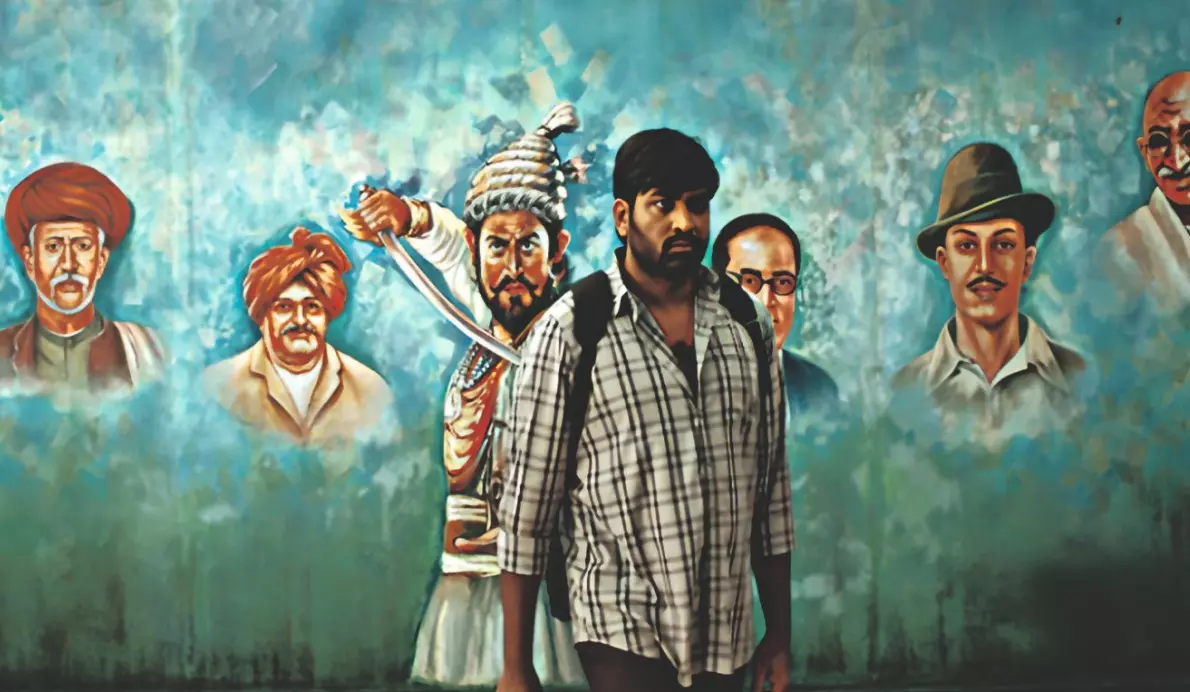
India in 2026 is a nation at its loudest. In an era where entertainment is loud, prime-time shows and 15-second Insta reels ‘SCREAM’ for attention, there is a ‘silent’ revolution in the showbiz industry. Some contemporary filmmakers are rediscovering the power of silent storytelling. No dialogues. No songs. Just a strong story, stunning visuals. powerful performances. and a brilliant music score.
The popularity of the silent movie Gandhi Talks (2026), starring actors Vijay Sethupathi and Arvind Swami, marks the return of silent movies. As leading actor Aditi Rao Hydari rightly put it: “The film allows vulnerability and silence to coexist beautifully.” Renowned film director Kishor Belekar opines that ‘silence’ is actually a totally different language in itself. He adds, “Even a whisper could make a lot of sound and could even be considered dialogue.”
The Power of Silence
In an industry drowning in noise, silence speaks louder than words. Not long ago, actor-politician Kamal Haasan’s silent movie Pushpaka Vimana (1987) absorbed the language of the form and consciously moved away from it. Internationally-acclaimed Malayalam silent movie Holy Wound (2022) used the power of silence to capture the lives of a same-sex couple
being subjected to social disapproval.
According to Cinema Studies Professor Kuntal Bhogilal, “The role of silence in cinema depends on the creator’s intent, and how integral to that intent is the decision to make a silent film. It also depends on how well and fundamentally the power of silence is used.”
Today, it is not easy to create a movie without speech, as raising money and engaging an easily distracted audience becomes exceedingly hard.
Despite this, films like Pushpaka Vimana (1987) prove the effectiveness of this genre. The widely praised silent film by Singeetam Srinivasa Rao used complete silence to narrate the suffering of a poor boy living in a lavish five-star hotel. Silent movies have proved the universal nature of the genre. This film translates successfully into any other language.
A Silent Journey
The journey of silent movies began with Dadasaheb Phalke’s Raja Harishchandra, India’s first feature film in 1913. The movie drew crowds in hordes, both in India and abroad. Over 20 years, 1,338 silent films were made. V. Shantaram’s Savkari Pasha (1930) silently exposes the brutality of money-lending in India. The prolonged silence of Netaji Palkar (1950) showed the deep inner feelings of a patriot. The silent masterpieces made by Charlie Chaplin, City Lights (1931), The Gold Rush (1925), even after sound films came around, enthral the audiences even today.
Cut The Noise
Several filmmakers argue that cinema fundamentally communicates through images, and this visual language can be powerful even when it isn't literally “silent.” The use of gestures to convey emotions, short text dialogues on screen, the language of the eyes (oculesics), sets and background score, all contribute to the making of a silent movie.
The arrival of talkies in 1931 changed the grammar of filmmaking in India. Film-makers joyfully embraced sound, whether it was music, words, or melodramatic expression.
However, even in the era of sound cinema, some filmmakers returned to the art of silent storytelling. Not due to lack of technology, but because some things could be expressed only without sound.
According to Belekar, “Silence is a choice rather than something required.” He studied Chaplin’s movies, went back to Kamal Haasan’s Pushpaka Vimana, absorbed the language of the form, and consciously moved away from it. “My movie Gandhi Talks is not a tribute to silent movies,” he says. It is rather his personal manifesto about what silence is capable of achieving — a cinematic form that comes into being afresh rather than by borrowing from its predecessors. It was important to note that he knew his audience's demands. “The audience is aware of world cinema.”
Figures Of Speech
For Indian filmmakers of a younger generation, it is no longer just philosophy which has been reduced to mere silence. It has now become an intimate weapon of protection. The remarkable thing about the progression, however, is not the fact that silence has continued in Indian cinema, but rather the fact that it continues to be discovered over and over again.
In today’s entertainment world, the unspoken power of ‘silence’ feels even more relevant than before. Alika Singh, a film buff and aspiring scriptwriter, says, “At a time when a majority of mediocre movies use loud dialogues, shrill songs, and big budgets to SCREAM success, the return of silent cinema with powerful performances and a strong storyline feels like a welcome break.”
Indian film directors have been aware of the strength of silence for more than a century. It
started by chance, became language, developed into philosophy, hardened into necessity, and ended up as defiance. In movies, silence is not a defect; rather, it speaks volumes.
A Silent Revolution
• Gandhi Talks (2026), a silent movie lauded by the audience
• Holy Wound (2022), widely acclaimed Malayalam silent movie
• Pushpaka Vimana (1987) starring Kamal Haasan was a hit
• Raja Harishchandra (1913) was India’s first silent feature film
• The Artist (2011) won several awards all over the world
• Nosferatu: A Symphony of
Horror (2023)
• Charlie Chaplin’s The Gold Rush (1925), City Lights (1931)
