When Reel Politics Hits Real Nerves

Political storytelling comes with risks. Director Kiran Jay Kumar discusses the challenges behind Mayasabha: Rise of the Titans
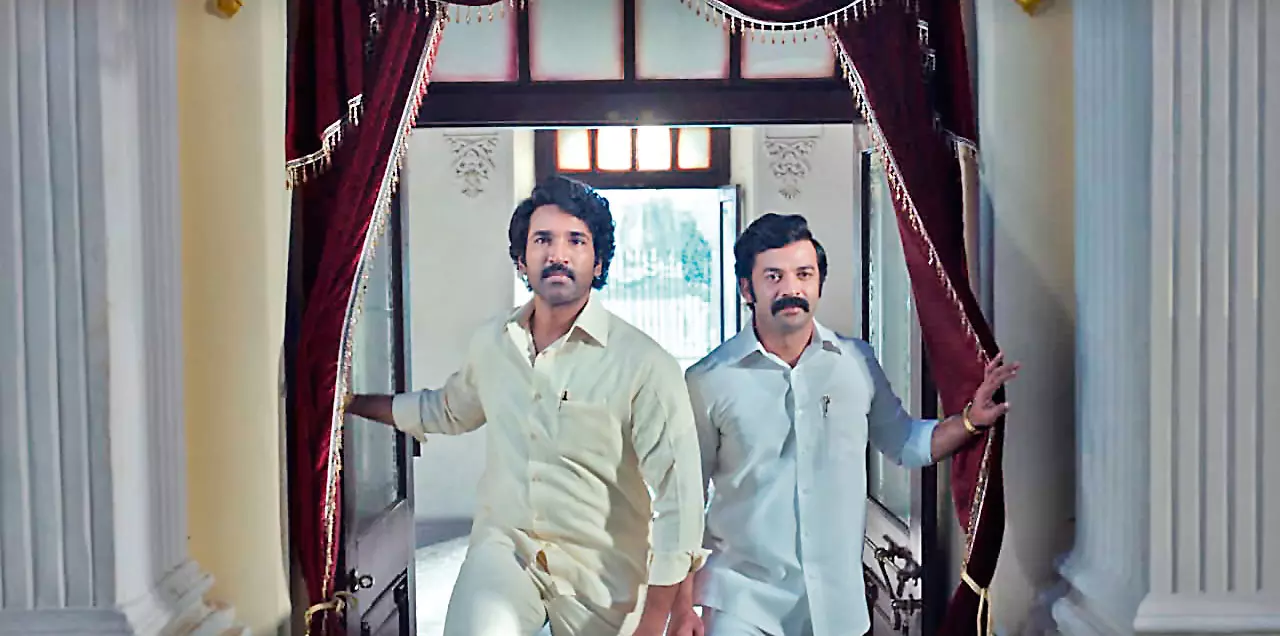
Friendship tested by ambition. Political history shaped by private choices. Deva Katta’s Mayasabha: Rise of the Titans draws on Andhra Pradesh’s political landscape, but its central concern is human: what happens when personal bonds collide with power?
The IFFI entry has drawn attention to Telugu political storytelling. In an interaction with Deccan Chronicle, director Kiran Jay Kumar discusses turning political history into drama, researching different eras and navigating the sensitivities surrounding the genre.
THE HUMAN STORY BEHIND POLITICS
For Jay Kumar, the key was to avoid making the series feel like a history lesson. “If we were to simply narrate the events that took place in the political history of the state and their consequences, it would end up feeling more like a political science class or a history lecture rather than an engaging story,” he says.
“We believed that was the only way it could truly entertain people while also touching their hearts,” he says. Deva Katta had this approach in mind when he first conceived the story.
POWER PLAYS BEHIND CLOSED DOORS
Politics often unfolds through alliances, strategies and private conversations. The team mapped each character’s values, ideologies and goals first, Jay Kumar says. The dramatic charge came from the tension between friendship and individual ambition. “Those were the moments that genuinely excited us as storytellers.”
RECREATING POLITICAL ERAS
Jay Kumar’s background in Political Science and History helped shape the project. Deva Katta, despite studying Mechanical Engineering, brought a complex understanding of India’s political and social landscape, he says. The team researched party formation, political agendas and struggles for identity.
“We also focused considerably on production design and costume design to ensure that the visual world evolved authentically with each political period,” he says.
FICTION, FACT AND CREATIVE FREEDOM
With fictional characters inviting comparisons to real political figures, the makers knew the screenplay required care. They portrayed both central characters as idealistic individuals and weighed the possible consequences of choices. Jay Kumar and Deva Katta reviewed each other’s scenes and debated them before finalising the screenplay. Their aim was an emotionally engaging story about politics rooted in values and progress, without losing direction or inviting misinterpretation.
WHY FILMMAKERS MAY HOLD BACK
Jay Kumar hopes the series encourages more Telugu political dramas. But he questions how many filmmakers would be willing to take the risk. “These days, people’s sentiments seem to get hurt for all sorts of reasons, sometimes without any apparent reason,” he says. “Not everyone, wants to invite controversy.”
Highlight: For a genre fuelled by power, ideology and public memory, that hesitation may be its biggest obstacle.