When Indian craftsmanship becomes luxury, who gets the credit? Our Craft. Their Label

Fendi’s Rs 8.3-lakh embellished bag has reignited the debate over Indian craft and attribution. But before pointing fingers at global fashion houses, perhaps the fashion industry needs to look at the hands behind the handiwork, including its own
Chikankari. Zardozi. Kantha. Phulkari. Bandhani. Kalamkari. Aari. Dabka. Mirror work. Mukaish. Indian luxury has built immense value around these crafts. Yet the designer gets the name, the house the label, the celebrity the photograph. The artisan? “Handcrafted.” It says how it was made, not who made it.
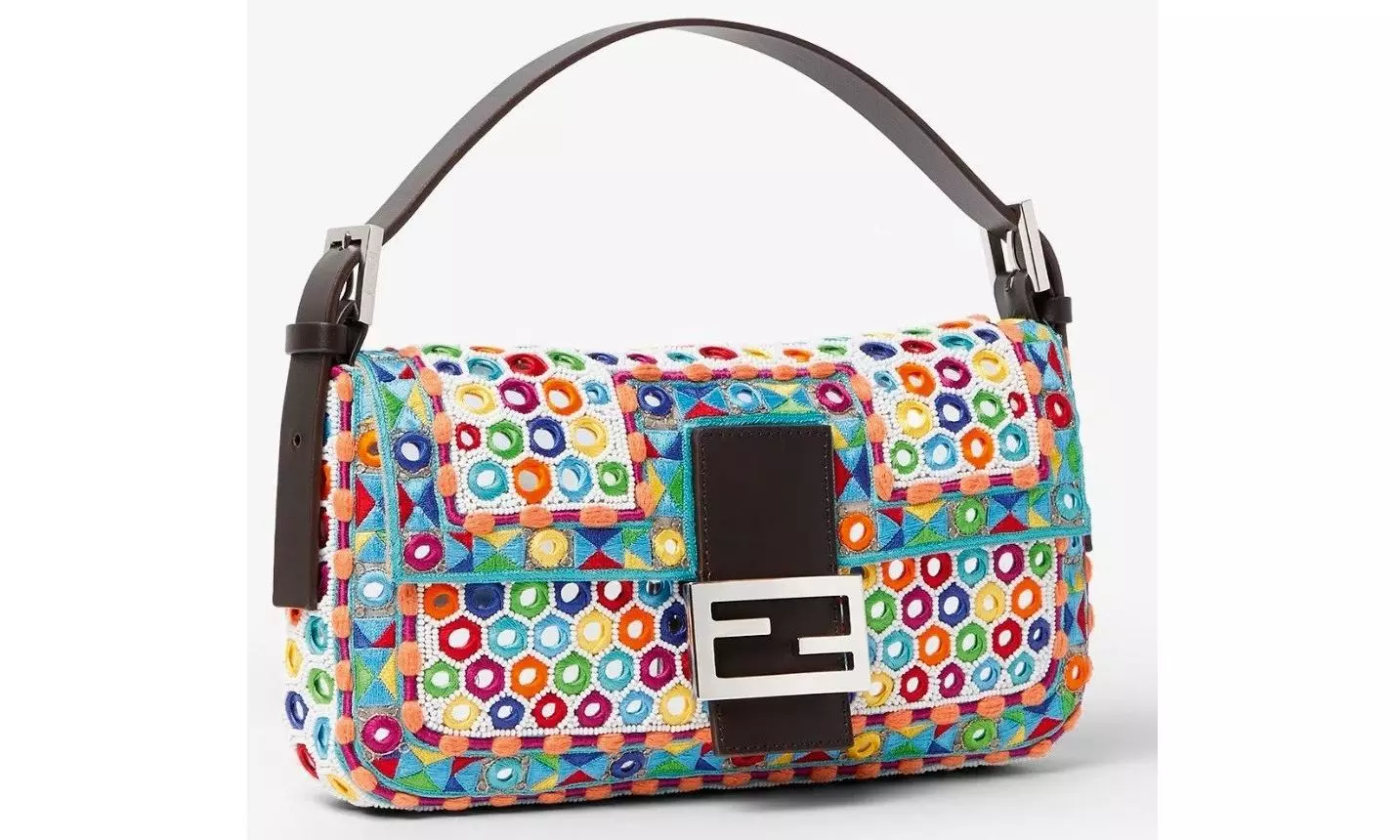
Fendi’s Rs 8.3-lakh Baguette, with 39,500 beads, 475 mirrors and 138-plus hours of craftsmanship, bears an uncanny resemblance to India’s mirror-work traditions. The debate is sharper because Fendi has previously credited Chanakya artisans in India for its embroidery. This time, however, the product description says only “Made in Italy”, with no mention of Chanakya. It doesn’t reveal where the embroidery was made, raising questions. RPG Group chairman Harsh Goenka shared an image of the bag, writing, “After the Prada Kolhapuri chappal scandal, here comes the Fendi ‘Navratri’ bag. Charging Rs 8.3 Lakhs for a design that looks exactly like a Rs 500 bag available in the streets of Gujarat. And zero credit to Indian artisans. When will luxury brands stop colonising our crafts?”
Biocon founder Kiran Mazumdar-Shaw also accused Fendi of cultural appropriation, arguing that showcasing Indian craftsmanship as luxury without crediting its artisans diminishes their contribution. The larger irony? Indian crafts have travelled the world as luxury. The hands behind them too often haven’t.
THE INDIAN MIRROR
Sabyasachi. Manish Malhotra. Tarun Tahiliani. Anita Dongre. Rahul Mishra. Abu Jani Sandeep Khosla. Anamika Khanna. Payal Singhal. Raw Mango. Good Earth. Torani. Indian luxury has built huge value around traditional crafts. But how much of the human story reaches the customer? Credit the workshop, spotlight the artisan, add a QR code. As Rina Dhaka notes, one piece can pass through several hands. The aim isn’t to diminish the designer’s authorship, but to widen the label.
THE NOISE IS GOOD
Rina Dhaka sees the debate as an opportunity to improve craft recognition. “It’s an ideal way to have credits shared, and the feelings are good propellers to push the change.” She cautions against claiming craft as belonging to one country. Zardozi arrived during the Mughal era, while related traditions span South Asia. Attribution is further complicated by the production chain. “The processes use so many hands from in house sample man to contractor to subcontractors to finally the workers..the chain is long.” “The noise is good. It will help bring recognition to craft forms and brand India,” she adds.
PROVENANCE MUST INCLUDE PEOPLE
Raghavendra Rathore, luxury lifestyle designer, believes artisan recognition should be part of luxury provenance. “When an artisan’s skill is central to the character and value of a garment, that contribution should be acknowledged.” But credit alone isn’t enough. “Credit should ideally be accompanied by fair compensation, because recognition without economic participation can easily become another form of tokenism.” His comparison is pointed, “If a brand can identify the origin of a diamond, it should also be able to identify where its embroidery was produced and which craft tradition it represents.” For Rathore, it isn’t designer versus artisan, “The credit should be shared, but clearly defined.”
CREDIT THE CRAFT
For Harshwardhan Patwardhan, founder and MD of Chappers, the Fendi bag is less scandal than opportunity. “I don’t think Fendi selling an embroidered bag for Rs 8.3 lakhs is the scandal people are making it out to be.” He believes Indian craftsmanship has long been undervalued internationally. “Indian craft is finally stepping into the luxury spotlight.”
His demand is simple, “Credit the craft.” At Chappers, every pair carries the artisan’s name and place of origin. But he acknowledges that luxury products pass through many hands, “A bag like Fendi’s likely passes through many hands, and listing every one isn't realistic.” It also raises a question for Indian fashion: why demand from global brands what many Indian brands don’t practise?
THE ARTISAN DOESN’T NEED A GLORY TAG
FENDI — 2026
Rs 8.3-lakh Baguette sparks debate over mirror-and-bead craftsmanship and Indian visual references. Fendi has also worked with Mumbai-based Chanakya.
RECENT FLASHPOINTS
An embellished gown drew online criticism over its resemblance to Indian zardozi and questions of craft attribution.
PRADA — 2026
After backlash over its Milan sandals, Prada acknowledged their Indian inspiration and launched a “Made in India x Inspired by Kolhapuri Chappals” collaboration, training 180 artisans.
Harsh Goenka slammed Fendi’s Rs 8.3-lakh bag, comparing it to a ?500 Gujarati street bag and questioning the lack of credit to Indian artisans.
The noise is good. It will help bring recognition to craft forms and brand India.”
— RINA DHAKA
If a brand can identify the origin of a diamond, it should also be able to identify where its embroidery was produced.”
— RAGHAVENDRA RATHORE
“Indian craft is finally stepping into the luxury spotlight. Credit the craft.”
— HARSHWARDHAN PATWARDHAN
“Recognition is often sought by the privileged; livelihood is sought by those who create.”
— NAGMA ANWAR ANSARI
