The thunder of the dhak (barrel-shaped membranophone) spectacular idols, steaming bhog and tearful farewells bring Bengal’s colours, flavours and emotions to Hyderabad
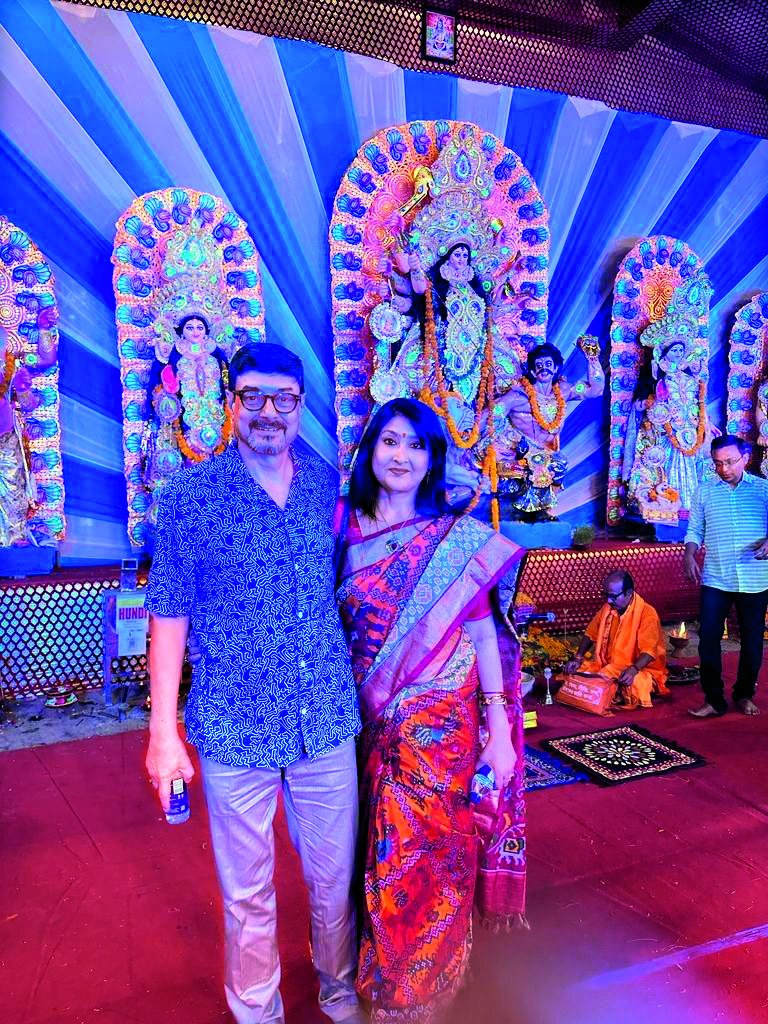
The dhak announces her arrival before you see her. Inside the pandal, incense curls through the air, marigolds frame the entrance and Maa Durga stands resplendent. Children weave through the crowds as families pose for photographs and the aroma of steaming bhog draws visitors towards food stalls.
For a few days, Hyderabad acquires a distinctly Bengali rhythm. Mornings belong to prayer; evenings bring music, and the infectious energy of dhunuchi naach. Beneath the spectacle lies — a reunion with roots, memories and a community that feels like family.
LONG WAIT FOR MAA
For Madhumita Chakraborty, founding director of Samarjita Management Consultancy, the countdown begins almost as soon as Bijoya Dashami ends. Having lived in Hyderabad for over three decades, she proudly calls herself a Hyderabadi Bengali.
“We bid farewell to Maa Durga, but a part of us begins counting the days until her return,” she says.
A member of Hyderabad Bengali Samity, BSS Secunderabad, Utsav and Uttarayan also, she starts preparing well before the festivities. Musical rehearsals begin nearly a month in advance.
Saptami, Ashtami and Navami are particularly cherished. Mornings bring pushpanjali and bhog prasad; evenings unfold with cultural programmes. Celebrating alongside her family makes the occasion even more special, allowing traditions to pass naturally to the next generation.
She particularly enjoys dhunuchi naach, in which devotees dance with smoking incense burners to the pounding dhak! Though she has never joined in, it remains a favourite spectacle.
DHAK, BHOG BIRYANI CELEBRATE TOGETHER
At the Bengalee Cultural Association (BCA) in Banjara Hills, the association’s Bonedi Zamindar Bari theme recreates the grandeur of Bengal’s traditional ancestral homes.
Dr Prasenjit Ray, the association’s treasurer, has watched the festival evolve, with large creative themes and enthusiastic participation from younger generations.
For Anita Dasgupta, senior member of BCA, Durga Puja is an emotional anchor for the Bengali diaspora.
“Hyderabad’s multicultural warmth infuses the festival with an inclusive spirit,” she says, describing a celebration where age-old rituals and artistry coexist.
The food captures this cultural blend beautifully. Sacred afternoon bhog and Kolkata street-food favourites share space with Hyderabadi biryani and Irani chai.
For Bengalis living far from their birthplace, the dhak, idols and Anondomela bring childhood memories rushing back. Telugu friends and families join the celebrations, adding to the sense of community.
“Bengal may be our roots, but Hyderabad is our karmabhumi,” says Ray.
GROWING WITH NEXT GENERATION
For Rahul Nandi, joint general secretary and cultural secretary of Uttarayan Sociocultural Association, preserving Durga Puja means making its traditions meaningful to children growing up away from Bengal.
It is about remembering the fragrance of bhog, the artistry of pandals, the beat of the dhak and the warmth of a community that gathers as one family.
“Preserving culture is not about holding on to the past; it is about making our roots meaningful to the generations that will carry them forward,” he says.
UNTIL MAA RETURNS
During Durga Baran and Sindoor Khela, women offer vermilion to the Goddess and one another. Red-streaked faces and warm embraces mingle with the ache of farewell. Madhumita’s prayer captures the sentiment: “Ebar Ma Gouri ele, aar maye phirabo na…” — next time, when Ma Gouri returns to her parental home, we will not let her go back. Eventually, the drums fall silent and the pandals empty.