War Films Must Be Handled With Responsibility

10 Aug 2025 9:16 PM IST10 Aug 2025 9:16 PM IST
John Abraham opens up on his personal connection to his upcoming film Tehran, prioritizing meaningful roles, and navigating sensitive stories
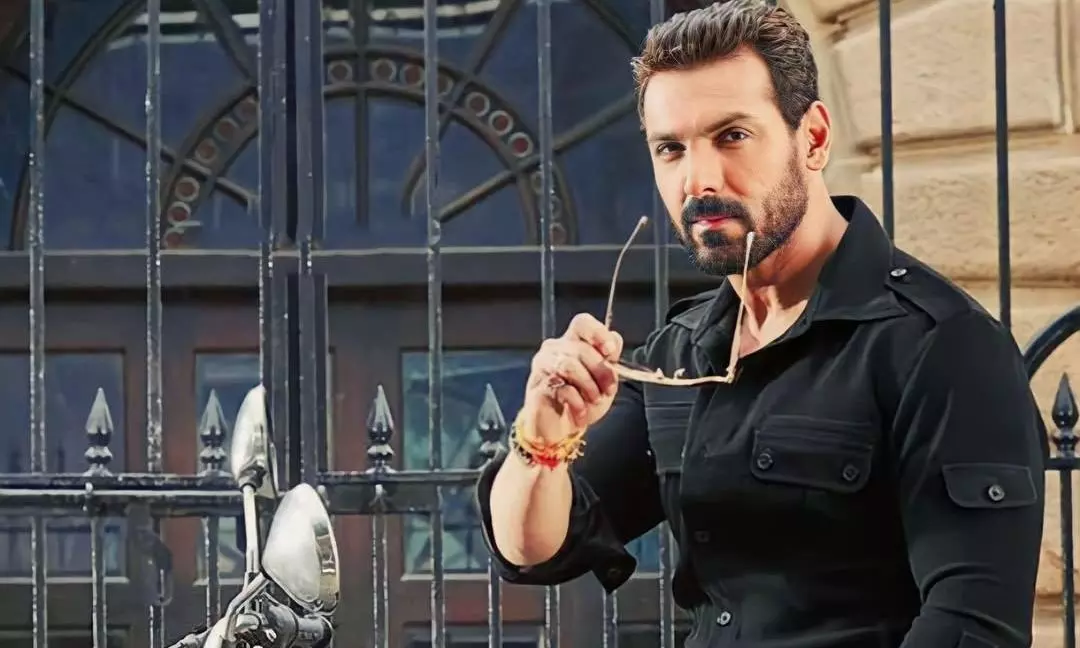
John Abraham (Image:DC)
John Abraham’s last outing, Diplomat, not only won audience appreciation but was also a critical success. The actor now returns with Tehran, a geopolitical thriller premiering on Zee5 on August 14, 2025. Here are excerpts from an exclusive conversation with the actor:
Q You’ve received both praise and criticism. Do you just focus on doing good work and different films?
I’ve received love and critique for my work. Diplomat was different—I worked on nuances, silences, and expressions. The real J.P. Singh even told me, “You played me better than me.” What more can an actor ask for? I just wish the film had reached a wider audience.
QYou’re known for controlled, restrained performances. How do you cultivate that?
It’s about recognizing your limitations and constantly refining your craft. I focus on performance, not monetary gains. I’m still learning and trying to do better with every role. I surround myself with honest people, not yes-men. My goal is to create a lasting legacy with each performance.
QWhat first drew you to ‘Tehran’?
This film is close to me emotionally— my mother is Iranian. As a child, I didn’t understand when she spoke Farsi, so I committed six months to learning it. I also had to learn Hebrew.
While the Iranian regime is questioned, the country has a rich cultural and artistic heritage. This film is India’s first international project of this scale, with actors from Iran, Ukraine, and the Netherlands. It was a beautiful experience—cinema truly unites people.
QYou often take up real-life stories and war films. What’s your process?
You can’t make a war film without understanding the subject. I study geopolitics extensively which deeply informs my work. These topics are sensitive and must be handled responsibly.
QHas producing films changed your perspective?
Producing taught me that success is unpredictable. But you can be smart with money, build strong teams, and focus on a great script. Audiences are very smart now — you can’t fool them.
QHave you received crossover film offers from the West?
I’ve had offers and been approached by agents. But I've consciously chosen not to go West. I've never had PR or wanted to flaunt international projects. I’m happy doing meaningful work here.
QTehran is releasing directly on OTT. How do you feel about that?
I’m a big-screen actor and would’ve loved a theatrical release. But given the film's sensitive Iran-Israel conflict, it was too explosive for theaters. I'm grateful to Zee5 for giving it a platform — otherwise, it may never have seen the light of day.
I’ve received love and critique for my work. Diplomat was different—I worked on nuances, silences, and expressions. The real J.P. Singh even told me, “You played me better than me.” What more can an actor ask for? I just wish the film had reached a wider audience.
QYou’re known for controlled, restrained performances. How do you cultivate that?
It’s about recognizing your limitations and constantly refining your craft. I focus on performance, not monetary gains. I’m still learning and trying to do better with every role. I surround myself with honest people, not yes-men. My goal is to create a lasting legacy with each performance.
QWhat first drew you to ‘Tehran’?
This film is close to me emotionally— my mother is Iranian. As a child, I didn’t understand when she spoke Farsi, so I committed six months to learning it. I also had to learn Hebrew.
While the Iranian regime is questioned, the country has a rich cultural and artistic heritage. This film is India’s first international project of this scale, with actors from Iran, Ukraine, and the Netherlands. It was a beautiful experience—cinema truly unites people.
QYou often take up real-life stories and war films. What’s your process?
You can’t make a war film without understanding the subject. I study geopolitics extensively which deeply informs my work. These topics are sensitive and must be handled responsibly.
QHas producing films changed your perspective?
Producing taught me that success is unpredictable. But you can be smart with money, build strong teams, and focus on a great script. Audiences are very smart now — you can’t fool them.
QHave you received crossover film offers from the West?
I’ve had offers and been approached by agents. But I've consciously chosen not to go West. I've never had PR or wanted to flaunt international projects. I’m happy doing meaningful work here.
QTehran is releasing directly on OTT. How do you feel about that?
I’m a big-screen actor and would’ve loved a theatrical release. But given the film's sensitive Iran-Israel conflict, it was too explosive for theaters. I'm grateful to Zee5 for giving it a platform — otherwise, it may never have seen the light of day.
( Source : Deccan Chronicle )

Next Story