Many healthy non-diabetic women are wearing continuous glucose monitors (CGM) to check sugar levels 24x7 and change diet patterns daily at odd hours
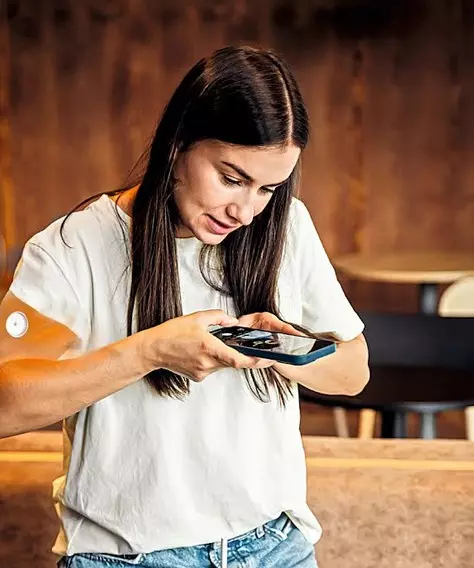
Once reserved for diabetics and hospital charts, glucose monitors have quietly crossed into the lifestyle space—and women are leading the charge. From wellness influencers in Hyderabad, Mumbai, Delhi, and Bengaluru to Pilates studios in Bandra and Brooklyn, continuous glucose monitors (CGMs) are now being worn not as medical devices, but as tools of self-optimisation. Welcome to the era of the Glucose Girls—a new wellness tribe obsessed with steady energy, fewer cravings, happier hormones, and avoiding the dreaded “spike.”
But beneath the clean graphs and pastel screenshots lies an uncomfortable question: when does bodily awareness turn into bodily surveillance?
Mass Appeal
The appeal of CGMs is understandable. In a world where women are constantly told their bodies are “too hormonal,” “too tired,” or “too unpredictable,” data feels empowering. CGMs promise clarity. Proof. Answers.
Yet what began as curiosity is fast becoming a form of self-policing.
On social media, glucose curves are no longer neutral data—they are value judgments.
Flat lines are celebrated. Spikes are shamed in full public view. Foods are labelled “good” or “bad” based on momentary biological responses rather than overall nourishment.
“Women are turning glucose readings into moral scores,” warns Dr Cannon D’Souza, nutritionist. “A spike is being treated like a personal failure, when in reality it’s a normal physiological response.”
The danger isn’t the technology—it’s the narrative being built around it.
Dr S Naik, a diabetologist from Mumbai-Pune, has warned healthy youngsters against the use of glucose monitoring devices and patches. Dr Naik says, “This health fad has gone too far.
Young healthy women are getting obsessed with their sugar levels after every meal. This is dangerous. It can lead to eating disorders, hormonal imbalance, and other health complications.”
Optimisation vs Obsession
Unlike crash diets of the past, the Glucose Girl trend presents itself as scientific and sane. No food groups are officially banned.
Dessert is “allowed,” just strategically timed. But this subtlety is exactly what makes it more insidious. For many women, CGMs introduce a new layer of anxiety around eating. Meals are no longer intuitive experiences but experiments. Hunger cues are overridden by graphs. Enjoyment is postponed in favour of optimisation.
“I still eat dessert,” says Aanya Shah, 29, marketing professional and CGM user. “I just don’t eat it alone. If I’m having cake, I’ll have it after dinner—not as a snack. The difference in how I feel is shocking.”
Proponents often frame CGMs as tools for hormone balance, especially for women dealing with PMS, PCOS, or fatigue. But experts caution against oversimplifying complex endocrine systems.
“Blood sugar is one piece of a very large puzzle,” explains Dr D’Souza. “Fixating on glucose alone can distract from sleep, stress, emotional health, and overall nutrition.”
Ironically, the stress of monitoring itself can raise cortisol—directly impacting blood sugar and hormones. The body, under constant scrutiny, responds defensively.
‘Anti-Spike’ Living
The language of the movement is telling. Spikes are villains. Stability is a virtue. Control is aspirational. But glucose spikes are not inherently harmful—especially in healthy individuals. They are part of normal metabolism, particularly after carbohydrate-rich meals, exercise, or emotional stress.
“Trying to eliminate every spike is biologically unrealistic,” says nutritionist Dr Michael Fernandes. “The goal of health is resilience, not flatness.”
By chasing perfect curves, women may unintentionally restrict food variety, under-eat carbs, or ignore hunger—
patterns disturbingly close to disordered eating, just dressed up as wellness.
Data Danger
CGMs provide numbers, not wisdom. They don’t account for menstrual cycles, illness, emotional stress, or sleep deprivation. A “safe” breakfast one
day may spike glucose the
next—leading users to distrust foods rather than understand variability.
“People forget that bodies are dynamic,” notes Manher Kaur, wellness consultant. “Instead of listening to themselves, they’re listening to a sensor.”
For some, the constant feedback loop becomes mentally taxing. Numbers linger long after meals. Anxiety replaces appetite. Eating becomes performative—even when no one is watching. There’s also the question of access. CGMs are expensive, often imported, and largely unnecessary for non-diabetic individuals. Yet the trend
frames them as essential—another entry ticket into ‘doing wellness right.’
“It creates a hierarchy,” says Kaur. “Those with data feel superior. Those without feel uninformed.” This risks turning health into a gated lifestyle rather than a universal right.
Body Project
Perhaps the most troubling aspect of the Glucose Girl movement is how seamlessly it fits into productivity culture. Stable energy isn’t just about feeling good—it’s about performing better. No crashes. No slumps. No softness. CGMs promise control in a world that fears messiness. But bodies are meant to fluctuate. They respond, adapt, spike, and recover.
The Glucose Girl trend insists it’s different from diet culture—and in many ways, it is. But the fixation on
numbers, optimisation, and control echoes old patterns with a new vocabulary.
“This is diet culture in lab-coat language,” says Kaur. “Less overt, more persuasive.” The danger isn’t using data—it’s outsourcing self-trust to it.
The Real Takeaway
Glucose monitors are powerful medical tools. Used responsibly, they can educate and inform. But when adopted without context, they risk turning wellness into another site of pressure—especially for women already navigating unrealistic expectations. Health isn’t about never spiking. It’s about resilience, recovery, and trust. Because the ultimate goal of wellness shouldn’t be control—it should be freedom.