Three-Parent Baby: The Future Of Reproduction!

Baby with 1 Dad, 2 Mums brings major breakthrough in hereditary disease prevention and infertility treatment, doctors shed light on the technique and how it prevents mitochondrial disorders
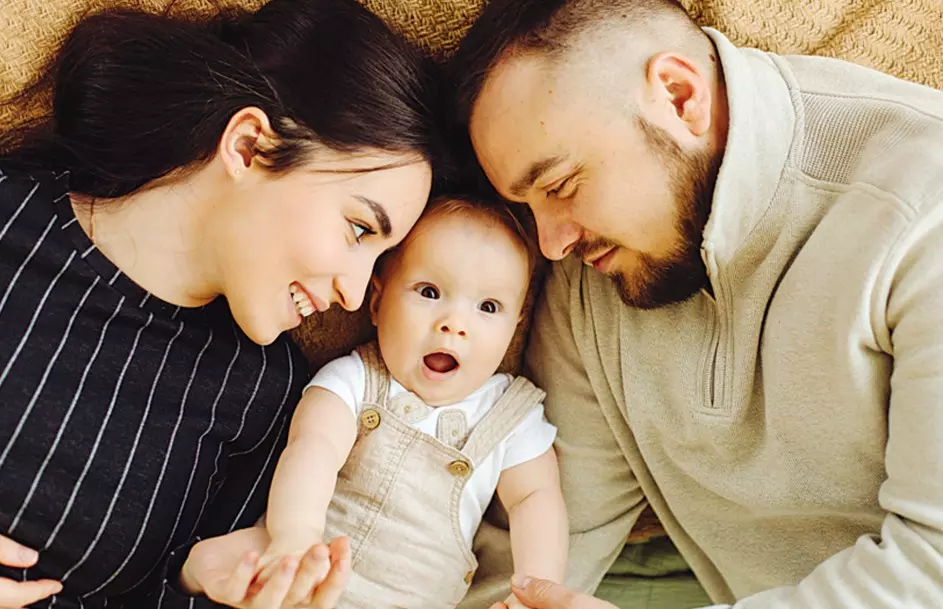
In a quiet revolution, the concept of three-parent babies seems to have moved from science fiction into the realms of medical reality. A healthy baby born to 1 Daddy and 2 Mommies! The official term is mitochondrial replacement therapy (MRT). It is an impressive and innovative IVF technique. It involves genetic material from three individuals-two women and one man. The goal: Create a single healthy embryo.
The Science Behind It
“Three-parent babies is not a new technique that was discovered way back in 2014 in the UK,” says Dr Harsh Sheth, Assistant Professor & Head of Advanced Genomic Techno-logies Division, FRIGE Institute of Human Genetics. The reason for this discovery wasn’t the search for newer avenues. It stemmed from the need of finding ways to prevent mitochondrial disorders from being passed on to offsprings.
Dr Harsh explains that it was in 2015 that eight babies were born via this unique IVF technique. What’s come to the forefront now is that a follow-up study on these eight babies confirmed them to be healthy and free from hereditary diseases.
Dr Harsh says, “The science behind the technique is simple, it all has to do with Mitochon-dria aka the powerhouse of cells.” Think of this giant organ (the Mitochondria) to be assigned the sole function of converting sugar into tiny energy packets. These energy packets are termed as ATP. The cell further derives its energy to perform all of its functions from the ATP.
Dr Harsh says, “The three-baby IVF technique is important so as to prevent mitochondrial diseases which usually happen when the Mitochondrial DNA carry mutations along with them.” In simple words, they aren’t as energy generating as otherwise. What's worse, is that these mutations could also lead to devastating inherited diseases such as Leigh Syndrome, MELAS and many more.
Mommy’s Mitochondria
“A baby typically gets DNA from two parents – the mother and father. But the mother’s egg also contains something called
the mitochondria,” explains
Dr. Jwal Banker, Consultant IVF specialist at Banker IVF & Women’s Hospital.
Dr. Jwal says that what the technique seeks to deal with is a woman’s faulty mitochondria which can otherwise pave the way for serious inherited diseases.
Dr Jwal explains, “Through this technique, what we do is take the egg, remove the damaged mitochondria and insert a healthy one from a donor egg, after which the father’s sperm is added.” However, point to be noted: the three-parent baby IVF technique isn’t recommended or necessary for all. Dr Jwal points out that this is only done for couples where the mother is a carrier of a mitochondrial disease and there is a high risk of that disease to be passed on to the child.
Gogineni Kishore Sai, a Genetic consultant & Counsellor says, “The biggest benefit of this technique is the potential to prevent certain life-threatening mitochondrial disorders.” Gogineni opines that for families with a history of these diseases, MRT may offer a way to have a child that is biologically related yet doesn’t necessarily inherit possible disorders.
Possible Loopholes
Just like any pioneering technique, mitochondrial replacement therapy (MRT) continues to navigate uncharted and new territory. Gogineni explains, “One concern is something called heteroplasmy, where a small amount of faulty mitochondrial DNA from the mother may still be carried over during the procedure.”
This presence of a defective mitochondria could, in theory, lead to long-term health issues-effects that may not manifest until later in life or in following generations. Good news being, data and studies so far show that most babies born through MRT have been healthy and show no immediate signs of mitochondrial defects.
Bundle Of Joys
• In 2015 eight babies were born via this unique IVF technique.
• It is now confirmed that all the eight babies are healthy and free from hereditary diseases.
• In 2016, a baby boy was born to Jordanian parents via MRT developed by Dr John Zhang at New Hope Fertility Centre, New York City.
• Following this, in 2017 clinical trials began in the UK.