At Hyderabad’s British Residency, Tarun Tahiliani marked three decades of design with a restrained, reflective showcase rooted in drape, memory and Indian dress
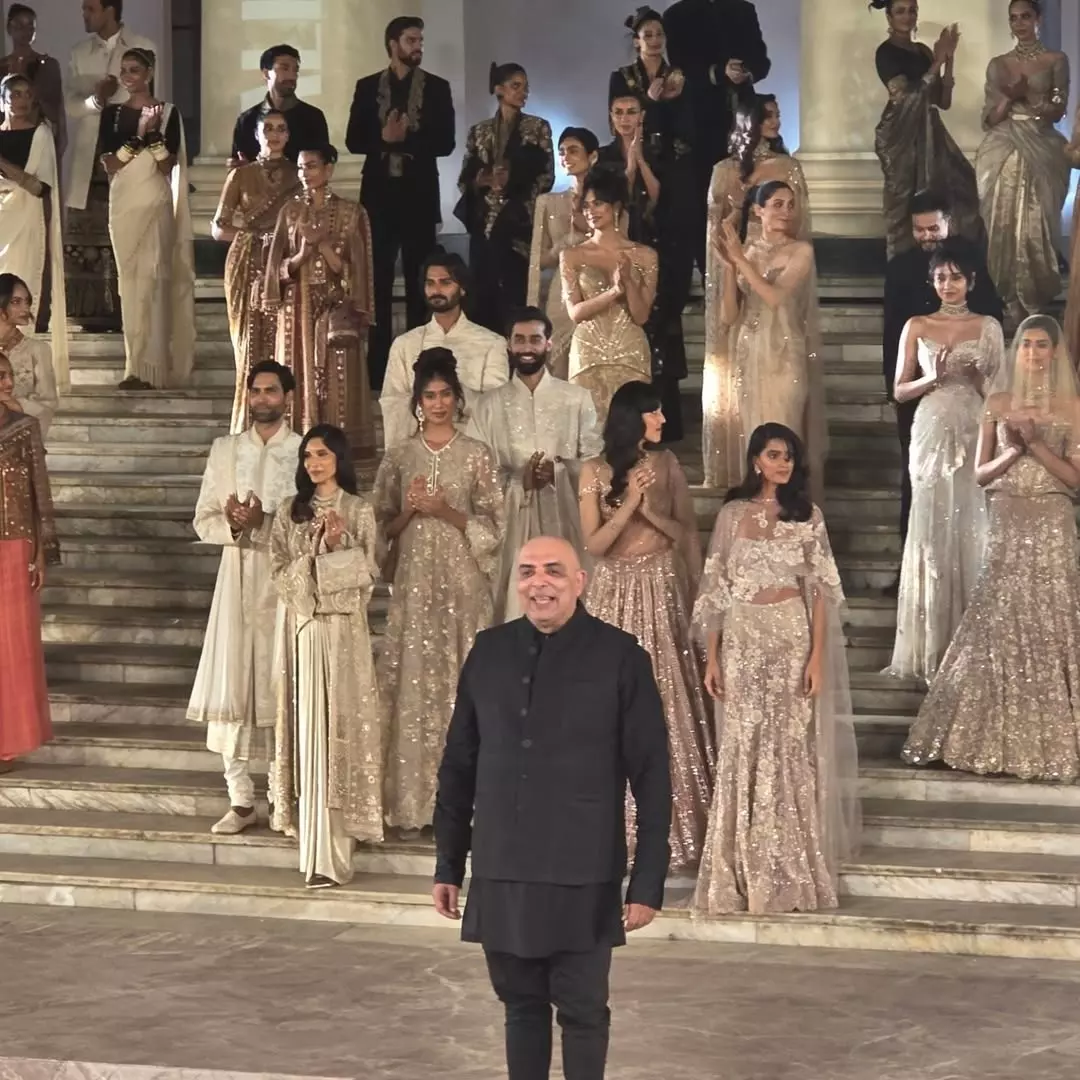
On a winter evening in Hyderabad, history and fashion folded into each other as Tarun Tahiliani marked three decades of his work at the British Residency. There were no celebrity showstoppers, no theatrical gimmicks demanding attention. Instead, what unfolded felt intimate, almost meditative, yet powerful reflection on how India dresses, remembers and moves forward.
Guests were welcomed by qawwali that set the tone, followed by folk dancers whose rhythms felt rooted in the soil. The evening made it clear that this was not just a runway show. It was a story. of fabric, of drape, of a country constantly absorbing influences while holding on to its soul.
As the lights softened and the models began to walk, the collection revealed itself in chapters. Each look seemed to travel through time, from pre-Mughal fluidity to the refinement of courtly India, from the impact of colonial tailoring to the many layered identities of modern life. Indian garments always have, allowing the wearer to define the form. There was restraint, elegance and an ease that came from deep understanding, not surface decoration.
The choice of venue felt deeply personal. Tahiliani has often spoken of growing up in a post-Partition India that admired the West while slowly drifting from its own traditions. As he travelled across the country—discovering handloom clusters and draping cultures—he began to see how modern India already was, long before the word modern arrived here.
The British Residency inside Koti women’s college campus, British in structure but Indian in spirit, mirrors that idea perfectly. Built through collaboration between cultures, it stands as a reminder that synthesis, not separation, has always shaped us. That philosophy ran through every detail of the evening. The garments carried Mughal softness alongside colonial structure. Drapes were reimagined for contemporary life without losing their original intelligence. Nothing felt nostalgic or costume-like. Everything felt relevant.
When Tahiliani finally stepped out, the standing ovation felt inevitable. Thirty years in, his vision remains clear. This was not a celebration of longevity alone, but of continuity. Of India as a textile civilisation. Of fashion as memory. And of a designer who never tried to invent India, only to understand it, and dress it with respect.

