From Litti Chokha to Champaran mutton, from bagara baingan to smoked pork-bamboo shoots, local bites are getting global gourmet bytes, writes Purnima Goswami Sharma
Every food morsel tells a story. And everybody is exploring India’s culinary landscape from farm to fork through regional cuisine. Every region has an incredible variety of local dishes with distinct flavours. The revival of Indian regional food and spices is reshaping the consumers' dining experience. In 2026 restaurants and cafes are likely to take dishes from the corners of the country to gourmet levels. Thanks to creative Indian chefs, regional food is also being showcased at a global platform.
Culinary Roots
Shaped by climate, culture and generations of heritage, these diverse food traditions together create a tapestry of tastes that continues to evolve while honouring time-tested roots. “Dishes like thukpa, dal baati churma, momos, avial, etc. have moved from home kitchens and street corners to restaurant menus and festive spreads. These foods offer comfort, and guests gravitate toward dishes that feel rooted and soul-satisfying. The food industry is bringing these regional favourites into focus. Government initiatives to promote traditional millets and regional food have revived interest in India’s indigenous culinary heritage. Eating local is sustainable and aligns with seasonal produce and regional lifestyles. Chef Ravinder Kumar, Executive Chef – Karma Lakelands Gurgaon.
Crafted Menus
Across India, restaurants are introducing cherished local dishes. “From Nagaland’s smoked pork with bamboo shoot and Kerala’s comforting avial to Punjab’s makki ki roti–sarson da saag and Bengal’s kosha mango, flavours limited to specific regions are now enjoyed everywhere. The growing presence of traditional cuisines reflects a rising consumer appetite for dishes prepared with native ingredients. As diners grow curious and discerning, India’s rich culinary heritage continues to flourish, bringing the nation’s diverse kitchens closer than ever, “says Chef Biplob Mitra, IHCL SeleQtions Goa.
Social Media Reach
Home tourism has reshaped regional meals into immersive cultural experiences. “Techniques such as dum pukht, the dhungar method, long slow cooking and hand-ground pastes reveal culinary wisdom that comes alive only in home kitchens. In such settings, meals take on deeper meaning. Sparking a resurgence of recipes, techniques, and regional flavours,” says Chef Reetu Uday Kugaji, Culinary Expert and Chef Consultant.
Foods once limited to rural regions are now celebrated across India while retaining their cultural depth and sense. “A Maharashtrian thali reflects balance, the Onam Sadya embodies Kerala’s sense of abundance, and Himachal Dham, prepared by community cooks, is about rituals. In Bihar, the earthen-pot flavours of Champaran mutton recall agrarian life, and in Gujarat, bajra rotla with garlic reflects seasonality and sustenance,” adds Reetu.
Social media has amplified this shift by carrying stories from banana leaf feasts, mud stoves and courtyard kitchens far beyond their regions. Regional restaurants and home-style eateries in cities are embracing these dishes, enabling diners to enjoy them. “From Nagaland’s smoked meats and bamboo shoot dishes, to the forest-inspired foods of Jharkhand and Chhattisgarh, the lotus stem of Kashmir regional flavours is now travelling far beyond their origins. Telangana’s gongura dishes, Andhra’s spicy coastal cooking, Kerala’s coconut-rich cuisine and Tamil Nadu’s traditional rice and millet dishes are visible on urban menus,” concludes Reetu.
Foods once confined to local settings are now enjoyed nationwide, and regional cuisines are no longer limited by geography.
The Taste Of India
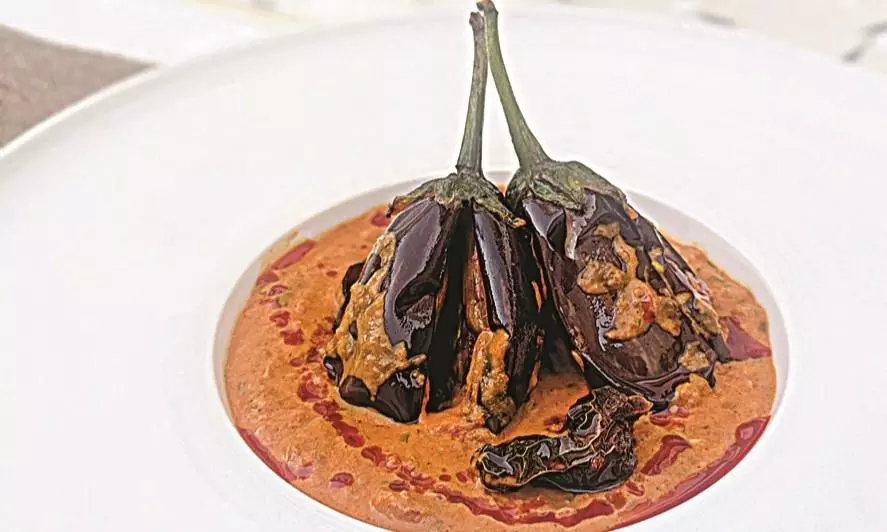
Bagara Baingan (Hyderabadi) (Chef Biplob Mitra, IHCL SeleQtions Goa)
Ingredients
• 250 g eggplants
• 2 tbsp peanuts
• 2 tbsp sesame seeds
• 2 tbsp poppy seeds
• 2 tbsp grated coconut
• 1 tbsp coriander powder
• 1 tbsp cumin powder
• 1 tbsp ginger, grated
• 2 green chillies, chopped
• 1 tsp mustard seeds
• 1 pinch asafoetida
• ½ tsp turmeric powder
• 1 tbsp tamarind pulp
• Salt to taste
• ¼ tsp red chilli powder
• ½ tsp jaggery
• Oil as required
Method
1. Make two deep incisions on the eggplants from the base towards the stem. Each eggplant should be quartered, but held together at the top. Fry the eggplants.
2. Dry roast the peanuts, sesame poppy seeds, and coconut. Then blend with 2 tablespoons of water.
3. In the pan, add 1 tablespoon of oil, mustard seeds, asafoetida, green chillies, ginger, onions, coriander powder, cumin, red chilli, turmeric, and salt. Add ½ cup of water and simmer for 2 minutes.
4. Add half of this to the ground paste in the pan, and the rest fill into the eggplants. Then cook eggplants in 2 cups of water for
15 minutes. Add tamarind pulp and jaggery, and make a thick gravy. Serve with steamed rice.
Garhwali Urad Ki Pakodi (Courtesy Reetu Uday Kugaji, Culinary Expert and Chef Consultant)
Ingredients
• Whole black urad – ½ cup
• Turmeric-1/4th tsp
• Carom seeds-1/2 tsp
• Ginger, chopped-1 inch piece
• Green Chillies, ground-1 tsp
• Garlic paste-1 tsp
• Cumin seeds roasted +ground -1/2 tsp
• Red chilli powder-1 tsp
• Turmeric powder-1/4 th tsp
• Asafoetida-1/4 th tsp
• Salt
• White and Black sesame seeds-2 tbsp
• Cumin seeds,
roasted-2 tbsp
• Mustard Oil
Method
1. Soak dal overnight in water with a little turmeric. Wash until the skin separates; discard the loosened skin. Grind the dal into a coarse mixture.
2. Mix in carom seeds, ginger, the ground chilli–garlic–cumin paste, red chilli, turmeric, asafoetida and salt.
3. Moisten your palm, place a portion of dal pithi on it, flatten and make a hole in the centre. Press sesame and cumin seeds onto the surface. Deep fry until crisp.
Litti Chokha (Courtesy Ravinder Kumar, Executive Chef – Karma Lakelands)
• Whole wheat flour – 2 cups
• Ghee – 2 tbsp
• Salt – to taste
• Water
Filling
• Sattu (roasted gram flour) – 1 cup
• Mustard oil – 2 tbsp
• Garlic – 1 tbsp, chopped
• Green chilli – 1 tsp, chopped
• Ginger – 1 tsp, grated
• Lemon juice – 1 tbsp
• Carom seeds – ½ tsp
• Pickle masala – 1 tsp
• Fresh coriander – 1 tbsp, chopped
• Salt
Baingan Chokha
• Brinjal – 1
• Tomato – 1
• Garlic – 4 cloves
• Mustard oil – 1 tbsp
• Green chilli – 1
• Fresh coriander – 1 tbsp
• Salt
• Lemon juice – 1 tsp
• Coriander – 1 tbsp
Baingan Chokha
Roast brinjal, tomato, and garlic until charred. Cool, peel, mash, and mix salt, green chilli, coriander, and mustard oil.
Method
1. Knead a dough of wheat flour, and add ghee to it.
2. Mix sattu with oil, garlic, ginger, green chilli, carom seeds, lemon juice, coriander,
pickle masala, and salt.
3. Divide the dough into balls, flatten each, add a spoonful of filling and seal the balls.
Roast the litti over charcoal. Brush with ghee.

