Finally, people have found a digital detox, book reading has become the favourite pastime in 2026
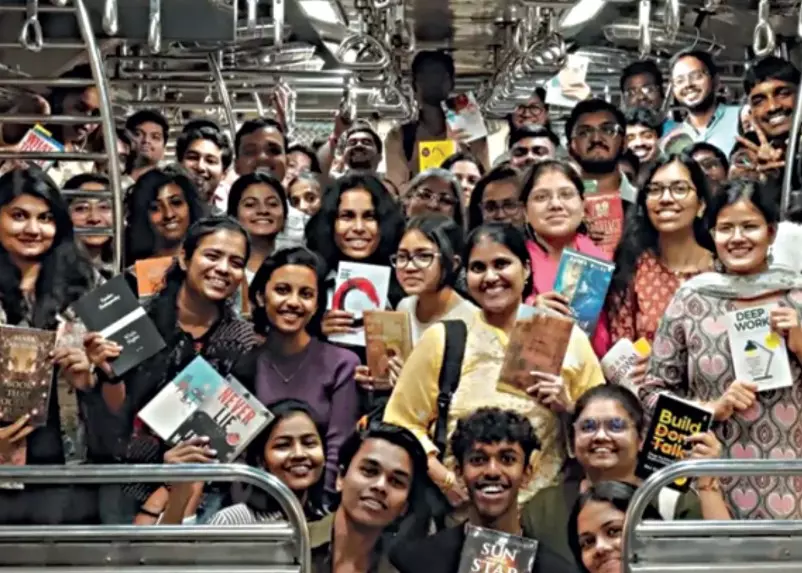
In the era of endless scrolling and 24x7 digital connectivity, youngsters have turned the “page” to rediscover the age-old joy of reading books. ‘Reading’ has become the hot new hobby of 2026.
Look around, and you will see a reader sitting quietly with a book amid the hustle and bustle of urban commuting. With metro and rail networks expanding in big and small cities like Mumbai, Delhi, Hyderabad, Bengaluru, Pune, Kochi, Agra, Kanpur, Lucknow, Jaipur, to name a few, travel time now offers commuters small pockets of free time. Many are choosing to fill those moments with books. Interestingly, you will find ‘bookworms’ not just on metros, trains and buses, but also at airports, parks and cafes. For most ‘digitally saturated’ Genzers, books are the best form of slow escapism, relaxation, and meaningful me-time. While reading a book, there are times when a reader feels that the author is speaking directly to him/ her. As Sonali Bendre Behl, a passionate bibliophile, puts it: “If you know, you know. And if you read, you feel it.”
A ‘Novel’ Idea
Worldwide, digital fatigue, as many studies claim, has played a vital role in people returning to reading books. Instead of “selfies”, people are returning to bookshelves. “There is renewed interest in reading because people have begun to notice the effects of digital fatigue and long-term doomscrolling,” says Shadab Zaveri, a lecturer and avid reader.
The quest for ‘slow’ mindful activities in fast-paced urban cities is becoming increasingly common. Amid hectic routines, people are looking for ways to ‘pause’ and engage in meaningful things. “Reading slows you down, cuts the noise and lets you exist without constant stimulation,” says Akshita Sharma, a bibliophile.
The Power Of Print
Many local libraries and bookstores have noticed an increase in footfalls. They report growing interest of readers in collecting classic titles, paperback editions, hardcovers and limited editions. It signals the wider return of the print culture. The trend of collecting physical copies points to a shift in reader behaviour, where personal significance matters more than the content. For readers, owning a book copy goes beyond the reading experience. It becomes a keepsake of memories, thoughts, moments, and emotions. Physical books are the “in thing” in 2026. “Collecting them feels personal. It’s like holding versions of who I was,” says Akshita.
The practice of turning pages, highlighting lines and scribbling personal reflections in physical books helps readers immerse more and build a stronger engagement with the texts. It’s like leaving parts of yourself on the pages. This renewed intimacy with the books is shaping a broader cultural shift.
Talk Around Books
More youngsters are joining neighbourhood book clubs, reading groups, and literary communities. Readers pick a book to read together and discuss it. Such discussions often enrich individual ideas, reflections and interpretations. Actor Sonali Bendre has been running a book club since 2017. Twinkle Khanna has established herself as a bestselling author. Saif Ali Khan, Deepika Padukone, and Alia Bhatt have repeatedly stressed the importance of reading books in their lives. They also occasionally share book recommendations with their audience.
Avipsa Majumdar, a psychologist, says, “Discussing a book with others deepens understanding by bringing multiple interpretations.” She further adds, “Psychologically, this process stimulates reflection and critical thinking. Readers understand not just characters better but also the perspective of fellow readers, making it intellectually rewarding.”
These communities are operating in multiple settings, including libraries, cafes, parks, gardens, promenades, terraces and local trains and metros. A collective reading experience that turns personal reading journeys into an opportunity to exchange thoughtful ideas.
The Lure Of Classics
Between new releases and pages of stories written centuries ago, readers are finding parallels and echoes of the present. There has been a resurgence in demand for classics like 1984 by George Orwell, Pride and Prejudice by Jane Austen, To Kill a Mockingbird by Harper Lee, The Great Gatsby by F. Scott Fitzgerald, Wuthering Heights by Emily Brontë, Crime and Punishment by Fyodor Dostoevsky, and Jane Eyre by Charlotte Brontë, among others.
The themes of power, ambition, identity and self-discovery tackled in these books remain strikingly relevant even today. “As long as we have humans experiencing emotions, we will have classic literature being relevant,” says Zaveri. Multiple works capture societal questions and human experiences of autonomy, rebellion, and control. “Classics manage to evoke emotions in all readers,” adds Zaveri. Perhaps the reason why young readers are turning towards classic literature even as new books flood the market.
Meaningful Engagement
For many, revisiting classics is about finding comfort and continuity in the present. While societies evolve, many human concerns remain universal. The settings and contexts differ, but the human emotions and struggles feel familiar. Majumdar says, “People are not just returning to reading for information. But for meaning, balance and a more intentional way of experiencing the world.”
Whether in solitude or urban commute, readers across India are reclaiming the culture of ‘reading.’ The ‘return of reading habit’ is perhaps a deeper reclaiming of personal space and a meaningful transformation ofone’s thought process.
Classic Attraction
• 1984 by George Orwell
• Pride and Prejudice by Jane Austen
• To Kill a Mockingbird by Harper Lee
• The Great Gatsby by F. Scott Fitzgerald
• Wuthering Heights by Emily Brontë
• Crime and Punishment by Fyodor Dostoevsky
• Jane Eyre by Charlotte Brontë

