If the idea of tying the knot or a committed relationship terrifies you, then you might have ‘gamophobia’, experts step in to dissect the many facets to it
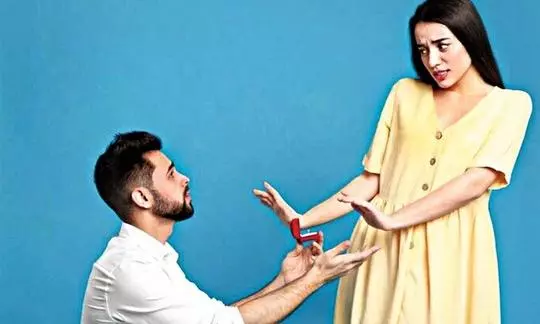
With changing relationship norms, rising divorce rates and a growing focus on individuality and self-fulfilment, there has been an unprecedented rise among young adults over fear of commitment, and marriage plans. Welcome to Gamophobia, a reality in today’s world, where people have commitment fears and are terrified at the idea of marriage.
While it’s normal to feel anxious about the uncertainties in a long-term commitment, someone with gamophobia will be overwhelmed and have long-lasting fears about the mere idea of marriage or a relationship.
Factors At Work
“Marriage today doesn’t represent only love; it’s a structure that individuals are no longer stepping into blindly,” says Ekta Khurana, Psychologist, Founder of the Mind Home from Delhi. However, the apprehensions experienced by men and women, both differ.
Ekta opines men usually fear fulfilling emotional expectations. Whereas for women, the fear is about losing themselves to fit into roles they never really agreed for. Ekta quips, “The fear, often is not about connection but of losing autonomy.”
Gamophobia can be cruel. It can spurt its head and crawl into other long-term friendships or relationships. For instance, individuals with gamophobia may find it difficult to maintain friendships or other platonic relationships. Further, it could also have an impact on social and professional dealings.
Past Trauma & Baggage
Many of these inhibitions don’t just develop overnight. Most of them are a culmination of the fine-tuning that’s fed into our systems for years. From watching parents have nasty, abusive fights to experiencing difficulties as a child in being expressive of one’s needs. Well, these reasons only get one scratching the surface.
Dr C. Veerender, Counsell-ing Psychologist and CEO of You and Me Counselling Centre from Hyderabad says, “It’s a pattern where the majority of children who have parents with abusive relationships or dysfunctional homes usually develop a phobia towards marriage.”
Dr Veerender opines that such individuals don’t easily trust the opposite sex due to the long-standing pain and abuse experienced at home from a young age. One may even think of this as a defence-mechanism where individuals lock themselves into cocoons to block other individuals from entering their safe and cozy space.
Dr Veerender says, “This has a lot to do with the relationship a child shares with his or her mother.” It’s simple: when a child feels cheated or betrayed by one’s mother, it’s beyond imagination to trust any other individual. What’s sad is that this sticks along even into adulthood.
Marriage (aka Role-fulfilment)
Individuals with gamophobia don’t believe in having multiple partners. They are as committed to their current partners. What they fear is role fulfilment. Something that is graciously and unabashedly bestowed by the institution of marriage.
Aparna Verma, Counselling Psychologist & Co-Founder of Manovriti from Bangalore terms this as the grey-area for most individuals to comprehend. She says, “Most people aren’t even afraid of commitment. They just don’t want to lose themselves in it.” Aparna opines that marriage as an institution offers a barrage of things. From varied social roles, to fulfilling family expectations or the brunt of legal bindings to the never-ending pressure of ‘fitting-in.’ She shares experiences where she has constantly heard couples tell her that they’re happy being committed, and that they don’t want to spoil what they have by getting married.
She says, “These questions represent fear, where you fear role engulfment and not love.”
Role engulfment is a psychological term that describes losing your identity to meet traditional roles like that of an ‘ideal husband’ or a ‘good wife’. The problem lies in the unspoken expectations, gendered exhaustion or emotional imbalance. People choose to walk away from such offerings. However, not all individuals experience gamophobia the same way. Aparna says, “Gen Z’s and Millennials have grown up in a more individualistic, globalized culture where autonomy is deeply cherished.”
Factors at Play
In a comparative society driven by norms set by Instagram and social media, people develop a scarcity mindset when it comes to choosing a partner. With questions such as ‘What if their status affects mine? Or What if people judge me because they don’t earn too well? And the list goes on. Bitter truth: Financial and social compatibility matters. Aparna explains, “It’s not just about how much one earns, but how people think and approach money.” Ekta opines that for women, financial stability is equivalent to emotional safety. She says, “Women for a long time have seen how financial dependence has been used as a quiet form of control.” However, today with women being independent. They are ok being givers, but refuse to be chewed off their financial standing and independence.
Ekta opines it isn’t that individuals today have become materialistic. They just have understood that money translates into forms of power and command.
Newer Forms of Love
It’s time to broaden one’s understanding of healthy relationships. Perhaps, even hit the brakes on nudging individuals into marriage. Aparna quips, “The idea that marriage is the ultimate form of love and fulfilment is deeply rooted in heteronormative, patriarchal narratives.”
Maybe it’s for the better that this changes. All in all, the shift is clear. The difference, evident. Earlier generations viewed marriage as a necessity. Today, individuals see it as a choice. Something they choose for themselves unapologetically!

