The Emotional Mess of Second Lead Syndrome

In reel life or real life, many women apparently fall for the ‘bad boy’ rather than the ‘good boy’, but why is it that the best man never gets the girl…
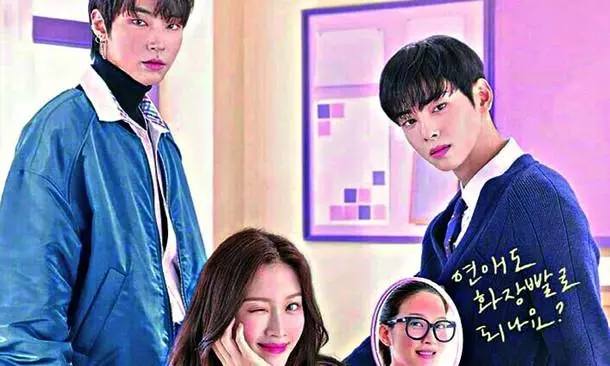
In the glittery world of Asian dramas — particularly Korean, Chinese, and Japanese series — love isn’t always fair. If you’ve ever screamed at your screen because the sweet, supportive second lead didn’t end up with the heroine, you’ve fallen victim to a heartbreak phenomenon: Second Lead Syndrome (SLS). Whether it is reel life or real life, women apparently find the ‘bad boy’ more attractive than the ‘good boy.’
This recurring trope sees the emotionally intelligent, kind-hearted man, who bakes cakes for the heroine and saves her from traffic, lose out to the brooding, emotionally unavailable main lead who probably insulted her in episode one. Fans sob, X erupts, and the second lead walks away — single but somehow still smiling.
Heartthrobs & Heartaches
Tara Singh (27), a K-drama fan laments, “I’ve never recovered from Start-Up and True Beauty. Tara’s heartache echoes the views of thousands of viewers worldwide who feel personally wounded by these fictional heartbreaks.
But the question remains: why does the best man never get the girl? According to relationship coach Mina Rao, this trope taps into deeper societal wiring. “In storytelling, and sometimes in real life, people are drawn to emotional transformation,” she explains. “The main lead often represents a ‘fixer-upper.’ The audience, and often the heroine, wants to believe that love can change someone.”
Second leads, on the other hand, come prepackaged with empathy and maturity — great in theory, but apparently too stable to generate the same emotional drama.
In the famous Korean drama (K-drama) series, Boys Over Flowers, Ji-hoo is the violin-playing guardian angel while Jun-pyo literally has a goon squad and a temper tantrum. But, guess who wins the girl? Clue: It’s not the guy with the instrument. “Second Lead Syndrome reflects the emotional labor women are often expected to perform,” adds Anurag Bhatt, a relationship strategist. “There’s this subconscious allure in ‘taming’ the main lead. The second lead already respects and understands her — where’s the tension? The chase? The growth arc?”
Bhatt calls it “the emotional lottery ticket fallacy”—viewers and heroines alike gamble on the idea that a cold, aloof man will eventually become warm and tender because of their love.
Still, the emotional toll is real. Fans experience genuine grief when their preferred match doesn’t materialize. Reddit threads with titles like “I’ll never forgive the writer of Cheese in the Trap” or “Why does the good guy always finish single?” garner thousands of comments.
Some writers try to throw fans a bone. Second leads often get their own moment of silent dignity — a wistful smile in the rain, or a whispered “Be happy” as they walk away. Cue the sad violin.
Others, like in the K-TV series, Reply 1988, turn the trope into a psychological end-urance test, dragging audiences through emotional limbo only to crown the least-expected winner. “Writers know exactly what they’re doing,” Mina laughs. “They want your tears. Second Lead Syndrome is a calculated emotional strategy.”
Hope for second leads
A recent shift in storytelling is giving rise to “second lead justice.” Some dramas (Hometown Cha-Cha-Cha, Strong Woman Do Bong Soon) break the mould by featuring emotionally intelligent male leads from the start. Meanwhile, new webtoons and Chinese dramas (aka C-dramas) are even casting second leads as the “main” love interests in spin-offs — righting the fictional wrongs, one soft-boy romance at a time. However, regardless of the sentiment when the second lead in the Korean TV show, Love Alarm Season 2 got the girl, the fans showed no mercy. Fans were disappointed towards the ending and the series. Fans, too, are becoming more vocal in their demand for better relationship dynamics in the media. “I want my daughters to know that kindness isn’t boring,” says Mina. “Real love looks more like the second lead — not the guy who tells you you’re annoying and calls it flirting.”
So, the next time you’re binge-watching a K-drama and find yourself inexplicably sobbing over the cardigan-wearing second lead, remember: you're not alone. You’re part of a global emotional resistance — one that just wants the nice guy to win, For Once! Until then, stock up on tissues, and maybe skip that final episode.
