The Aravallis Face an ‘Uphill Battle’

Activists want the Aravallis to be preserved and protected, not turned into a hilly-billy minefield for mining mafia and land sharks
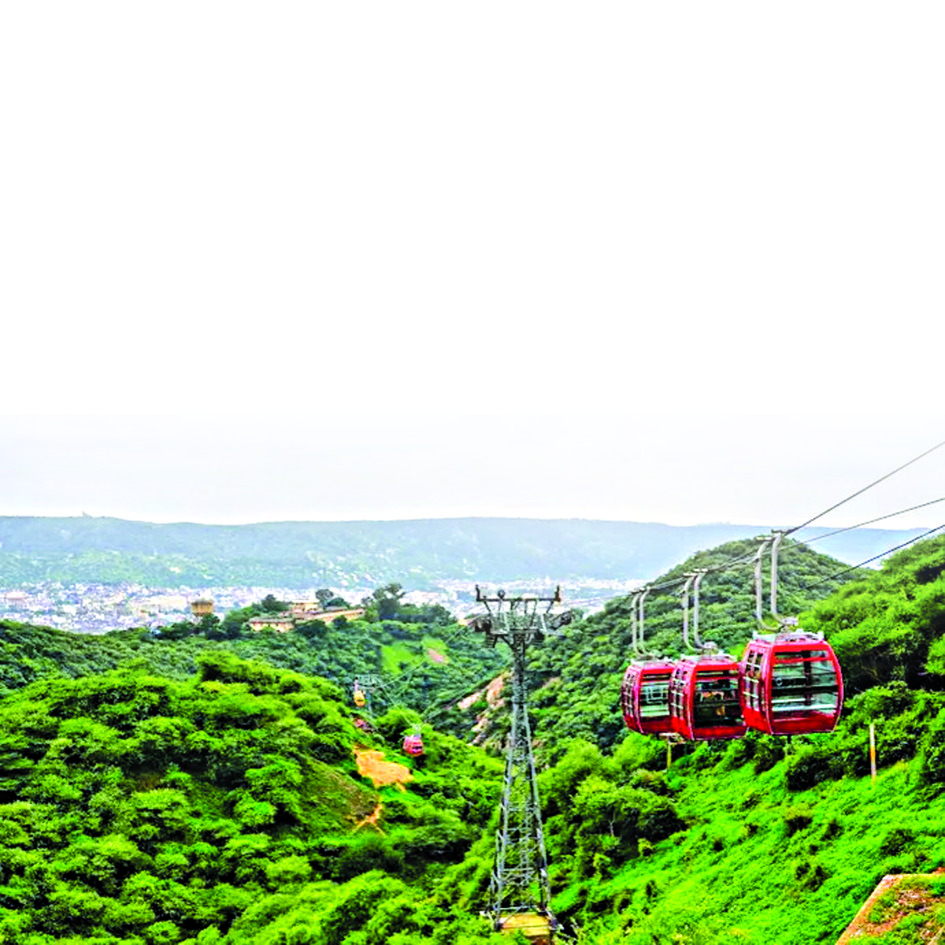
Even as the Supreme Court on Monday stayed its own order from last month that accepted a revised definition of the Aravalli Hills and mountain range, activists, environmentalists, and scientists are still worried about the future of the fragile ecosystem in the Aravallis. A vacation bench led by Chief Justice Surya Kant ordered the formation of a new committee to study issues that need to be examined, or re-examined, in terms of an updated definition of the mountain range.
In November 2025, the SC had accepted a uniform legal definition of what constitutes the Aravalli Hills and Aravalli Range on the recommendation of a committee led by the Environment Ministry. Under this definition, an “Aravalli Hill” is a landform with an elevation of at least 100 metres above its local surrounding terrain and an “Aravalli Range” is a cluster of two or more such hills within 500 metres of each other. To geologists and green activists, it was an arbitrary guillotine. By defining the range through height rather than geological heritage, the court had effectively “erased” thousands of hills, stripping them of legal protection.
Vikrant Tongad, an environmentalist who grew up in Greater Noida in the 1990s, had watched a fertile ‘command area’ — fed by the ancient lifeblood of the Ganga Canal, slowly vanish. “Because we have to turn it into a concrete jungle, we don’t have any restrictions or objections,” he notes. “We believe that there should be some balance with nature.” Today, that same pattern of development has moved toward the ancient Aravalli Range. These hills serve as the final green wall protecting the National Capital Region (NCR) from the encroaching sands of the Thar Desert. Yet, a recent SC ruling has introduced a clinical, mathematical definition that critics say is a “suicide note” for the region’s ecology.
The Arithmetic Of Destruction
The math is grim. According to an internal assessment by the Forest Survey of India (FSI), of the 12,081 hills in Rajasthan, only 1,048 are 100 meters or higher. Under the new definition, over 11,000 hills could be legally reclassified as “not Aravallis.” “If this definition gets implemented, we will lose 99% in Rajasthan and 90% in Haryana,” warns Jyoti Raghavan, a founder-member of the Aravalli Bachao Citizen’s Movement. “Only 1,048 hills qualify. It would give a loophole to all the mining mafia and the builder mafia to grab the Aravallis.”
After public uproar, the Centre directed the states to impose a complete ban on granting new mining leases in the Aravallis. The SC has now issued notice to the federal government and four concerned states – Delhi, Haryana, Rajasthan and Gujarat – and set January 21 as the next date of hearing.
Puncturing the Aquifer
Beyond the visible loss of hills, the survival of the region's water security is at stake. The Aravallis are a massive groundwater recharge zone, where natural fissures allow monsoon rains to seep into underground aquifers. “The Aravallis are very critical water recharge zones,” Raghavan explains. “The water from Gurgaon already comes under the over-extracted category. In the last few years, it has gone from 40 feet to some 1,500 feet. We are staring at total collapse.”
Tongad agrees that the damage begins with urbanisation and deep construction. “The deeper you go, 2-3 floors below the ground, you will damage the aquifer,” Tongad says. People have been misusing groundwater for domestic and commercial purposes, like car parking.
Fragmenting The Wild
For the wildlife that calls these hills home — leopards, striped hyenas, and snakes – the 100-meter rule is a map of fragmentation. Animals do not recognise mathematical definitions of hills. “The conflict will rise,” says Raghavan, who recently rescued four snakes in a span of three weeks. “We are taking away their homes. They wander off into the cities... and then we do this halla-gulla that a leopard has come. Where will they go, the poor creatures?”
Tongad warns that this fragmentation will accelerate the crisis. “Leopards usually do not care about state borders,” he notes. “But if we fragment the Aravallis with mines, then we are basically fragmenting the corridors of India's wildlife. Leopards are seen in Bhatti Mines in Delhi. They come from the beaches of Travelgarh. If you disperse the corridor, you increase the man-animal conflict.”
Erasing Pre-History
There is also the crucial archaeological aspect to the story. The Aravallis contain rock art and stone-tool ‘factories’ that predate the Indus Valley Civilization.
“There is old rock art evidence in Gurgaon, Aravalli. No one is talking about it,” says Tongad. “The oldest in the world... even before the Harappan civilization. What is your plan to save it? There is no mention of it in the SC order.” He also notes the cultural loss to the legacy of Maharana Pratap, who roamed in these mountains.
Politics of "Sustainable" Mining
The government’s rush to redefine the range is partially driven by a desire to make mining “sustainable.” However, those on the front lines see this as a linguistic trick. “There is no such thing called sustainable mining because mining, the word in itself, is destructive,” Raghavan asserts. She points out the absurdity of the new rule: “Today the Aravallis, and if this gets through, tomorrow they would want to define the Himalayas. Where will it stop?”
Tongad suggests that the upcoming Management Plan for Sustainable Mining (MPMS) will be the moment of truth. “After MPMS is made, milk will become water (doodh ka doodh, paani ka paani),” he says, using the Hindi idiom for the ultimate clarification. “How much area will be given for mining? How much area will be protected? All this will be cleared.”
The Villains And Apathy
While it is easy to blame the “mining mafia,” activists say the real issue is consumer demand and public indifference. “We are all culprits,” Raghavan admits. “I’m driving a car —where does the fuel come from? Even if I switch to an electric vehicle, where will the lithium come from? It comes from forests. Mining happens because we demand it.”
Raghavan is troubled by the public’s misplaced priorities, but says the movement is gaining momentum despite legal setbacks. Protesters recently formed a human chain outside a local minister’s residence, drawing media attention. Tongad adds, “People are beginning to understand the environment. Some may call it an illusion, but the desire to protect this land shows we care—and that’s a good sign for any country.”
The Aravallis have survived two billion years of volcanic shifts but may not withstand a legal definition that says a hill isn’t a hill unless it is 100 metres tall. As Raghavan warns, this isn’t just about losing land—it’s about losing the lungs and water that sustain North India.
