The ‘All-Time High’ Monster Munchies

From hash brownies, weed gummies, bhang barfis, vijaya vatis to mewa modak vati and drunkin doughnuts, these party poppers are blurring the line between desserts and recreational drugs
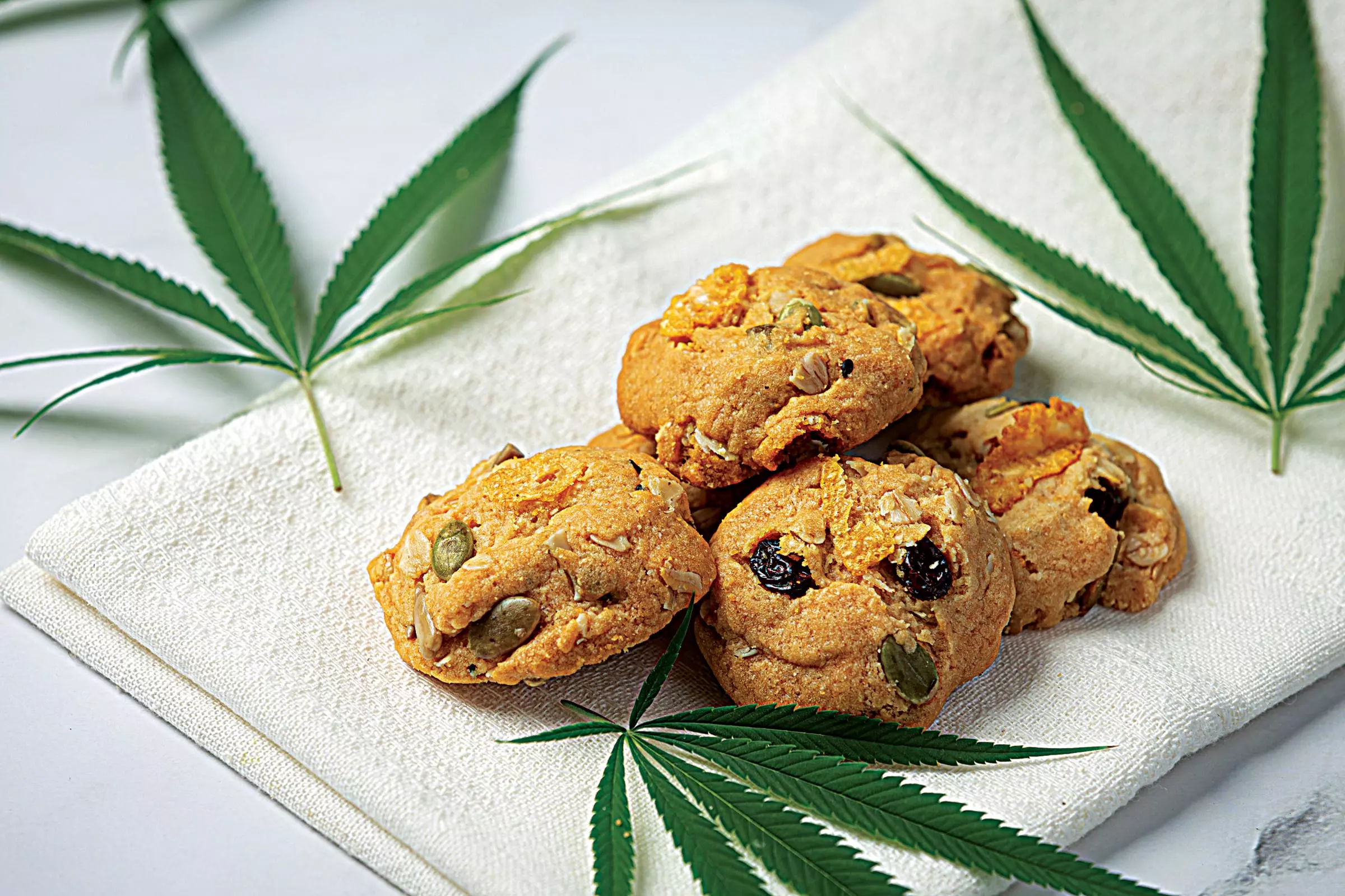
A chocolate brownie, cookie or a barfi rarely raises suspicion at a party. But when it contains a bit of hashish and weed, the familiar dessert can carry consequences far beyond an evening treat.
In India, where hashish is prohibited under the Narcotic Drugs and Psychotropic Substances (NDPS) Act, 1985, hash brownies raise concerns about both the law and the health risks associated with consuming cannabis in an unfamiliar form. “People can mistake the familiar appearance of a brownie for a sign that it is harmless. The important distinction is that the substance inside can have psychoactive effects, and its potency may not be obvious to the person consuming it,” says Dr. Yash Utnekar, an addiction specialist.
High In Disguise
Yet the curiosity surrounding cannabis edibles lies partly in their appearance. Unlike substances that are immediately recognisable as drugs, brownies, cookies, toffees and barfi bars look like ordinary desserts. Their taste may not reveal what they contain, and their effects may take time to emerge. For inexperienced users, this gap between appearance and reality can make an apparently casual experiment unpredictable.
Cannabis edibles are food products infused with ca-nnabis compounds, including tetrahydrocannabinol (THC), the principal psychoactive component responsible for the high. Hashish, commonly called hash, is a concentrated cannabis resin that can be incorporated into baked goods.
“For some young adults, the appeal of edibles may lie in curiosity, convenience or the perception that consuming them is less
conspicuous than smoking cannabis. But the absence of smoke does not mean the absence of risk,” says Dr Utnekar.
Homemade preparations can be particularly difficult to assess because the amount of THC may be unknown or unevenly distributed. Consequently, the effects can vary considerably, even among people consuming portions from the same batch.
Candy Crash Course
One of the biggest risks associated with cannabis edibles is the delay between consumption and the onset of effects. According to the US Centers for Disease Control and Prevention (CDC), the effects can take between 30 minutes and two hours to become noticeable and may last longer than expected. “By the time the first portion begins to take effect, the additional consumption can intensify the experience,” says a Mumbai-based Bollywood scriptwriter on the condition of anonymity.
This delay can create a false sense of reassurance. Someone who feels no immediate change may assume the brownie has had little effect and consume more.
“The delayed onset is one of the most important things people need to understand about edibles. They may not feel anything initially and mistakenly conclude that the product is weak. When the effects eventually emerge, they can be much stronger than anticipated,” explains Dr. Utnekar.
Possible reactions include dizziness, nausea, a rapid heartbeat, anxiety, panic, confusion and paranoia. The intensity can depend on the product's potency, the quantity consumed, an individual’s previous experience and whether alcohol or other substances have also been used.
New Party Poppers
Social settings can make risk assessment even more difficult. Curiosity, peer pressure and the desire to fit in may encourage young adults to experiment without knowing what a product contains or how it might affect them.
The casual framing of ‘hash brownies’, ‘weed barfi’, ‘banta chocolate’ and ‘cool cookies’ is significant. When a psychoactive substance is presented as a party snack, the distinction between eating a dessert and consuming a drug can become blurred. The novelty of the experience may take precedence over questions about potency, dosage or possible adverse reactions.
“At a party, people can be tempted to try something simply because everyone else seems comfortable with it. But you may not know what is in the brownie or how it will affect you. Just because somebody else appears fine does not mean you will have the same experience,” says Sahil Ahuja (33), a young adult familiar with conversations around cannabis edibles.
There is also a question of consent. Food containing cannabis should never be offered to someone without their knowledge. A person who believes they are eating an ordinary brownie cannot make an informed decision about consuming a psychoactive substance.
Awareness Matters
Awareness begins with recognising that edibles are not interchangeable with ordinary baked goods. Their effects can be delayed, prolonged and difficult to predict, particularly when the amount of THC is unknown.
The conversation around ‘hash brownies, magic mushrooms, barfi bars, drunkin doughnuts’ need to move beyond their novelty and perceived convenience. Curiosity may explain why some young adults experiment with cannabis edibles, but it does not eliminate the risks associated with them.
A brownie may look like an innocent addition to a party table. Yet its appearance reveals little about its contents, its potency or the experience it may trigger. Understanding that distinction is essential to making informed choices about what goes on the plate.
Beyond the ‘bad trip’ hangover
The risks extend beyond an uncomfortable evening. Cannabis can impair attention, memory, coordination and reaction time, making driving or operating machinery dangerous. Combining cannabis with alcohol or other drugs can increase impairment.
Frequent cannabis use can also lead to cannabis use disorder, in which a person struggles to control consumption despite negative consequences. Cannabis use has also been associated with anxiety and paranoia, although individual responses differ and not everyone experiences the same effects.
“Cannabis does not affect everyone in the same way.
A person may experience anxiety or panic instead of the relaxation they expected. It is important to recognise that an edible can have significant psychological effects, particularly when its strength is unknown,” says Dr. Stuti P, Mental Health Professional.
Anyone experiencing severe confusion, extreme agitation, difficulty breathing, repeated vomiting or reduced consciousness after consuming a suspected cannabis edible should receive urgent medical attention. They should not be left alone or allowed to drive.
The Sweet Scare
Some popular intoxicating desserts served at underground ‘pot luck’ parties include mewa modak vati, weed gummies, munakka tablets, bhang goli/toffee, ganja chocolates, and vijaya vati to name a few.
Stuff You Should Know
• 3.1 Crore individuals in India use cannabis products; about 25 lakh suffer from cannabis dependence. (Nasha Mukt Bharat Abhiyan)
• Bhang: Made mainly from cannabis leaves. Allowed under certain rules in some states.
• Charas/Hash: Made from cannabis resin. Prohibited under India's NDPS Act.
• Ganja: Made from the flowering tops of the cannabis plant. Prohibited under India's NDPS Act.
People can mistake the familiar appearance of a brownie for a sign that it is harmless.”
— Dr. Yash Utnekar, Addiction Specialist
At a party, people can be tempted to try something simply because everyone else seems comfortable with it.”
— Sahil Ahuja, Young Adult
Cannabis does not affect everyone in the same way. A person may experience
anxiety or panic instead of the relaxation they expected.”
— Dr. Stuti P, Mental Health Professional