Amid mental health concerns, many parents and governments are imposing midnight social media ban on teenagers
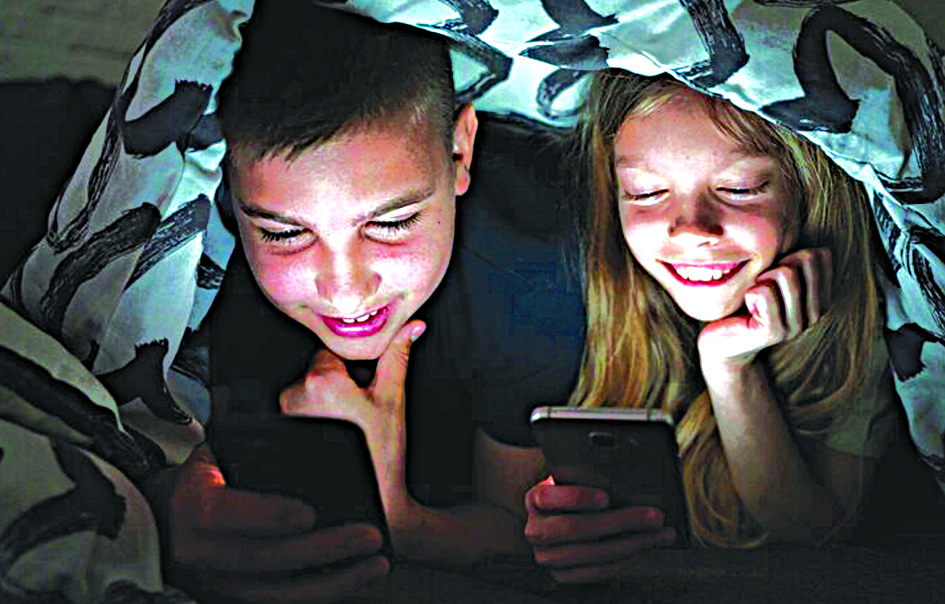
The endless cycle of scrolling through Insta-gram, YouTube and Face-book may soon face a legal pause for millions of teenagers. As concerns over poor sleep, declining academic performance and worsening mental health continue to mount, several countries have begun introducing midnight social media curfews for young teenage users. Australia, the United Kingdom and France have already taken steps to regulate late-night access to social media platforms for minors, and India could soon follow suit with a similar Bill reportedly under consideration.
The proposed legislation aims to restrict teenagers from accessing social media during late-night hours, encouraging healthier sleep routines and reducing excessive screen time. Policymakers argue that the move is designed to address growing evidence linking prolonged social media use to anxiety, stress, reduced concentration and behavioural issues among adolescents.
Parents Welcome Digi Ban
For many parents, managing teenagers glued to their smartphones has become an everyday struggle. Families often report late-night arguments over screen time, with many children staying awake well past midnight despite school the next morning. “I've tried everything — from taking away the phone to setting Wi-Fi timers — but nothing seems to work, ” says Priya Sharma, a mother of two teenagers. “A government-backed curfew would at least give parents some support. It's becoming impossible to compete with social media algorithms.”
Rohit Nair, another parent, believes the issue extends beyond discipline. “My son wakes up tired every morning because he's watching videos until 2 a.m. It's affecting his grades and even his mood at home. A midnight restriction could help families restore healthier routines.”
Experts View On Curfews
Mental health professionals believe that limiting late-night access to social media could improve sleep quality and emotional well-being, provided the restrictions are accompanied by parental guidance and digital education. Dr. Deepika Sharma, Clinical Psychologist at Asian Hospital, says, “Midnight social media curfews can potentially benefit teenagers by reducing late-night screen exposure, protecting sleep, and creating a healthier boundary between online activity and rest. Adequate sleep is closely linked to emotional regulation, attention, memory and academic performance. However, a curfew by itself is unlikely to solve the broader problem of problematic social media use.”
If restrictions are imposed without communication, trust and parental guidance, some teenagers may simply shift their online activity to hidden or less supervised platforms. The most effective approach is therefore a balanced one that combines reasonable digital boundaries with open conversations, parental involvement and education about healthy technology use. The focus should not be only on restricting access, but on helping adolescents develop the ability to use digital platforms responsibly.
Child development specialist Meera Kumar echoes similar concerns, saying that while digital boundaries are important, adolescents also need to develop self-control. “Technology isn't going away. The long-term goal should be teaching teenagers how to make healthy choices online rather than relying solely on restrictions.”
Teens Divided Over Digi Ban
Not all teenagers are convinced the proposed curfew is the right solution. Many argue that responsible users should not be penalised because of excessive behaviour by others. “I use social media to chat with friends after finishing my homework,” says Aarav Singh (16). “A complete ban after midnight feels unfair. Instead of blocking everyone, schools and parents should teach us how to manage our screen time.”
Others, however, admit that staying offline is harder than it sounds. Several students acknowledge spending hours scrolling through short videos without realising how much time has passed, often sacrificing sleep before examinations.
A Turning Point
India is home to one of the world's largest populations of young internet users, making any social media regulation particularly significant. If the proposed Bill becomes law, technology companies may be required to introduce age verification systems and automatically restrict access for teenage accounts during designated overnight hours.
Supporters believe such measures could improve students' productivity, classroom performance and overall mental health, while critics caution that enforcement challenges and privacy concerns will need to be carefully addressed. As smartphones become increasingly central to teenage life, the debate has shifted from whether social media affects young minds to how governments, families and technology companies should respond. Whether India adopts a midnight social media curfew or chooses an alternative regulatory approach, one thing is becoming increasingly clear: balancing digital freedom with the well-being of young users has emerged as one of the defining policy challenges of the digital age.
No Net Kids!
• Australia, the UK and France have already taken steps to regulate late-night access to social media platforms for minors.
• In December 2026, Australia became the first country in the world to ban children under 16 from social media.
• The Indian government is working on a separate law to regulate children's use of social media platforms depending on their age. The restrictions are likely to be imposed on different age groups (8-12 years, 12-16 years and 16-18 years)
• There is growing concern over the negative impact of social media on children’s mental health, safety and academic performance.