In On Through and Around, textiles are reimagined as living stories — carriers of memory, space, and time
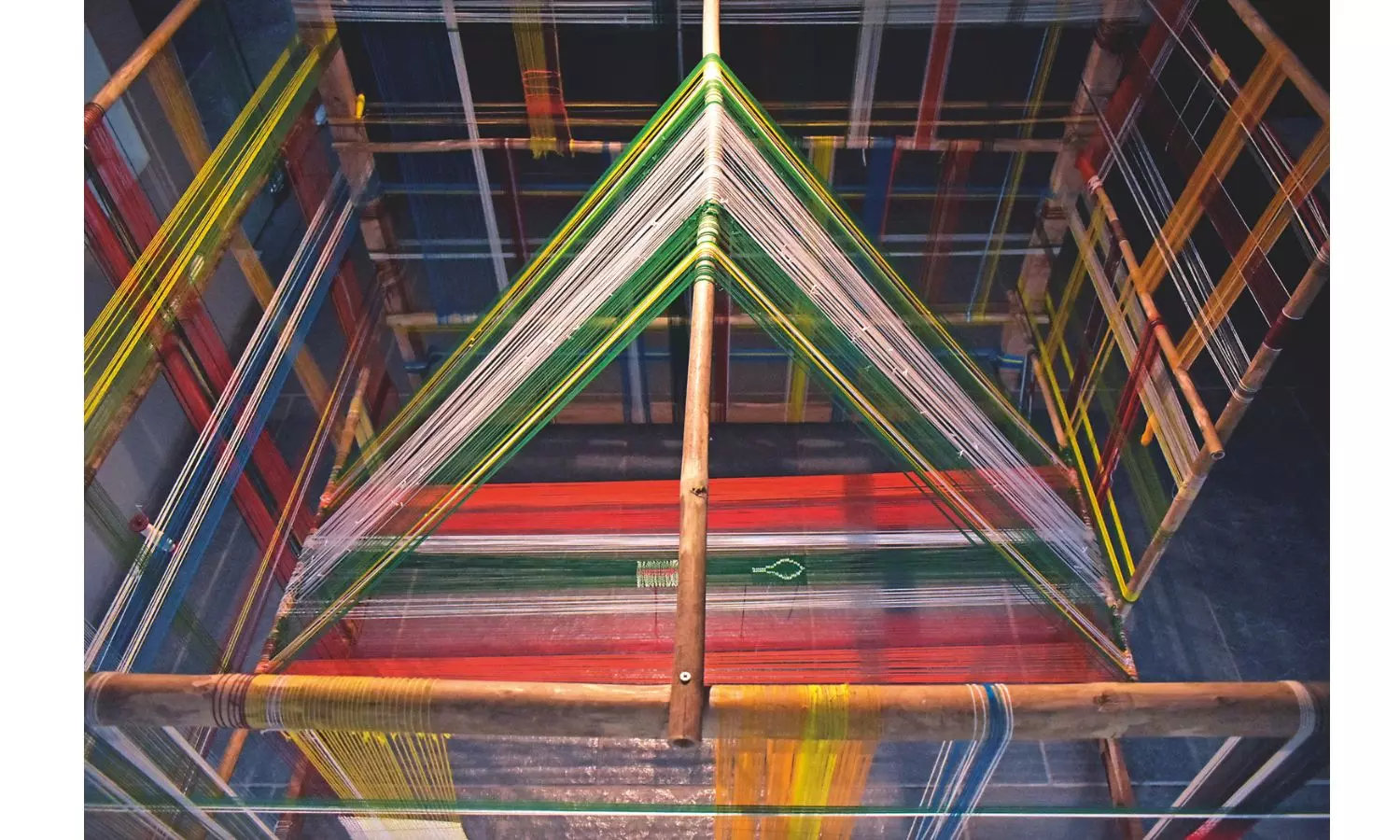
A replica of a loom swathed in stunning shades of red, green, blue, and yellow threads from Assam greets the visitor at the very beginning of the exhibition In On Through and Around at Dhi Contemporary gallery.
Painstakingly installed on-site by artist Dwimu Baro over three months, it is just the beginning of this immersive experience around art and space.
With five artists: Ana Teresa Barboza (from Peru), Mahim Jana (now based in China), Sabiha Dohadwala (from Mumbai), Hyderabad-based Shruti Mahajan, and Assam’s Dwimu Baro, the show connects textiles and artisans through multiple explorations. All five artists are related through their usage of textile as a tactile medium, which they explore with an unabashed curiosity.
Curator Somedutta Mallik explains, “Textile holds the memory of space and history. It is the residue of time: heirlooms passed on from one generation to another and textures one can feel and smell. This is an attempt to invite viewers and invoke their sensory memory while dealing with textiles.”
A journey through Space
The works on display speak a unique language of experimentation and study. Artist Shruthi Mahajan, who has been working with weavers from Maheshwar for nearly two decades, shows different works inspired by her journey. The highlight is the diaphanous piece, Continuities of Construction, made from fabrics of Maheswari that resembles walking into a river where the color changes from white to black. Other works of hers resemble the zigzag patterns in the Ahilyabai Fort and assorted memories from the region. “When does a place become a space and vice versa?” She questions and adds, “I was inspired by my journey in Rewa society, the unlearning and relearning, and the interaction with weavers.”
Reflecting changing times
Dwimu Baro’s installation Hisan Sali (Loom of the Verandah) draws from the Boro community’s tradition of weaving on verandahs while sharing stories. Through this work, she reflects on weaving as both a social and cultural act. Using wool sourced from Shantiniketan and Hyderabad, she includes an audio recording of herself, her mother, and a neighbor speaking about how the practice of weaving is changing. As modern life speeds up and machine looms replace handwork, the slow, communal rhythm of Boro weaving faces decline, mirroring wider shifts in tradition and livelihood.

