
Peau d’Orange isn’t always cancer, but here’s why doctors take it seriously
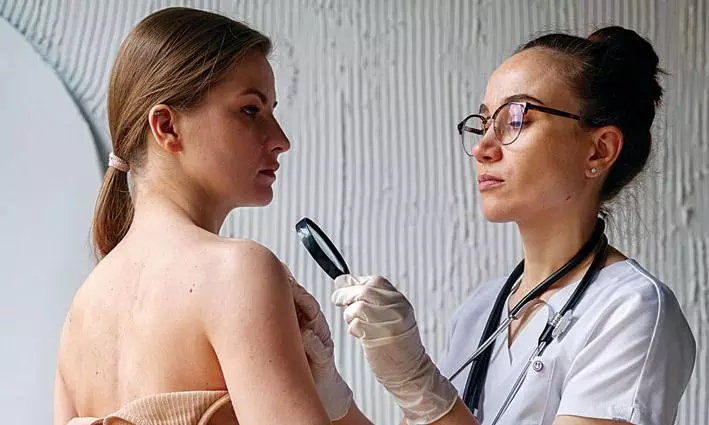
A change in the appearance of breast skin can be alarming, particularly when it begins to resemble the uneven, dimpled surface of an orange peel. Medically known as peau d’orange, this condition causes the skin to appear thickened, swollen and pitted. While the symptom is commonly associated with inflammatory breast cancer, it is not necessarily an indication of malignancy. Infections, inflammation and certain benign breast conditions can also produce similar changes. However, doctors caution against dismissing persistent or unexplained skin changes. Peau d’orange can sometimes be one of the earliest visible warning signs of an aggressive form of breast cancer.
Expert View
Explaining the mechanism behind this condition, Dr. Ashutosh Kothari, Director – Breast Cancer, Oncoplastic and Reconstructive Surgery, Sir H. N. Reliance Foundation Hospital, Mumbai, says, “It occurs as a consequence of subcutaneous tissue swelling and fluid buildup. Because the sweat glands and hair follicles are firmly attached down to deeper tissue layers, they cannot expand along with the rest of the skin, resulting in characteristic tiny pits.” Essentially, the dimpling is a consequence of uneven swelling beneath the skin. However, the appearance itself does not establish what is causing the swelling.
Not Every Case Is Cancer
One of the most important things to understand about peau d’orange is that it is a clinical sign rather than a diagnosis. Although it can occur particularly inflammatory breast cancer, certain non-cancerous conditions can produce a similar appearance. Breast infections, including mastitis and abscesses, can trigger inflammation and fluid accumulation in the surrounding tissue. This swelling can interfere with normal lymphatic drainage, resulting in changes to the skin’s appearance. Other inflammatory conditions and benign tissue changes can also contribute to swelling and thickening.
Dr. Nikhil Himthani, Medical Oncologist, MOC Cancer Care, Lajpat Nagar, New Delhi, explains that peau d’orange is fundamentally a manifestation of lymphatic disruption. When this appearance develops suddenly without an obvious explanation, particularly in the absence of breastfeeding, an abscess, throbbing pain or fever, it should be taken seriously.
Matter Of Concern
While benign conditions can cause similar skin changes, persistent or unexplained peau d’orange is concerning because it is a clinical feature of inflammatory breast cancer (IBC).
Unlike several other forms of breast cancer, IBC does not necessarily present with a distinct, palpable lump. Instead, cancer cells can block the lymphatic vessels beneath the skin, preventing normal fluid drainage. The resulting accumulation of fluid causes swelling, thickening, redness and the orange-peel texture. Dr. Himthani explains, “Persistent or unexplained peau d’orange is treated as an oncological red flag because it is the classic hallmark of IBC.” Aggressive cancer cells can physically obstruct the dermal lymphatic channels, creating widespread fluid backup and visible skin changes. This is also why the absence of a noticeable lump should not offer false reassurance.
Triple Assessment
Distinguishing between an infection, inflammation and malignancy requires more than simply examining the skin. Dr Kothari recommends a process known as triple assessment, which involves clinical examination, appropriate breast imaging and tissue diagnosis where indicated. This allows specialists to investigate the underlying cause.
In cases where an infection is suspected, doctors may initially prescribe a short course of antibiotics. If the signs remain after 7-10 days, a biopsy becomes necessary. A skin punch biopsy and a core needle biopsy of the underlying tissue can help identify malignancy, including cancer cells affecting the dermal lymphatic vessels.
Box: Peau d’Orange Explained
• Peau d’orange is a French term that translates to ‘orange peel skin’.
• It describes a distinctive change in skin texture in which small indentations develop across the breast, making its surface resemble the skin of an orange.
• The appearance occurs when fluid accumulates beneath the skin, causing the surrounding tissue to swell while the hair follicles and sweat glands remain anchored to deeper layers.
It occurs as a consequence of subcutaneous tissue swelling and fluid buildup.”
— Dr. Ashutosh Kothari, Dir. (Breast Cancer, Oncoplastic & Reconstructive Surgery) Sir HN Reliance Foundation Hospital, Mumbai