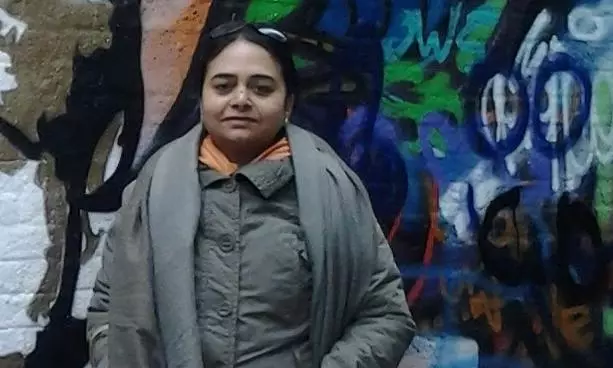
The arrest of travel writer and YouTuber Jyoti Malhotra on espionage charges — a first of its kind — has thrown the spotlight on influencers and the threat they could pose to national security
A travel blogger with a smartphone, an internet connection and nefarious designs — that’s all it takes to launch a psychological war on the enemy. The arrest of YouTuber Jyoti Malhotra, allegedly groomed as an asset by Pakistan’s spy agency, has raised concerns about how influencers are being lured to sway public opinion. And it’s not just Jyoti; authorities suspect that others, too, may be on the payroll of the enemy country.
Speaking to the Hyderabad Chronicle, Hisar SP Shashank Kumar Sawan confirmed Jyoti was being developed as a Pakistani asset. “She was in touch with other YouTube influencers. They were also in touch with PIOs. This is also (a kind of) warfare, in which they try to push their narrative by recruiting influencers,” he said. While Jyoti is currently being interrogated by Haryana Police along with central agencies, Shashank added that his team is scrutinising her financial transactions and travel history. “Her known income sources do not justify her foreign travel. On the surface, she was just a travel blogger,” he added.
JYOTI’S PAK LINKS
Jyoti, who has 3.85 lakh subscribers on her YouTube channel ‘Travel With Jo’, had visited about eight countries, including China and Pakistan. In 2023, she obtained a 10-day visa to Pakistan. A man named Danish allegedly instructed her to meet his friend, Ali Ahwaan, who arranged her travel and stay. Jyoti attended high-profile parties and continued her communication with Danish, a Pakistani officer formerly posted at the Pakistan High Commission in New Delhi during the four-day military conflict that began with India’s Operation Sindoor. According to the police, she was being systematically used as an asset.
RISING CONCERN
“In today’s hyperconnected world, information is power — and unfortunately, misinformation is a weapon,” says influencer and digital creator Riya Pawar. She notes that a senior officer like the Hisar SP raising public alarm should make everyone — creators, consumers, and platforms — pause and reflect. “This isn’t just trolling or casual propaganda; it’s a form of digital warfare.”
THE ENEMY NARRATIVE
“YouTubers aren’t just content creators anymore — they’re culture shapers, opinion influencers, and unfiltered news sources for millions. The influence of a manipulative YouTuber is more dangerous than a rogue news channel,” Riya warns. Asked whether the government can rein in YouTubers, Riya says the answer lies in both punishment and prevention. “Yes, the government should act decisively against YouTubers who knowingly aid enemy propaganda. National security is non-negotiable.” She also calls for collaboration with ethical influencers. “Not every creator intends harm, but ignorance or greed can be just as dangerous. We need more creators who value truth over trend, responsibility over reach, and patriotism over profit,” she adds.
OBSESSION WITH VIRALITY
Zabi Khan, animal rights activist and influencer, agrees that while Jyoti’s actions appear to aid anti-national interests, one must avoid generalising. “The problem lies not just with individuals like her but also with the growing obsession with virality. People are risking lives, staging dangerous stunts, or making outrageous statements just to grab attention online,” he says. Zabi emphasises that the burden of responsibility lies equally on society. “It’s on us — the citizens — to reflect on what we watch, what we share, and who we elevate. Laws can be made, but without societal responsibility and media literacy, they’ll fall short.”
ACTIONS HAVE CONSEQUENCES
Rakesh Anand Bakshi — filmmaker, actor, author and photographer — feels that for an influencer, their image is their job. But that comes with duty. “While chasing goals, if you forget principles like ‘Family First, Society & Nation First’, you’re on the path to destruction,” he says.