The old-fashioned camera with its limited frame film rolls and lack of ‘edit’ facilities is making a comeback as a creative choice
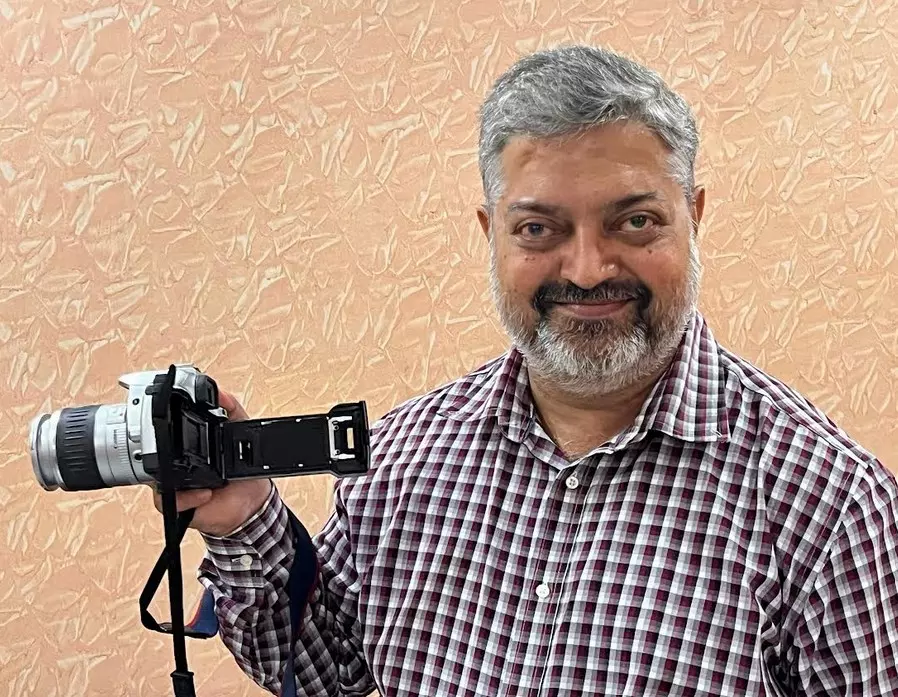
Chunky 35mm cameras and medium-format rangefinders are finding their way back into hands. Photographers used to instant digital clicks are slowing down — loading rolls, counting frames, waiting for negatives. The Hyderabad Photo Trade Expo, TPS Galleria, and Photo Today are putting film back on the map. Clubs like SIPVATA and institutes such as the University of Hyderabad are including it in their events, while giving the medium fresh ground to grow. As Aquin Mathews, founder of the Indian Photo Festival, says, “Photographers, both hobbyists and professionals, are keeping this movement alive, treating film as a more personal, hands-on way to make images in a digital age.”
One direct appeal of analogue is how it reshapes the act of making a picture. Wildlife photographer Jitender Govindani believes in the paradox that the limitations are liberating. “Film cameras don’t give you the same control a digital does — you can’t just bracket exposures, fire off burst shots, or fix things endlessly in post. That’s a real challenge. But at the same time, that’s where the creativity comes in. You trust your eye, you trust your instinct, and you let the imperfections breathe.” He adds that the discipline is recognised internationally: “When one sends one’s work to international salons under FIAP or PSA patronage, the awards recognize the patience and intent that film demands… It’s not about the medal itself, but about keeping alive a tradition where photography is judged for its soul, not just technical polish.”
The absence of instant correction facilities forces a different kind of thinking. With a finite number of frames per roll and no immediate playback, photographers plan, compose, and, crucially, accept mistakes. Aquin explains, “Loading a roll of film, setting up your image, and waiting for it to be developed gives each photograph that sense of purpose and it’s highly rewarding.”
There is a strong element of memory and ritual in the return to film. Several photographers describe the camera as an object that once marked events with weight and care, a contrast to today’s endless scroll. Raghuvamsh Chavali says: “When I was handed a camera, it felt like I was given Thor’s hammer — powerful, but heavy with responsibility.” The ritual extended beyond the click: “You would press the shutter and then wait. The roll went off to a darkroom, often taking 30-40 days to return. Until then, the images were a mystery sealed inside that thin strip of film.” That waiting, he argues, lengthened the life of a memory: Families would pray, “Let at least one photo survive....that’s enough for a lifetime memory.”
The darkroom remains central to film’s comeback. Charles Pritam Makhal, a photographer and educator, describes the material chain that ties maker to image: “With just 36 frames in a roll, every click matters. You pause, think, and shape your story with intention. In the darkroom, the process continues — developing film, baking negatives in chemicals, and bringing silver gelatine prints to life. Each step carries your touch, breath, and effort.” He is firm about film’s place: “Analogue photography is not nostalgia. It is a living, breathing art form, one that connects deeply to our humanity.”
Some see film’s comeback as part of a retro vogue that can burn bright and disappear when the wider ecosystem fails to sustain it. Chavali adds, “With digital as a safety net, and without a community valuing analogue as art, film remains fragile.”