Sleep Line Obsession Pillow Talk

People are worried about the effects of sleeping position on their face, experts throw light on facial symmetry, pillow, and a good night’s sleep
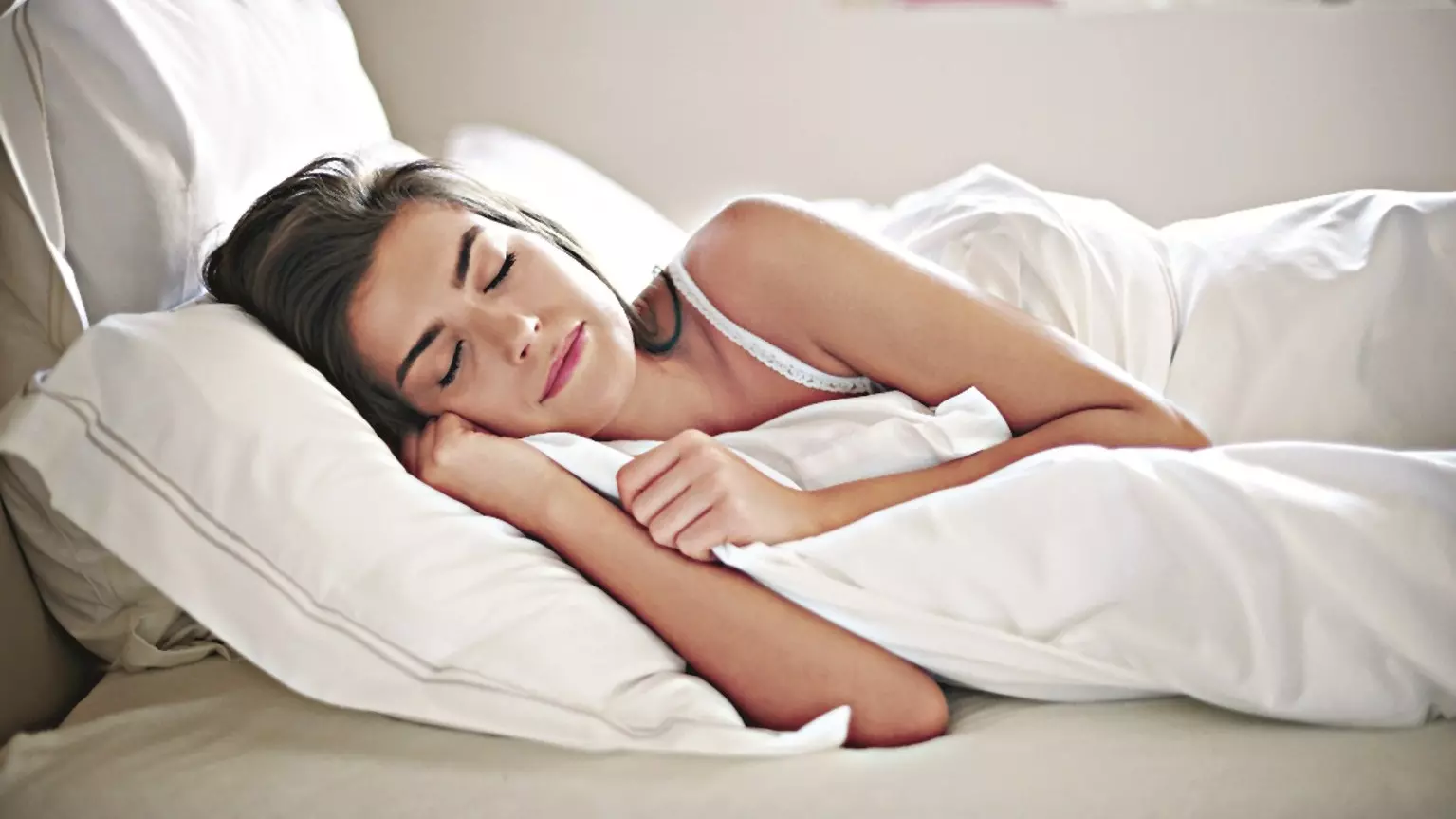
In an era where facial symmetry filters and side-by-side comparisons go viral, even the direction you rest your head at night has come under scrutiny. Dermatologists and sleep specialists say patients are arriving at clinics asking whether years of side-sleeping have subtly altered their appearance. Is that deeper fold on one cheek from collagen loss — or from eight hours of nightly compression? The answer, experts say, lies somewhere between internet exaggeration and biological reality.
Sleeping Position & Face
According to Dr. Amit Bangia, Associate Director of Dermatology at Asian Hospital says, “Musculoskeletally and dermatologically, the repetitive mechanical stress of soft tissues is caused by the continued nightly pressure on one side of the face.” He adds, “This pressure is temporarily able to block the lymphatic drainage, causing tissue puffiness in the morning or the retention of fluid on the dependent side.”
That morning asymmetry — one eye slightly puffier, one cheek appearing fuller — is usually transient. But over time, chronic compression may have more subtle effects.
Dr. Bangia adds, “The chronic compression could also intensify the process of collagen breakdown in predisposed persons, especially when in combination with intrinsic ageing. Even though the effects of bone remodelling due to sleep position alone are unlikely in adults, a small change in soft tissue volume and jaw tension might be present in adults with bruxism or temporomandibular joint sensitivity.”
In other words, your pillow probably isn’t reshaping your skull — but it might influence how your skin and soft tissue respond to gravity and pressure over decades.
Sleep Lines vs. Expression Lines
Dr. Tanushree Biswas, Consultant Dermatologist and Head Medical Advisor at Kaya Limited, says one of the biggest misconceptions online is that sleep position can dramatically alter facial structure. “In up-to-date clinical practice, it is postulated that sleep position in itself does not cause radical restructuring of bone structure,” she says. “But long-term habitual side-sleeping may be the cause of superficial asymmetry of the face, and wrinkle formation.”
She distinguishes between expression lines — formed from repeated muscle movement — and compression lines, sometimes called “sleep lines.”
With repeated mechanical compression on the same side of the face, the so-called sleep lines may develop, which are not the same as expression lines, as they are located perpendicular to muscle motion. Dr. Biswas says, “These compression lines may be etched into the skin with time, particularly in patients with lower density of collagen or a decreasing skin elasticity.”
Still, she cautions against overstating their impact. “Sleep posture can hardly change structural facial appearance as commonly asserted in viral social media stories. Much more important causes of asymmetry and wrinkles are genetics, intrinsic ageing, UV exposure, and lifestyle variables.”
The Lymphatic & Jaw Connection
Beyond wrinkles, some patients report waking with jaw tightness or uneven muscle tension. That concern, doctors say, has more to do with soft tissue mechanics than facial symmetry trends.
Dr. Bangia notes that unilateral pressure can “support muscle tightness patterns,” particularly in individuals who grind their teeth at night. In patients with bruxism or temporomandibular joint sensitivity, consistent side pressure may reinforce tension on one side of the jaw. Fluid retention can also create a temporary imbalance. When you sleep on one side, gravity encourages fluid to pool in dependent tissues. While the lymphatic system typically corrects this once you’re upright, repeated nightly compression may contribute to the perception of asymmetry — especially in individuals already prone to puffiness.
Back Sleeping Isn’t a Universal Fix
Online advice often presents back-sleeping as the aesthetic gold standard — promising symmetrical ageing and fewer wrinkles. But sleep medicine specialists warn that comfort, airway support and spinal alignment matter more than cosmetic optimisation.
For some individuals, back-sleeping can worsen snoring or obstructive sleep apnea. Others find it uncomfortable enough to disrupt rest, and poor sleep quality has far more significant consequences for skin health than mild compression lines ever could.
Dermatologists stress that quality sleep supports collagen production, cellular repair, and barrier function. Chronic sleep deprivation increases cortisol levels, which may accelerate ageing more dramatically than side-sleeping ever would.
What Actually Helps
Rather than panic over pillow position, experts recommend a balanced approach. “In the aesthetic dermatology practice, compression-related lines can be reduced with early interventions like microneedle radiofrequency collagen-enhancing procedures, biostimulatory injections, medical-grade retinoids and tailored skincare plans,” Dr. Biswas says. Supportive measures like silk pillowcase and positioning can be used, although they should not substitute the evidence-based skin rejuvenation interventions.
Dr. Bangia echoes the importance of combining ergonomics with skin care. “The management can involve lymphatic drainage facials, collagen-induction treatment, jaw tension neuromodulators, and the use of temporomandibular dysfunction evaluation when necessary,” he says. The combination of sleep ergonomics and dermatologic interventions provides a mezzo course by appealing to physical support and superficial skin integrity and dividing the aesthetic myths and the physiologic facts.
In simpler terms: choose a supportive pillow, avoid extreme compression, treat bruxism if present, and focus on proven skin-health strategies like sun protection and retinoids.
Viral Anxiety vs Biological Reality
Facial asymmetry is normal. Nearly every face has one brow slightly higher, one cheek subtly fuller, one nasolabial fold deeper than the other. Social media magnification has turned these natural variations into perceived flaws.
While sustained nightly pressure can influence soft tissue behaviour over time, experts agree that it is rarely the primary driver of visible asymmetry. Ageing, genetics, and environmental damage remain far more significant factors.
For those worried about “sleep lines,” the most effective approach isn’t obsessively training yourself to lie perfectly still on your back. It’s maintaining skin health, managing jaw tension if needed, and ensuring restorative sleep. Because in the end, beauty sleep still matters — just not for the reasons your algorithm might suggest.