Scream Queens Are just Killin It!

Heroines are building their ‘horror portfolio’ in South Indian horror and thriller movies; and the fans are loving every scream and spine-chilling scare
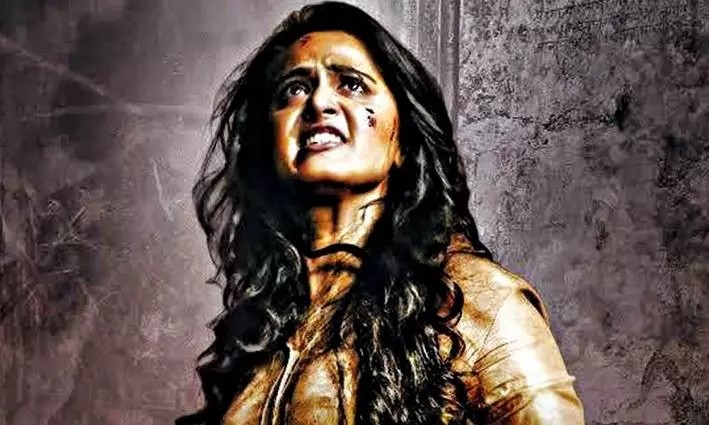
The question is often asked, how are Tamil and Telugu cinema killing it — literally and metaphorically —with female-led horror and thrillers? Previously, Indian horror cinema used to mean shaky chandeliers, screechy violins, and a woman in white gliding across the screen for no good reason. But something has taken a wild turn in the south, with spine-tingling screenplay and authentic acting. The women aren’t just screaming anymore – they are surviving through the movie and sometimes scaring the living daylights out of us.
From Haunted to Haunting
Tamil and Telugu cinema has found a new muse — and she’s wearing fear like a badge of honour. Horror has traditionally treated women as either bait or bodies. But South Indian filmmakers are giving them the lead — and letting their trauma take centre stage. Recent entries like Masooda (2022), with Sangeetha and Thiru-
veer, blend psychological horror with emotional trauma and mother-daughter dynamics. Telugu film Pindam (2023), starring Kushee Ravi, offers chilling social commentary with a strong female lens.
From Maya (2015), starring Nayanthara, to Game Over (2019) with Taapsee Pannu, the genre has leaned into stories that don’t just use women for scares — they let them drive the dread. “I watched Game Over and couldn’t sleep for two days — but not because of ghosts,” says Kritika Reddy, a Hyderabad-based gamer. “It was the realism of her fear, and the fact that it was her story, not her boyfriend’s or brother’s.”
Unlike testosterone-charged horror films, these stories deal with internal demons — grief, PTSD, abuse — wrapped in clever symbolism. In Maya, it’s the weight of single motherhood. In Game Over, it’s sexual assault and memory loss. Masooda explores social stigma and mental illness as a source of fear. The monster isn’t just under the bed. It’s in the mind. Connect (2022) again saw Nayanthara battling the paranormal, this time in a lockdown setting, without backup or a hero to save the day. Just a mother, a dark house, and a demon on Zoom.
Brains, Not Just Blood
Nayanthara has unofficially become the South’s horror heroine, giving us hits like Maya, Dora, Airaa, and Connect. She’s traded glam for grit — and it’s working. But she’s not the only one doing so; Anushka Shetty’s Bhaagamathie (2018) brought horror into a political thriller space and earned Rs 60 crore. “There’s an appetite for thrillers that are short, sharp, and female-led,” says Suresh Naidu, a South India-based distributor. “Audiences are tired of the same mass hero format. They want fresh stories, fresh faces, and guess what? Women bring both.”
Raashi Khanna played a spirited ghost in the horror-comedy Aranmanai 3 (2021). Taapsee Pannu, with the Telugu psychological thriller Anando Brahma (2017), has built her horror portfolio. More recently, Regina Cassandra in Soorpanagai (2022) and Aishwarya Rajesh in Boomika (2021) have taken on lead roles in eerie, eco-horror and mystery genres. These films go beyond gore and gimmicks, aiming instead for slow-burn tension and thematic weight. “Female-led horror works because women know fear intimately,” says Vandana Iyer, a psychologist based in Mumbai. She adds, “They live with it every day, and that shows in their performances. It’s emotional truth meeting genre fiction.”
Scary Sells Baby
Let's talk on the business side, Maya was a sleeper hit, Bhaagamathie killed the screen at the box office, and Game Overgives us chills even to this day — despite its tight budget and limited release, it was dubbed into three languages and found much-needed love on OTT platforms. Even horror comedies are getting a glow-up and busting tickets at theaters, so the audiences are enjoying it more than expected. Anando Brahma was a movie where Taapsee leads a ghost-busting crew, and it made more than Rs 20 crore and was remade in Tamil and Kannada.
Globally, horror films have always seen a flirtatious interaction with the female leads or a softer approach to them — South India is taking a similar turn but with mango trees, thunderstorms, and the classic saree-wearing specter. The secret in these stories is that they don’t try to be overly feminist; they tend to have a flavour that most can’t deny. Women tend to become the metaphor for everything, loneliness, trauma, and more, over societal pressure. In most of these films, the women don’t survive; they dominate the screen. “When Taapsee’s character outsmarts her killer using a video game controller in Game Over, I wanted to cheer out loud,” says film enthusiast Vidhya Narayan. “We’re done watching women get dragged. Now, they drag back.”
Screaming Sirens
OTT platforms are commissioning indie horrors with feminist themes and folklore roots that are gutsy and grounded in fire, with women no longer playing the role of the “love interest”. Because once you’ve seen a woman take down both demons and generational trauma in one night, you’ll want more. Actresses like Aishwarya Lekshmi, Shraddha Srinath, and Amala Paul —known for choosing complex scripts — are already being approached for horror-thriller leads in 2025 productions.
With Virupaksha (2023) giving Samyuktha Menon room to shine in a gritty, suspense-filled role, and rumours of upcoming horror anthologies led by women directors, the genre is evolving. And South India? It’s not just riding the wave — it’s conjuring it. The scream queens have arrived, and they’re rewriting the genre one ghost at a time.
