Samantha in Maa Inti Bangaram ups the trend set by Deepika, Anushka Shetty, Kangana Ranaut and others, showcasing that the quintessential attire of traditional Indian women is no hindrance to winning intense combats
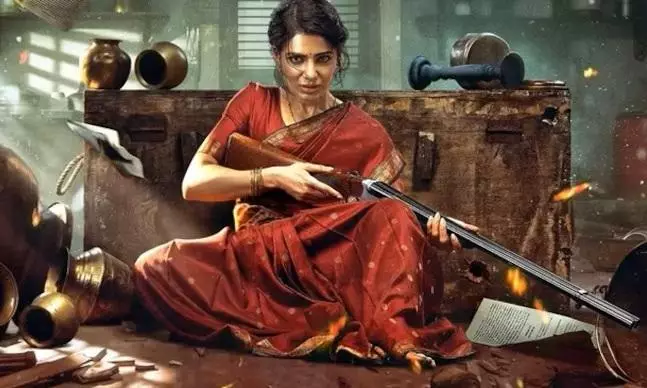
The saree-clad action heroine is one of the most powerful and visually arresting tropes in Indian cinema. It subverts traditional expectations by combining graceful, orthodox Indian attire with intense, high-octane combat. Samantha Ruth Prabhu nails the effect, playing a housewife who takes up arms to fight back in Maa Inti Bangaram. But she’s by no means the first to assume such an avatar.
Before Samantha, there was Deepika Padukone in Jawan. In a widely praised cameo, Deepika takes down multiple adversaries in a muddy, rain-drenched hand-to-hand combat sequence while seamlessly managing a classic cotton saree.
Kangana Ranaut in Manikarnika: The Queen of Jhansi played the warrior queen in nine-yard splendour. She performed extensive horse-riding and battlefield combat sequences in traditional Maharashtrian sarees.
Katrina in Tiger 3 executed a memorable, fast-paced espionage action sequence in a flowing saree, proving that style does not compromise lethal combat moves.
Producer Prerna Arora, who has cast Anupama Parmeshwaran as the Saree Avenger in an upcoming film, says it is the best costume for the Indian Action Heroine. “The saree empowers the Shero like no other costume. I am surprised we see so few heroines wearing a saree. The problem is, we see female empowerment as a very Western concept even now. Women in leather skirts are considered the embodiment of empowerment. I feel a woman in a saree can do anything. Samantha has just proved it.”

