People are constantly looking at their phone screens (mirror) and finding flaws; many are now covering their screens and accepting themselves as they are
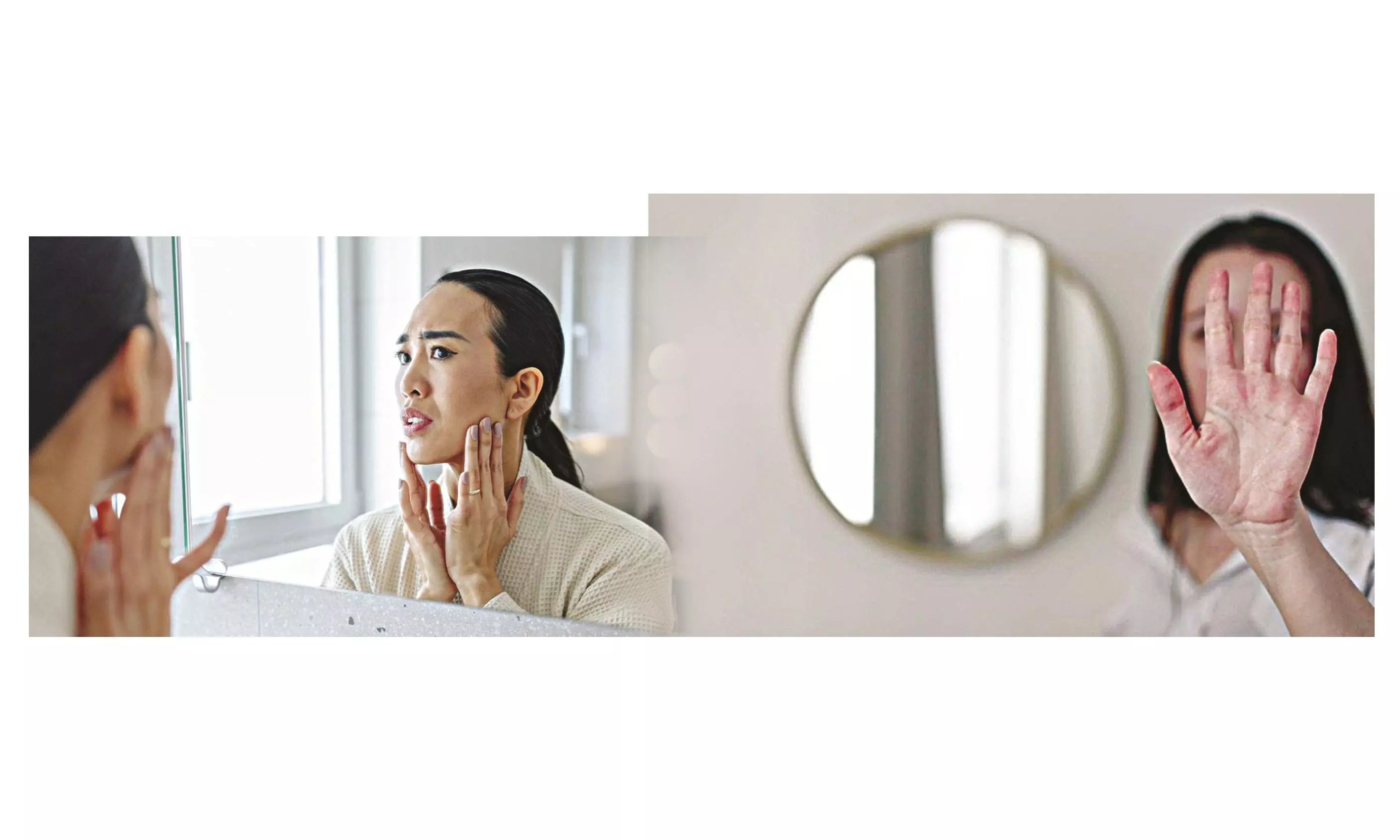
Mirrors are like screens. They are everywhere—phones, smart TVs, laptops, smartwatches, glass facades and window panes. They fit into pockets of life that we didn't know we created. We no longer just look at ourselves; we instead study ourselves and judge ourselves a bit too much. Checking your face during a conversation on video calls, it then trickles down to retaking photos 20 times, zooming in on flaws no one else sees. We crave validation from others to an unhealthy degree, and if it’s not forthcoming, it spirals downwards.
“Mirror exposure is a phenomenon where repeated exposure to visual stimuli (a mirror) increases liking for it unconsciously. This is a widespread trend where youth are highly smitten with their own self-appearances and expect others’ acceptance and praise,” says N. Nandini, Psychologist at Renova Century Hospitals, Banjara Hills, Hyderabad. From looking at our cameras continuously to retaking photos, deleting posts, adjusting angles, and staring at our mirrors for a last-moment check-up. This has driven many close to a toxic obsession with how they portray themselves in front of others.
People Are Opting Out
When this is practised in small amounts, individuals will notice that they no longer struggle with body image or emotional burnout from constant comparison. Instead, they feel a bit lighter, have a positive outlook on life, and most importantly, take a break from self-criticism. Sometimes it isn’t just about vanity but exhaustion that makes an individual frustrated. “Accepting the fact that nothing is perfect in nature, and there is beauty in self-acceptance, helps build self-esteem, self-confidence, and self-worth, which reduces anxiety about how they perceive themselves,” explains Nandini.
Covered Reflections
Richelle Fernandes (20), a student, says, “I feel that social media made me more aware of my flaws than my strengths.” And that gets really tiring after a point. “Scrolling feels normal until you suddenly start comparing yourself to everyone. You don’t even notice it happening. But by the end of it, you feel like you’re not enough,” says Kiara Desai (23) from Delhi. The question that arises here is, why is someone hiding from their own reflection? Some use the ‘mirror covering’ trick when they are on a weight loss journey, have appearance anxiety, social media fatigue, or constant self-scrutiny.
The Psychological Flip Side
It’s easy to turn a blind eye to a topic, but accepting it is hard. “Mirror covering is not a form of self-healing. The more a person runs away from reality, the more it leads to anxiety, severe low self-confidence, which leads to avoidant personality disorder, which will have an impact on forming relationships, sustaining them as they have poor self-image,” says Nandini. Constant visual self-checking is a form of severe compulsive behaviour, which can be overcome by seeking support from a therapist or a counsellor, setting fixed timings, and turning off notifications.
However, hiding from the mirror doesn’t erase the insecurity—it just moves it inward. Mastering emotional independence brings stability, security of feelings, and helps release compulsive behaviour.
The Social Media Loop
Social media has positioned mirror covering as an activity that allows you to have control over your looks. What began as a quiet coping mechanism has now become a visible statement to improve one’s sensitivity towards oneself. “I didn’t realise that checking my front camera became a habit. It’s almost like I need to approve how I look before stepping out or even posting a story. And if I don’t like it, my whole mood just drops,” says Aarav Mehta (21), a Gen Z student from Bengaluru.
This craving for others’ likes and followers is leading the youth to self-judge about their looks and appearance, which is creating a void in themselves. But this is no longer just about mirrors; it’s about identity and how comfortable one is with it. Because in a world that teaches you to constantly look at yourself, the real rebellion might just be learning how to live without watching.
Mirror Moments
· 37% of young participants reported lowered
· self-esteem after exposure to appearance-focused social media content (Nutrients Journal, 2025)
· 80% of young people admit to comparing their appearance with others on social media (Royal Society for Public Health, UK study)
· 60% of adolescent girls say social media negatively impacts their body confidence (Dove Global Girls Beauty & Confidence Report, 2023–24)