Prosthetics Use Is New Ramp Muse

From six-pack abs to chiselled cheekbones, the rise of enhancement wearables in the fashion world takes a new turn
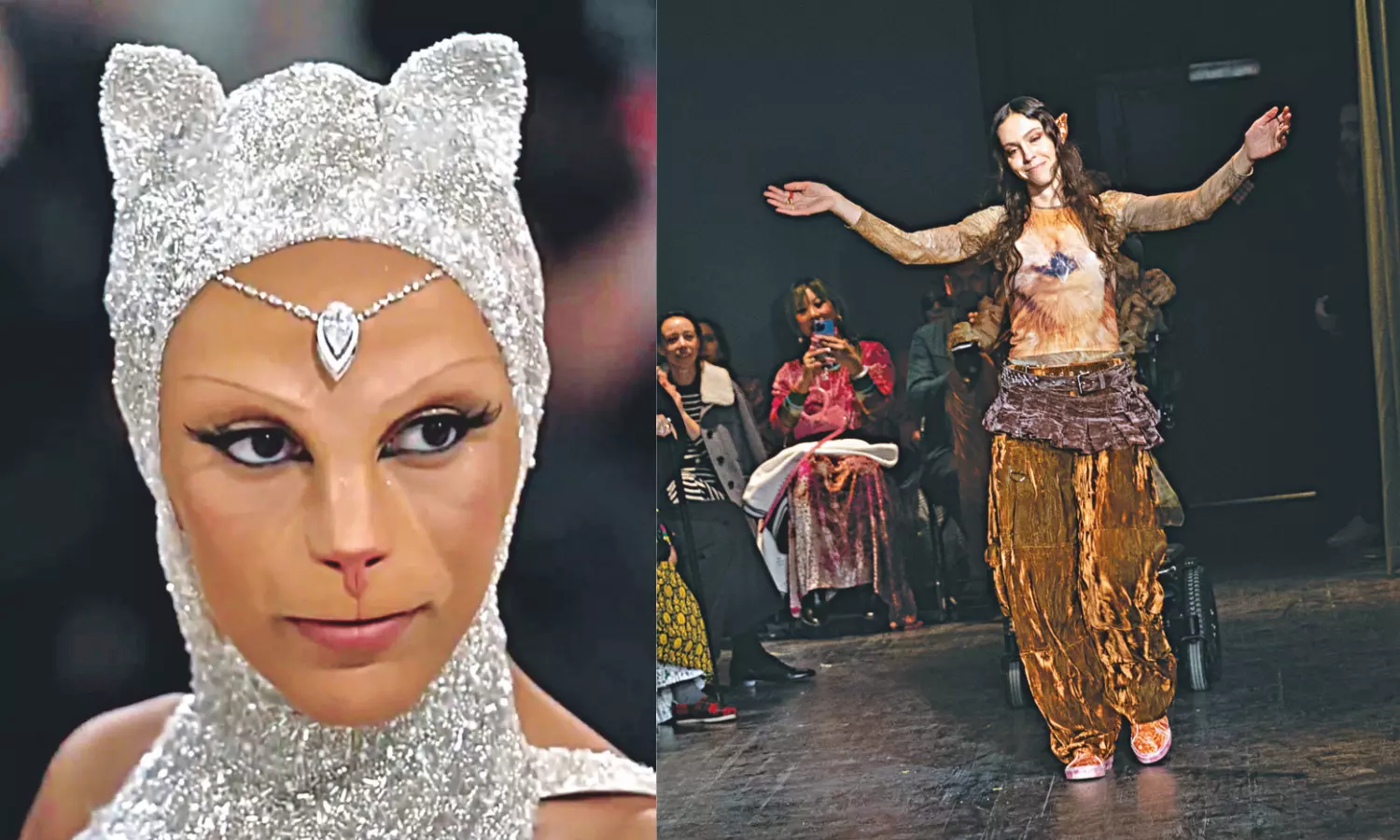
Once confined to the realm of medical necessity, prosthetics are now making a striking entrance into the fashion arena. This isn’t about restoring lost limbs; it’s about augmenting and refining, driven by an industry’s persistent pursuit of an often-unattainable ideal. From discreetly padded garments promising sculpted abdominal muscles to facial inserts designed to sculpt sharper jawlines, a novel wave of wearable body modifications is emerging, increasingly blurring the lines between the natural physique and meticulously crafted artifice. This burgeoning trend ignites crucial discussions about authenticity, the true meaning of self-expression, and the pervasive influence of hyper-perfected online aesthetics.
Perfect Image Pressure
For decades, the fashion industry has wielded significant influence in shaping societal perceptions of beauty. The relentless projection of slender figures, flawless complexions, and impeccably proportioned features has cultivated an environment where many feel compelled to conform.
Kanika Raj, a fashion designer and researcher says, “The idea that one must look beyond the Eurocentric standards of beauty in itself is a revolution. For so long people have considered one’s beauty as beautiful enough based on how upturned their nose is or how small their waist is and how lanky they are. When looked beyond that, the beauty of a ridge on the nose and the high cheekbones and the monolids is unbelievable and dreamy.”
Now, a new chapter is unfolding, one where individuals are not merely altering their appearance through makeup, clothing, or even cosmetic surgery, but through readily accessible, wearable enhancements. These are not permanent alterations; they are accessories, slipped on and off like a cherished piece of jewellery, yet their impact on self-perception and the broader beauty landscape is profound.
Balenciaga- High Cheekbones
Instant Sculpting
The appeal of these wearable enhancements is readily apparent. In a digital era saturated with filtered images and digitally sculpted avatars, the pressure to present a flawless online persona is immense. Wearable prosthetics offer an immediate, albeit temporary, solution to perceived imperfections.
Yearning for a more defined physique for a night out? Simply slip on a muscle-enhancing undershirt. Desiring a more angular facial structure for that perfect selfie? Opt for readily available jawline inserts. This accessibility democratizes the ability to achieve these hyper-realistic ideals, yet it also raises critical questions about the underlying motivations. Are individuals embracing these enhancements as a form of creative self-expression, or are they succumbing to the pressure of conforming to increasingly narrow and often unrealistic beauty standards perpetuated by the very industry that now offers these "solutions"?
Artistry vs Conformity
Isha Jajodia, the innovative mind behind the label ROSEROOM, offers a thoughtful perspective on this evolving trend. “These wearable modifications are unquestionably an artistic medium,” she acknowledges. However, she also expresses a crucial concern: “In a world where beauty is often narrowly defined, enhancements can sometimes feel less like self-expression and more like silent conformity.” Jajodia’s design ethos at ROSEROOM underscores this tension. “We believe that fashion, like wearable prosthetics, can serve as a powerful form of storytelling. But that story must be shaped by the wearer, not by an external standard.” She further elaborates, “As a designer, I constantly thrive on pushing boundaries not only to create but to reflect, challenge and reimagine. We are inspired by the potential of wearable design to break binaries, real vs artificial, flaw vs feature, and to contribute to a fashion future that prioritises authenticity over illusion. Through our work, we aim to shift the conversation. Fashion should not be a mirror of unattainable ideals but a platform for authenticity and self-definition."
Different Body Types
Many body positivity advocates feel that the fashion industry is reinforcing unrealistic ideals. In fact, Jajodia’s sentiment resonates deeply with body positivity advocates who have long championed the acceptance and celebration of diverse body types. “The rise of these wearable prosthetics is a symptom of a larger problem,” states renowned body positivity advocate, Anya Sharma. “For decades, fashion has peddled an unattainable ideal, leading individuals to feel inadequate in their natural bodies. Now, instead of challenging those ideals, the industry is offering quick fixes, essentially reinforcing the message that our natural forms are not enough. True empowerment comes from embracing and celebrating our unique bodies, not masking them with artificial enhancements.”
The Ethical Tightrope
From a design standpoint, the emergence of wearable prosthetics presents both intriguing creative avenues and complex ethical considerations. As Jajodia eloquently puts it, “As a designer, I constantly thrive on pushing boundaries not only to create but to reflect, challenge and reimagine.” This suggests a potential for these enhancements to be integrated into avant-garde fashion, exploring themes of identity and the constructed self in artistic and thought-provoking ways. However, the ethical tightrope lies in ensuring that these innovations are presented as tools for self-expression, rather than as necessary aids to achieve a prescribed standard of beauty. The line between artistic exploration and the reinforcement of harmful beauty ideals is thin demanding careful navigation by designers and the industry as a whole. The conversation surrounding wearable prosthetics in fashion is just beginning, but it promises to be a crucial one in shaping the future of beauty standards and the very definition of self-acceptance in an increasingly image-conscious world.
