Pitfalls Of Fast & (Furious) Delivery Mode

Experts say instant deliveries and quick-commerce has skewed our expectations and tolerance levels
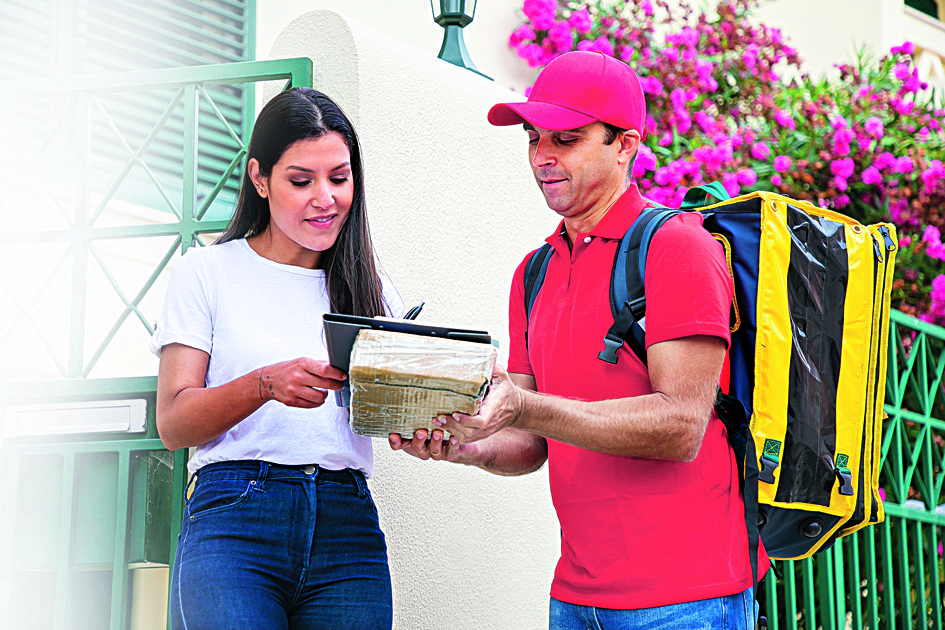
Ten minutes. That’s all it takes now to get milk, bread, toothpaste, lemons, alkaline batteries, or even a late-night craving delivered to your doorstep. What began as convenience has quietly turned into expectation, impulsive behaviour, impatience and anger at times. Across urban India, quick-commerce platforms are redefining not just how we shop, but how we think about time itself.
Speed, once a luxury, is now the baseline. From same-day deliveries to 10-minute grocery apps, the promise is simple: why wait when you don’t have to? But beneath this seamless efficiency lies a deeper shift. Behavioural experts say it is reshaping our sense of value, anticipation, and even decision-making.
The Vanishing Wait
For decades, waiting was part of the experience. Ordering something meant tracking it, planning around it, sometimes even forgetting until it arrived like a small surprise. “That gap between wanting and getting created emotional value,” says Dinakar Jethva, behavioural psychologist. “Anticipation made the outcome feel more rewarding.”
Today, that gap has nearly disappeared. A product is no longer something you look forward to. It is something you summon. The result? A subtle erosion of excitement. When everything is instant, nothing feels special. Consumers themselves are beginning to notice the shift. “I don’t think twice before ordering anymore,” says Simran Japtap, a college professor. “If I need something, I just get it. But I also feel like I waste more money on things I don’t really need.”
The Impulse Economy
Quick commerce thrives on immediacy, but it also feeds impulse. With minimal friction between desire and purchase, decision-making becomes faster, but not necessarily better. Data from industry reports suggests that a significant portion of quick-commerce orders are unplanned. The ease of access, combined with targeted recommendations and limited-time offers, nudges consumers toward spontaneous buying.
“It’s not just about speed, it's about reducing resistance,” explains Rahul Awasti (name changed), a product manager at a leading quick-commerce platform. “The fewer steps there are, the more likely a user is to complete a purchase.” But reduced resistance also means reduced reflection. The question is no longer “Do I need this?” but “Why not?”
Time Rewired
Beyond shopping habits, instant services are altering our perception of time itself. Waiting, once a neutral or even productive state, is now seen as inefficiency. Missed a delivery window? It feels like a failure. A 30-minute delay? Unacceptable. This recalibration of time expectations spills over into other areas: work, relationships, even personal goals. The patience required for long-term rewards begins to feel unfamiliar, even uncomfortable. “We’re conditioning ourselves to expect immediate outcomes,” says Sukirt Mankar, psychologist. “But many aspects of life, career growth, emotional healing, and creative work don’t operate on that timeline.” The risk, she adds, is a growing intolerance for anything that doesn’t deliver quick results.
The Business of Speed
For quick-commerce platforms, speed isn’t just a feature; it's the product. Dark stores, hyperlocal logistics, and predictive algorithms work in tandem to shave off minutes, sometimes seconds. Executives argue that they are responding to consumer demand, not creating it. For many, especially working professionals, instant delivery isn’t indulgence, it’s efficiency. It frees up time that would otherwise be spent commuting, queuing, or planning. Yet, the question remains: at what cost?
What We Lose
Convenience, by design, removes effort. But effort is often where meaning resides. Cooking a meal, visiting a store, or even waiting for a package, these small acts create a sense of involvement. When everything is outsourced to speed, experiences risk becoming transactional. There’s also the environmental cost of multiple small deliveries, increased packaging, and
the pressure on gig workers to meet tight timelines. While companies are investing in sustainability, the scale of demand continues to grow.
Slow Living Returns
Ironically, the rise of instant services may also spark a counter-trend. Already, there’s a growing appreciation for “slow living” for taking time, being intentional, and resisting the urge to optimise every moment. Some consumers are beginning to draw boundaries. Delaying non-essential purchases. Choosing weekly grocery runs over daily orders. Reintroducing friction as a form of control.
The Middle Ground
Instant services are not going away. Nor should they. They solve real problems and offer undeniable convenience. But as speed becomes the norm, the real challenge lies in reclaiming choice, deciding when to use it, and when to pause. Because in a world that delivers everything in minutes, patience may become the ultimate luxury.
