More people are buying handmade crochet rakhis instead of buying factory made mass production pieces
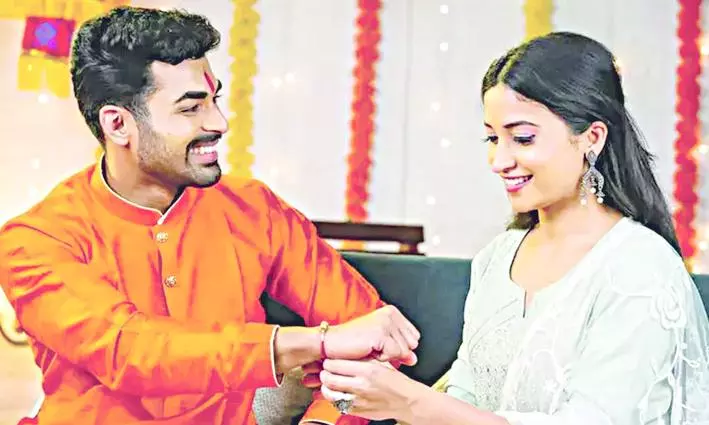
As the Raksha Bandhan fervour picks up, women across India flock to nearby shops, malls and high-end luxury stores to buy a suitable rakhi for their sibling. But somewhere in the corner of the internet lives a cheaper, more meaningful and faster way to achieve a heartfelt rakhi thread. For Chandraprabha Parihar (73), a ball of yarn, a crochet hook and a little patience can make something that a factory line simply cannot: a story you can tie around your wrist.
Parihar has turned a childhood hobby into a thriving craft which many have admired. From creating handmade crochet pieces and rakhis while working alongside more than 20 women artisans. Her venture, Nayher, was founded in 2022, when she was 69. The idea behind it all is that something made by hand has more value.
Crochet rakhis became particularly special because of Parihar’s own relationship with the festival. Coming from a family of eight siblings, Raksha Bandhan has always represented more than a date on the calendar. “I wanted to bring the warmth of something handmade into that tradition,” she says.
Sneaky Peek at Crochet
What started by taking a swift look at her sister doing crochet, has led Parihar to a meaningful second chapter in life. She grew up in a small village in Madhya Pradesh, at a time when education meant more than examinations. Skills like embroidery, knitting and crochet were part of everyday learning. “I picked it up simply by observing,” she recalls.
Her elder sister had taken classes to learn how to crochet and by a few glances, Parihar would memorize the movements of the hook and yarn. She turned her hobby into a business. Experiments with colours, motifs, techniques and allowing the yarn to take her in different directions. Parihar takes the difficult road of trying to make each rakhi interesting without losing the visual of the festival and the result leaves you feeling happier than ever!
From a Ball of Yarn to a Business
Every craftsmanship is new and mass production has made festive shopping wonderfully convenient. You can scroll, click and have a dozen rakhis arrive at your doorstep. But handmade craftsmanship asks for something else: time.
Every stitch represents a decision. Every colour evokes an emotion. Every small variation is evidence that it’s been crafted by a human hand—not a machine. “A handmade rakhi carries the time, patience and love of the person who made it,” she says.
Her inspiration comes largely from the people and traditions around her. Perhaps the most unexpected part of Parihar’s story isn’t that she learned crochet as a child. It is that she chose to build something around it decades later. She founded Nayher at 69. Today, more than 20 women artisans work with her, turning what was once a personal pastime into a livelihood and a creative community.
In 2025, she was also recognised with the Lokmata Ahilyabai Holkar Mahila Samman Award as a Senior Entrepreneur. Yet family remains the thread running through it all.
After all, crochet began as something she made for the people she loved. Decades later, the audience may have grown, but the reason remains surprisingly unchanged. At 73, she says crochet gives her purpose, happiness and independence. There is also a quiet thrill in knowing that something she has made with her own hands can travel beyond her home—to another city, another country and another family.And before the world rushes to click “Add to Cart”, there is something worth considering: choosing a handmade rakhi. It can support an artisan’s craft, help sustain a livelihood and give a small venture the helping hand it needs to grow.