North-South, the New Pairing in Bollywood

Very picturesquely, Kareena Kapoor Khan describes her pairing with Malayali actor Prithviraj Sukumaran as “Punjab ka chole and Keralam ka mutton”. “We are deadly together,” she says.
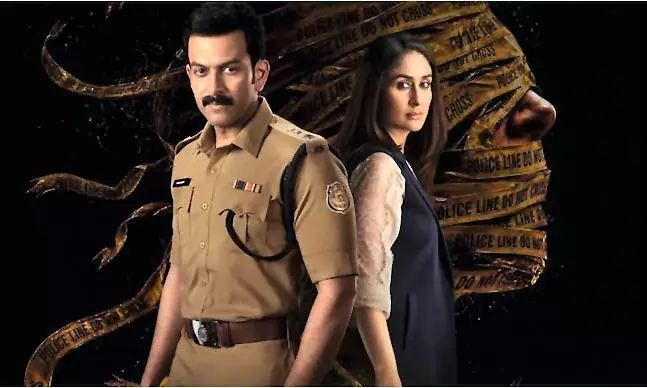
Kareena and Prithviraj are now sharing the screen for the first time in Meghna Gulzar’s much-anticipated crime thriller Daayra. The film brings the two actors together as senior police officers on opposite sides of a polarising case, setting up a potentially intriguing face-off.
Their pairing also reflects how Indian cinema has moved beyond the old practice of simply dubbing films into multiple languages. Producers are increasingly bringing together leading actors from different industries, creating stories that are deliberately pan-Indian and cross-cultural.
This year has seen several major productions embrace this mix. Nitesh Tiwari’s Ramayana: Part One brings together Bollywood’s Ranbir Kapoor as Rama, Kannada star Yash as Ravana and South star Sai Pallavi as Sita.
Lokesh Kanagaraj’s Tamil actioner Coolie brings together Rajinikanth, Telugu superstar Nagarjuna and Bollywood star Aamir Khan, who makes a much-publicised special appearance.
In H. Vinoth’s Jana Nayagan, Tamil superstar Vijay is paired with Bollywood actor Bobby Deol as the primary antagonist. Bobby has also increasingly become part of the Southern film landscape following his roles in Kanguva and Hari Hara Veera Mallu.
Laxman Utekar’s historical epic Chhaava paired Vicky Kaushal with Rashmika Mandanna, while Tushar Jalota’s Param Sundari, built around a North-South cultural clash, brought together Sidharth Malhotra and Janhvi Kapoor against backdrops ranging from Keralam to Delhi.
Kareena, meanwhile, is already eyeing another major South alliance. She is said to be in advanced negotiations to headline a large-scale mythological jungle adventure opposite Tamil star Dhanush, with Sanjay Leela Bhansali backing the project. For Kareena, the North-South divide has ceased to matter. “These divides — North, South, pan-India, regional, Shero, Hero — they are all non-existent. A film is a film. Language and statehood no longer matter,” she says.
“Cinema is no longer a regional phenomenon. We need to move away from our home ground, examine reasons beyond regions, and arrive at a kind of cinema which is both alive and contemporary. I’ve done films in Tamil, Telugu, Malayalam, Hindi and Bengali. I wouldn’t mind doing films in Punjabi or Marathi if they’re offered to me.”
Cinema is no longer a regional phenomenon. We need to move away from our home ground, examine reasons beyond regions, and arrive at a kind of cinema which is both alive and contemporary. I’ve done films in Tamil, Telugu, Malayalam, Hindi and Bengali. I wouldn’t mind doing films in Punjabi or Marathi if they’re offered to me.” —Kamal Haasan
