A straight talk on today’s digital surrealism, and the underlying truth of chaos and anxieties of the gloom-doom generation
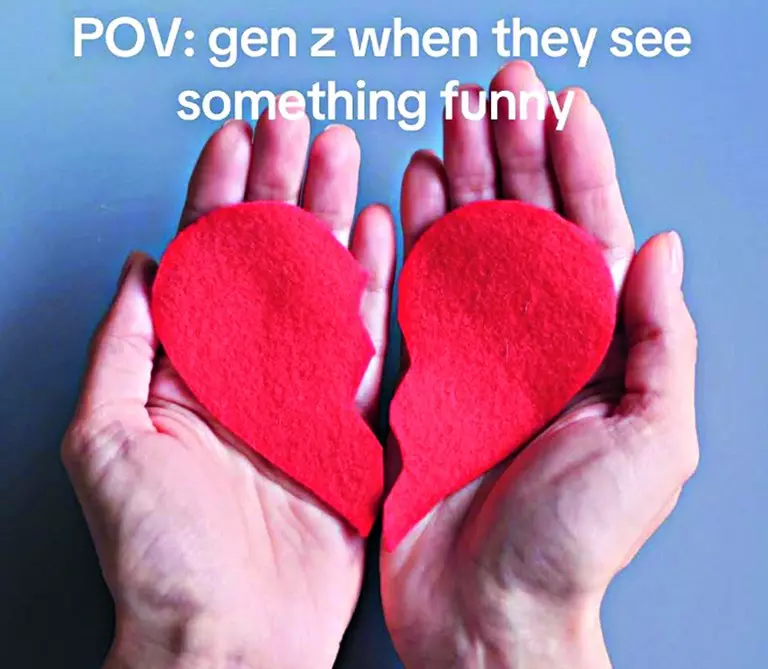
If you scroll through Gen-Z’s social media feeds, you’ll likely encounter jokes that seem completely detached from logic. A meme of a rotisserie chicken running for mayor, a frog screaming about taxes, or someone announcing, “This is my villain arc,” might feel like incoherent noise to outsiders. Yet, for Gen Z, these jokes are not meaningless—they’re a reflection of their internet-shaped worldview.
A comment like “I like you, don’t go bald”, “You are funny, don't get hit by a truck” is not supposed to be grammatically correct or make logical sense. Instead, it functions as a shorthand for absurdist humour, a collective wink that says: “We know this is nonsense, and that’s exactly why it’s funny.”
Humour Overload
Unlike previous generations who grew up with structured comedy formats—TV sitcoms, stand-up sets, or newspaper cartoons—Gen Z has grown up in a media ecosystem defined by chaos. Their humour mirrors the conditions of their digital upbringing: fragmented, oversaturated, and constantly shifting.
“Gen Z has been bombarded with information since childhood—news, memes, videos, ads, everything all at once,” explains Dr. Rhea Kulkarni, a cultural psychologist based in Mumbai. “When you live in an environment of nonstop input, humour naturally mutates into something that mirrors that chaos. Absurdity feels more authentic than neat punchlines.”
This sense of overstimulation fuels the rise of memes that embrace randomness as an art form. Where Millennials might have celebrated clever wordplay, Gen Z celebrates nonsense as a way of reclaiming space from the endless noise of the internet.
Collapse of Seriousness
Gen Z humour also thrives on deliberately refusing to take anything seriously. Online, someone might describe losing their phone charger as the start of their “villain arc,” “sybau”, or sarcastically call a mundane action like eating toast “the worst betrayal of 2025.” The exaggeration is part of the joke—but so is the underlying truth that the world itself feels unstable.
Economic uncertainty, climate anxiety, political polarization, and the pandemic have all shaped how young people see the world. In this environment, laughter often comes not from clarity but from chaos.
“Gen Z’s surreal humour is a defence mechanism,” said Arjun Varadhan, a media studies lecturer in Chennai. “The absurd memes reflect real anxieties but present them in a way that feels digestible. By turning seriousness into nonsense, they regain some control over how they experience overwhelming realities.”
Inside Jokes
Another key feature of Gen Z humour is its emphasis on community. Many memes are not designed to be universally funny—they’re meant for those who are already “in on the joke.” A bizarre phrase, typo, or poorly edited picture can spread rapidly because it signals belonging to a certain digital tribe.
For example, a meme of a distorted image of Shrek labelled “CEO of Business” might mean nothing to an outsider. But within Gen Z spaces, such randomness acts as a password—a way to say, “You get it, you’re one of us.”
This communal nature is why much of the humour feels alienating to older generations. The jokes are not necessarily for them. Instead, they operate as cultural shorthand within online subgroups, strengthening bonds in spaces that often feel fragmented. What started as digital humour has also seeped into everyday speech. Phrases like “Life’s been mad off lately, like instead of taking Ws I am taking Ls” or deliberately broken grammar now appear in conversations, classrooms, and even professional spaces.
For older generations, this shift can feel bizarre. But for Gen Z, blending digital absurdity with real-life communication is simply natural. They see no clear divide between online and offline selves.
Surreal Future Comedy
As Gen Z continues to enter adulthood, their style of humour is also shaping mainstream media. From advertising campaigns that mimic meme culture to comedians adopting absurdist delivery styles, digital surrealism is no longer confined to TikTok or Instagram feeds.
Critics might dismiss it as shallow, but its persistence suggests otherwise. At its core, Gen Z humour is not just about randomness—it is about survival, connection, and making sense of a world that often makes no sense at all.