Matcha goes green with envy as purple yam (aka kand or ube) becomes a global hit
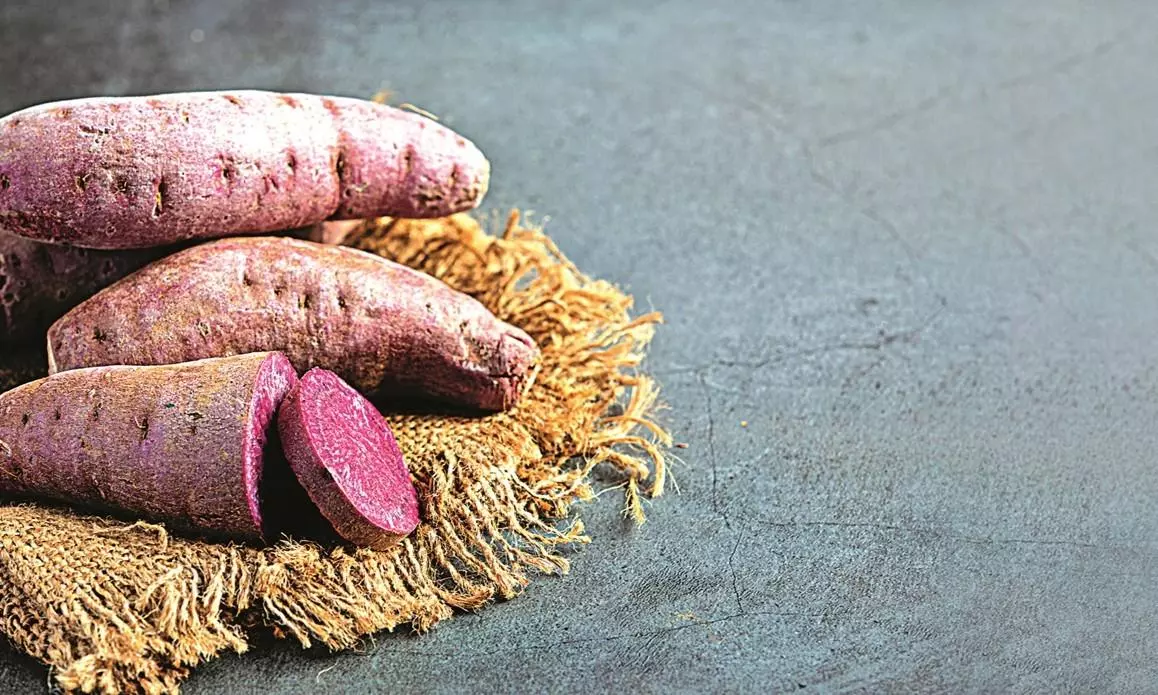
Purple yams have been in Indian kitchens for centuries — boiled into puzhukku in Kerala, fried into kand chips for Gujarati winters and folded into undhiyo. But the humble Indian kand or ratalu, (the Filipinos call it ube) is suddenly everywhere. The kand has taken the culinary world by storm. From violet kulfis, purple frappe, and violet boba tea to violet cheesecakes and purple yam puddings, the kand craze is everywhere. This ancient tuber (ube) is turning up in croissants in London, spring menus at Starbucks in the US and UK, and latte boards at Costa Coffee. Cafes in India, Indonesia, Turkey, London and Europe are also seeing a huge demand for purple yam desserts, smoothies and cakes.
Colour Travels Faster
“In today's digital dining culture, colour travels faster than flavour,” says Dr. Avin Thaliath, co-founder and director of Lavonne Hospitality. “A striking purple croissant or latte immediately captures attention online. But colour alone cannot sustain an ingredient for long.” What sustains ube, he argues, is everything underneath the visual: a sensory profile that pairs well with dairy, coconut, chocolate, and fermented doughs, and a nutritional case built on antioxidants, fibre, and complex carbohydrates.
Social Media Buzz
While social media opened the door, flavour and adaptability are what keep it relevant. The violet ube flavour began creeping into mainstream UK high-street coffee chains in summer 2024 with Pret's Ube Brûlée Latte, followed by Black Sheep Coffee's Halloween ube matcha offering. By spring 2026, both Starbucks and Costa had added ube to their seasonal menus on both sides of the Atlantic. The timing was not incidental. Social media acted as a great catalyst. A purple croissant photographs better than almost anything else on a café counter.
What Is Ube
Ube — pronounced oo-beh — is a purple yam native to Southeast Asia, distinct from taro and purple sweet potato despite the shared hue. Its flavour resists easy description: mildly nutty, faintly vanilla, creamy, and grounding, the perfect texture of comfort food. That gentleness is also what makes it so adaptable into ice creams, cheesecakes, bread rolls stuffed with cheese, halwa, and now lattes. In Kerala, it goes by chena kizhangu or neela chena and has long been cooked in various formats. The rest of the world is only now encountering it through the lens of a purple drink. “Ube carries a naturally striking colour, but unlike many Instagram ingredients, it also comes with emotional depth,” says Thaliath. “In many ways, people are not just consuming a colour; they are consuming a story and a cultural memory.”
Ube vs. Matcha
The comparison to matcha is inevitable. Both ingredients are ancient, both reached mainstream Western menus after years of existing at the margins, and both owe significant visibility to Instagram. The similarities, however, end there. Matcha is bitter, caffeinated, and bound up in the language of wellness and ritual. Ube is warmer, softer, and rooted in dessert and festivity. “They occupy very different emotional and sensory spaces,” says Thaliath. “Matcha became part of daily café ritual culture — bitterness, caffeine, wellness, ceremony. Ube is softer, warmer, more dessert-oriented and nostalgic.”
Zeba Kohli, chocolate sommelier, draws the same distinction from a different angle. Matcha, she says, is a beverage. Ube belongs to a different register. It is closer to the pleasure of a boiled ratalu on a winter afternoon. “Can matcha replace our kand, ratalu? No, it never can. Is it a competition to the Filipino ube? No, it absolutely isn't," she says. "Coffee came in, they said, will coffee ever replace tea? Coffee can never replace tea, but coffee has its own equal and absolute market.”
Question of Authenticity
Ube exports from the Philippines have doubled in value between 2024 and 2025, but the surge in demand has strained local farmers, with climate change and price inflation compounding the pressure. Some have called the trend a “gentrification of ube,” arguing that purple powder and food colouring do the Philippines no justice.
Thaliath acknowledges the tension. “Many ingredients from South and Southeast Asia have existed for centuries with rich culinary traditions, yet they often gain international legitimacy only after being reframed through Western café culture or premium branding,” he says. “The ingredient itself isn't new. The global gaze is.” The risk, he adds, is reduction. An ingredient becoming detached from its history and flattened into “the purple flavour,” with the agriculture, labour, and ritual that surround it disappearing behind aesthetics.
Homely & Kand-hearted
For India, the conversation has its own layers. Kand, ratalu, suran have been around forever. They are winter vegetables, undhiyo ingredients, things that have always had a place at the table without needing a café menu to justify them. Kohli is affectionate but unbothered by the global frenzy. “I don't think we need a Filipino ube to make kand famous. Nothing is going to replace any of our foods. It's just going to expand with a bit of elbow room.”
Whether ube outlasts the trend cycle is still an open question. Thaliath thinks the loudest phase — the purple-everything moment — will pass, as charcoal and rainbow foods did before it.

