Jugaad Rekindles Kitchen Flames Amidst LPG Crisis

4 April 2026 12:04 AM IST4 April 2026 12:04 AM IST
From biogas fuel to solar cookers, firewood, coal and cowdung cake cookstoves, people are adopting innovative ways to cook meals amid gas cylinder shortage
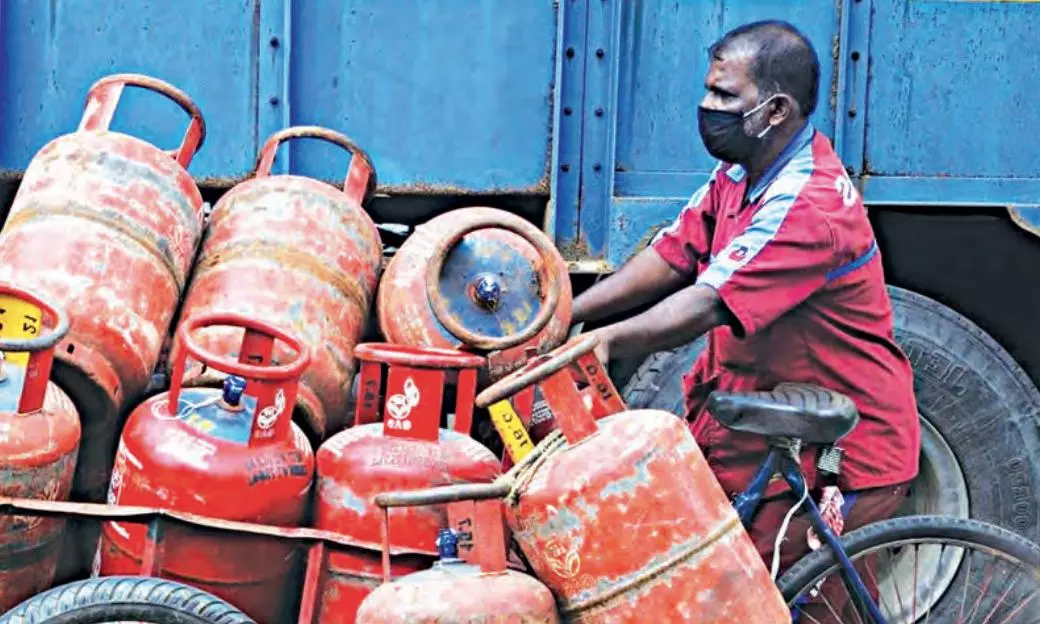
What’s emerging across India isn’t just a temporary response to LPG cylinder shortages — it’s a broader shift in how people think about cooking fuel.
Desperate times call for desperate measures! The LPG cylinder crisis in India due to the ongoing US-Israel-Iran war has reached its peak. For many households, the familiar blue flame of a gas stove is no longer guaranteed. Instead, people are turning to alternatives—some rooted in tradition, others powered by innovation and many driven by pure necessity.
From backyard biogas units to improved biomass stoves and improvised cooking setups, a new wave of low-cost, practical solutions is emerging. It’s not just about survival — it’s about adaptation. And in true desi style, it’s also about the Great Indian Jugaad!
From Waste to Flame
For some households, the answer lies not in buying fuel, but in producing it from organic waste. Dr. A. Sajidas, Managing Director of Biotech India, explains that biogas is one of the most accessible alternatives.
“Biogas is a clean and renewable source of energy produced through anaerobic digestion, where organic waste like kitchen leftovers is broken down to release gas that can be used for cooking,” he says.
What makes it particularly appealing is its simplicity. A compact household unit can convert everyday waste into usable fuel, effectively replacing a portion of LPG usage.
“For a family of five, a small biogas plant costing around Rs 45,000 can provide up to two hours of cooking gas daily,” Sajidas adds. “It doesn’t require much space and can be installed in a backyard, rooftop, or even underground.”
The maintenance, he notes, is minimal — regular feeding of kitchen waste and basic cleaning. More importantly, it turns a daily problem — waste disposal — into a solution.
But perhaps the biggest shift is where biogas is being adopted. Once seen as a rural solution dependent on cattle dung, newer systems now work efficiently with kitchen waste, making them viable for urban homes as well.
Still, awareness remains a challenge. “Many people don’t realise that their kitchen waste can generate cooking gas. With better policy support and awareness, adoption can increase significantly,” Sajidas says.
Old Systems, New Relevance
While new technologies are gaining ground, older systems are proving their resilience. At Dudhsagar Plantation in Goa, a biogas plant built over three decades ago continues to power daily cooking even today. Ashok Malkarnekar, who runs the farm stay, says the system was originally installed out of necessity. “Back then, LPG delivery wasn’t available in our area. Biogas was simply more convenient,” he explains. The setup, built using a traditional design, uses cow dung, kitchen waste, and even blackwater. Despite its age, it remains effective.
“As long as the feeding is consistent, the gas output is consistent,” Malkarnekar says. “It’s a one-time cost and very low maintenance. We barely rely on LPG now.” Interestingly, the system has also become a point of curiosity for visitors. “Our guests are very interested in sustainable practices. With LPG scarcity becoming more common, there’s growing interest in off-grid solutions like this,” he adds. What was once a rural necessity is now being re-evaluated as a model for sustainable living.
Firewood Gets Modern Twist
In many parts of India, especially rural and peri-urban areas, people are turning back to biomass — but with improved efficiency.
Ankit Mathur, Co-founder and CEO of Greenway Grameen, says that improved cookstoves are gaining renewed attention. “Efficient biomass cookstoves allow households to use easily available fuels like firewood, cow dung cakes, or crop residue, with very little behaviour change,” he explains. Unlike traditional chulhas, these stoves are designed to reduce fuel consumption and smoke.
“Our stoves can cut fuel usage to about one-third compared to traditional methods, while significantly reducing indoor air pollution,” Mathur says.
The benefits go beyond cost savings. For rural women, who often spend hours collecting fuel and cooking, these improvements can be transformative — reducing both physical effort and health risks.
Interestingly, demand isn’t limited to rural areas. Urban consumers are also showing interest, driven by factors like taste preferences, nostalgia, and a desire for backup cooking options. “Even as LPG supply stabilises, we expect households and businesses to continue investing in alternative solutions for energy security,” Mathur adds.
Cooking Meals Amid Chaos
Beyond structured solutions like biogas and improved stoves, there’s another layer of innovation unfolding — informal, improvised, and deeply local. Across the country, people are finding ways to keep their kitchens running with whatever is available. Savita, a house help from Mumbai says, “We never get the cylinder on time. We have to buy it in black for `2000–`3000 now.”
In one instance, a government school worker repurposed a pani-puri setup to cook mid-day meals when LPG supplies ran low. Elsewhere, a local handywoman began constructing simple concrete stoves fuelled by wood logs—low-cost, durable, and easy to replicate. Residents started using a heating rod to boil food and an iron to make chai.
These solutions may not come with technical manuals or branding, but they reflect something equally important: adaptability.
They are built quickly, using locally available materials, and designed to solve immediate problems. Ramesh Patil, a food stall owner, says, “Instead of waiting endlessly for an LPG cylinder, I’ve started using a biomass stove. It’s cheaper and more reliable.”
Grassroot Innovations
These grassroots innovation highlights a key reality — while large-scale energy solutions take time, people cannot wait. They find ways to cope, often blending traditional methods with modern needs.
While alternatives exist, scaling them remains a challenge. For biogas systems, the barrier is often awareness and upfront cost. For improved cookstoves, financing and distribution play a key role, especially in low-income communities.
Mathur points out that partnerships are crucial. “We’ve been able to reach millions of households by working with governments, financiers, and development organisations to make these solutions more accessible,” he says.
Urban adoption presents a different challenge — space constraints, convenience, and lifestyle habits. Yet, as fuel uncertainties continue, even city households are beginning to explore alternatives.
More Than Crisis Response
What’s emerging across India isn’t just a temporary response to LPG cylinder shortages — it’s a broader shift in how people think about cooking fuel. There’s a growing awareness that relying entirely on one system may not be sustainable. Diversifica-tion — once a concept limited to industries—is entering the household kitchen. And in that shift, India’s strength lies in its ability to adapt.
From decades-old biogas plants in Goa to modern portable digesters, from improved cookstoves to street-level jugaad, the solutions are varied—but the goal is the same: keep the flame alive.
( Source : Deccan Chronicle )


Next Story