It’s Better To Stay Curious Than To Stay Comfortable’

Huma Qureshi talks about her unconventional role in her unconventional production Baby Do Die Do
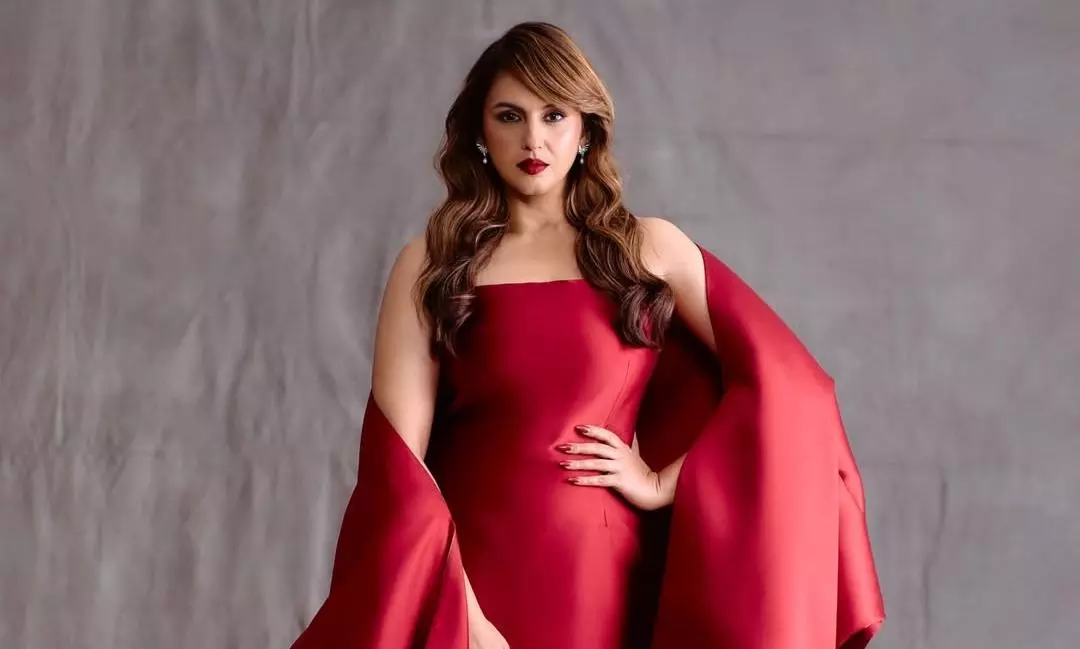
Huma Qureshi is very excited about her film. She discusses the thoughts behind the project and also how she sees her career progressing. Excerpts:
Baby Do Die Do is such an unusual title. How did this project happen?
The first thing that caught my attention was the script. It was unlike anything I had read before. We see a lot of thrillers, but very few that manage to balance suspense with emotion and dark humour the way this one does. Baby is such an unusual character, and the world she inhabits is layered, unpredictable and deeply human. Saqib was equally excited when he heard the story, and as producers, we both felt it deserved to be made because it wasn’t trying to fit into a formula. It felt original, and that’s becoming increasingly rare.
You play a deaf and mute hitwoman, a very unconventional character.
It was one of the most demanding roles I’ve ever played because I had to communicate everything without dialogue. Usually, as actors, words become your safety net. Here, I didn’t have that. Every emotion had to come through my eyes, my body language and even my breathing. I spent time understanding how people with hearing and speech impairments communicate, but I also didn’t want Baby to become just her disability. She’s a complete person with fears, vulnerability and immense strength. I worked closely with Nachiket to make sure her silence became her greatest expression rather than a limitation. It was exhausting, but incredibly rewarding.
From Maharani to Baby Do Die Do, your choices have been consistently unconventional. What do you look for in the roles you take on?
I’ve never been interested in doing the same thing twice. If a role scares me a little, I usually know I’m on the right track. Whether it’s Rani Bharti in Maharani, Tarla, Monica in Monica, O My Darling or now Baby, they’ve all challenged me in completely different ways. I want to play women who feel authentic, flawed and memorable. Success for me isn't about fitting into a certain mould, it's about constantly evolving as an actor and surprising both the audience and myself.
You and your brother, Saqib Saleem, are introducing a new leading man, Rachit Singh, in the film. What gave you the confidence to back a newcomer?
Talent doesn’t come with a number of films next to your name. It comes from honesty and commitment. When Rachit auditioned, there was something very genuine about him. He wasn’t trying to imitate anyone or be a star; he was simply present in the character. That’s what convinced us. As producers, Saqib and I wanted to support the film in the best possible way, and if someone is right for the role, that's all that matters. Every established actor was once a newcomer, and somebody took that chance on them.
