Is Dhurandhar’s Runaway Success A Signal For B’wood To Change Tack?

20 Dec 2025 8:51 PM IST20 Dec 2025 8:51 PM IST
Emotionally charged stories of patriotism and sacrifice are stealing a march over conventional crowd-pullers
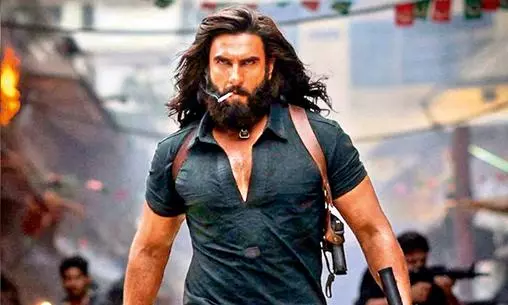
What makes Dhurandhar’s run remarkable is its unexpected arc.
Ranveer Singh’s Dhurandhar is showing no signs of slowing down. As the film completes its second week with a staggering ₹460 crore, trade experts believe its lifetime collections could land between ₹700 and ₹800 crore — firmly placing it among the biggest blockbusters in recent memory. But beyond the numbers, Dhurandhar’s extraordinary run has sparked a wider industry debate: is this box-office blitzkrieg reshaping audience priorities, and what does it mean for upcoming releases like Dharma Productions’ globe-trotting rom-com Main Tera Tu Meri Tu Meri Main Tera, starring Kartik Aaryan and Ananya Panday?
A Wave That Refuses to Recede
“Dhurandhar mania is still going strong, and the momentum is likely to continue until the New Year,” says trade analyst Sumit Kadel. “Despite being a non-holiday release, the reception has been spectacular. Even though most people have already seen it, the film has tremendous recall value and is likely to retain its screens.” That staying power, Kadel adds, is already affecting competing releases. “Yes, it is likely to create a dent in the collections of Main Tera Tu Meri…, which was initially expected to open at around ₹20 crore. In the current scenario, it may open closer to ₹12–15 crore during the festive season, though it could still go on to make ₹100 crore with support from Christmas and New Year holidays.”
From Dark Horse to Cultural Moment
What makes Dhurandhar’s run remarkable is its unexpected arc. Written off ahead of release for its near four-hour runtime and labelled by some as propaganda, the film has instead become a word-of-mouth phenomenon. Its impact is already reshaping release calendars: Agastya Nanda’s Ikkis has moved from December 25 to January 1, 2026, while Main Tera Tu Meri… advanced its release to December 25 to tap the festive window.
Beyond the Metros
The film’s impact has extended well past urban centres. Jammu and Kashmir recorded its highest opening for Dhurandhar, underlining the film’s deep regional resonance. “This isn’t just a box-office win—it’s being seen as a cultural moment,” says an exhibitor from Pulwama. “A mainstream Hindi film is pulling audiences back into cinemas in regions where footfalls had dipped sharply. Viewers here are responding not just to the action, but to themes of security, sacrifice and the long-term consequences of terror — issues that resonate deeply in this region.”
Much like Uri and Baby, Dhurandhar has reaffirmed that politically charged, intelligence-driven narratives can draw mass audiences without relying on conventional crowd-pleasing formulas.
A Shift in Audience Mood
Film analyst Girish Wankhede believes the film has altered the prevailing audience mindset. “Its patriotic tone, technical bravura and rousing score have created a clear appetite for large, emotionally charged spectacles. This sentiment isn’t just reflected in box-office numbers — it’s shaping what people want to watch now.”
In this environment, he notes, lighter urban rom-coms risk feeling out of sync. “A film like Main Tera Tu Meri… may struggle, as audiences who might normally opt for a date-night comedy are gravitating towards shared, high-emotion theatrical experiences like Dhurandhar.”
The Mid-Scale Dilemma
Dhurandhar’s run has sharpened a larger industry reality. Across banners, glossy mid-scale dramas built on aspiration and familiar emotional beats have struggled to generate theatrical urgency. Films like Param Sundari, Mr and Mrs Mahi, Sunny Sanskari Ki Tulsi Kumari and De De Pyaar De arrived with known stars, polished visuals and strong music — but failed to sustain momentum. It’s not a rejection of the genre — but a demand for sharper, more timely storytelling.
Conviction Over Familiarity
Industry watchers note growing fatigue around nepotism and in-house casting. Familiar faces alone — Kartik Aaryan and Ananya Panday included — are no longer enough in a market demanding conviction-led storytelling. Responding to the changing landscape, Karan Johar recently reiterated his belief in coexistence. “As a producer, I believe there’s space for a multitude of films. There’s scope for every film to perform. Also, Main Tera Tu Meri Tu Meri Main Tera is very different from every other film currently playing in cinemas.”
The New Reality
Analysts, however, caution against complacency. “Dhurandhar has changed both the conversation and the crowd,” Wankhede says. “Filmmakers must acknowledge the current audience mood and position their films as strong counter-programming, rather than competing head-on with an ongoing patriotic wave.”
( Source : Deccan Chronicle )

Next Story