From playful objects to immersive spaces, the exhibition, ‘The Making Room’, offers a thoughtful look at design as storytelling
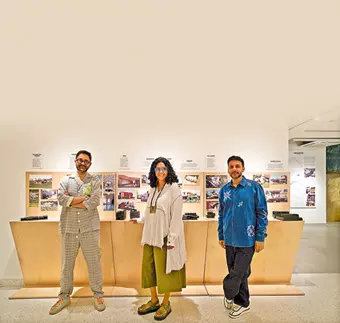
Step into Kadari Art Gallery this month and you are met with rooms of vivid, thought-provoking work by MuseLab, the design studio led by co-founders Huzefa Rangwala and Jasem Hirani. The exhibition leaves visitors thinking like a designer — curious, observant, and unafraid of play.
The show weaves together Muse Lab’s projects across masterplanning, architecture, furniture, and object design, with works that are both built, and unbuilt. Jasem and Huzefa describe their diverse repertoire of work as being led by creating ‘joy and surprise’.
To the visitor, this is amply evident. We are first introduced to a tall, ‘Totem lamp’, and multiple small wooden toys – which Huzefa explains is one of his favourite object design projects. The toys have their roots in a lockdown project, working with Channapatna toy artists, which Huzefa and Jasem designed to give the artists some employment over the pandemic, adding, “it showed design’s power: to uplift someone during a hard time, to engage, and to make kids happy.”
This human-centric approach to design is carried forward through the different projects on display – Fortune Farm, a jewellery store project in Ahmedabad – a meandering, vivid red retail experience – being a great example. The store is centred on one long, connected terracotta display, that inspires wonder, and was designed after understanding the experience of both – customers, and salespeople – making sure each element added to the experience of jewellery shopping. The designers explain, “Jewellery retail is usually transactional. We wanted to shift it into an experience centre. In retail, the product should be the hero — but we also want people to leave with a story.”
Storytelling, for Huzefa and Jasem, is a tool in the exhibition, but also an output of their work. They explain, “Storytelling is one of the oldest ways of passing information — that’s what we’re doing: telling stories through projects.” Often these stories are inspired by the very people they are creating these designs for. Their design process begins with asking clients about themselves. “Beyond the quantitative program, we ask: what’s the qualitative program? What songs do you like, a poem, a piece of art?”
When asked whether they have a signature style across their work that spans masterplanning, architecture, and object design, they say, “We didn’t want colour and pattern to become our identity — it’s more about gestures and moments.” This design philosophy– of placing human inhabitation of their work, over a signature material or form – is what makes their work a delight to see, and as viewers of their work, we are continuously surprised, and inspired.
Beside their work, there is notably a display of the things– books, objects, and other pieces of inspiration – that define the partnership between the two designers – emphasising that MuseLAB is as much about the story of their partnership as it is about their designs. They say about their 20-year friendship, and 13-year partnership, “Apart from being friends, there’s an underlying sense of respect for each other — and that subconsciously forms the foundation of the partnership.”
A must-visit for design enthusiasts and non-designers alike, the exhibition highlights the versatility of design and offers a quiet reminder that approaching things with curiosity — and a degree of play — can produce surprising, and delightful results.
(MuseLAB’’s new exhibition, Muse: The Making Room, opened at The Kadari Art Gallery and will go on until December 30th)
“ Storytelling is one of the oldest ways of passing information — that’s what we’re doing: telling stories through projects.” Often these stories are inspired by the very people they are creating these designs for. Their design process begins with asking clients about themselves. “Beyond the quantitative program, we ask: what’s the qualitative program? What songs do you like, a poem, a piece of art?”
— Huzefa Rangwala
& Jasem Hirani
“People can choose peace and collaboration, work together and bring out the best of each other. I thought they were a fine example of this since they didn't go to school or college together, or even work together. They met as architects and became friends when they were in America, and continued their friendship and finally their partnership. and they're doing really well — good work which is purely the gist of how humans can choose peace and friendship over any kind of conflict."
— Supraja Rao
Suramya Kedia Reddy