Two surgeons and their friends test endurance and alignment on the 43-km Inca Trail to Machu Picchu
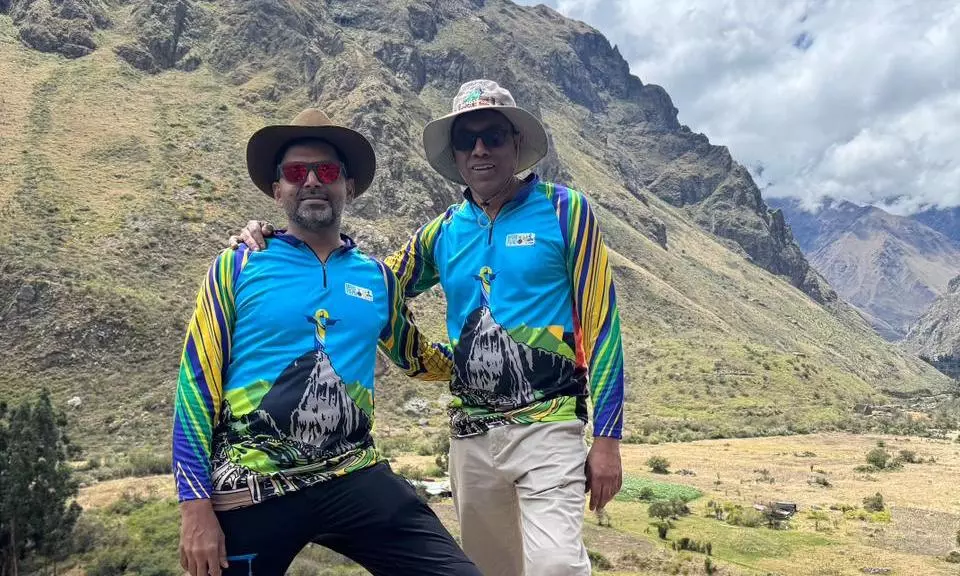
They usually mend bones and restore mobility—but for four epic days in the Peruvian Andes, two orthopaedic surgeons and their friends traded scalpels for trekking poles, testing their own joints and limits along the 43-kilometre Classic Inca Trail to Machu Picchu.
Where Bones Meet Stone
The trail’s interlocking stones, steep ascents, and sacred ruins challenged their muscles and thrilled their minds. “This trail is a surgeon’s delight,” joked Dr. Shashi Kanth G, Senior Consultant Orthopaedic Surgeon, Star Hospitals, admiring its natural shock absorption and historical load-bearing structures. “Every step felt like studying biomechanics in real life—nature’s perfect alignment.”
Tents, Tendons & Trekking Tales
Day 1: 12 km to Wayllabamba through lush terrain.
Day 2: 16 km to Dead Woman’s Pass at 4,215 m, testing every muscle.
Day 3: Passing five archaeological sites amid dense cloud forests.
Day 4: Sunrise at Intipunku (Sun Gate), revealing Machu Picchu’s misty majesty.
“Endurance isn’t just about muscles—it’s about pacing, recovery, and mindset,” reflected Dr. Praveen Reddy, Senior Consultant Orthopaedic Surgeon, Star Hospitals. “Trekking alongside friends from different fields made it a lesson in teamwork as much as in physiology.”
Lessons from the Trail
l Resilience, like bone remodeling, builds over time.
l Endurance, like cartilage under load, requires rest.
l Alignment—of body, group, and purpose—is everything.
They returned not just stronger, but with a profound respect for natural design and ancient wisdom.