Hyderabad conservationist Rajasekhar Thummala uses philately to spotlight India’s medicinal plant heritage
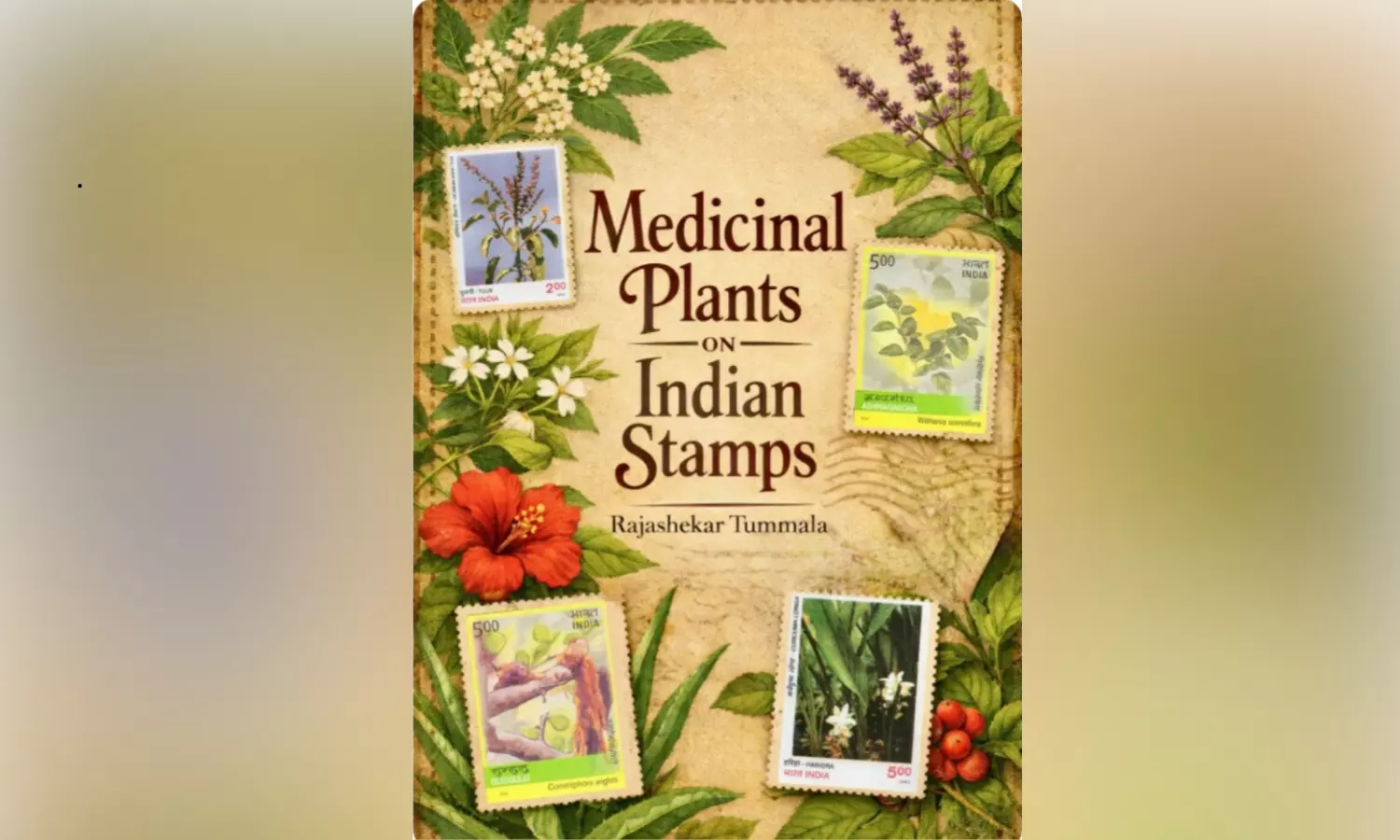
Medicinal Plants on Indian Stamps recently received a Silver-Bronze Medal at the Boston 2026 World Philatelic Exhibition.
Most books on medicinal plants begin in forests, herbariums or research laboratories. Rajasekhar Thummala’s begins in a stamp album. The Hyderabad-based conservation ecologist has transformed a lifetime of stamp collecting into an award-winning work that documents India's medicinal plant wealth through philately.
His book, Medicinal Plants on Indian Stamps, recently received a Silver-Bronze Medal at the Boston 2026 World Philatelic Exhibition, one of the world's most prestigious philatelic events. But beyond the international recognition lies a story that spans decades — of a childhood hobby, a career in conservation and a deep interest in India's rich medicinal plant heritage.
A second-generation philatelist, Thummala inherited his passion from his late father, Dr Surya Prakash Thummala. The hobby soon became serious as he began earning medals and prizes at philatelic exhibitions organised by the governments of Andhra Pradesh, Gujarat and Telangana.
At the same time, his professional life was taking shape in a very different field. Armed with a Master’s degree in Ecology and Environmental Sciences, a postgraduate diploma in Medicinal Botany from the University of Hyderabad and additional qualifications in environmental management, business management and intellectual property rights, Thummala built a career around biodiversity conservation, ecological restoration and medicinal plants.
The idea of combining those two interests had been in his mind for years. “Medicinal plants on stamps has long been the theme of my philatelic exhibit. I realised that while India had issued a few dedicated medicinal plant stamp series, many other stamps also featured plants with medicinal value. Nobody had really documented them from that perspective,” he says.
Medicinal Plants on Indian Stamps goes far beyond a catalogue of stamp issues. It explores the medicinal significance, history and conservation value of plants depicted on stamps issued from the pre-Independence era to present day.
The work required extensive research. Thummala examined stamps issued not only by independent India but also by former colonial territories.
One of the most intriguing sections deals with the French India “Lotus Issues” — a set of 16 stamps designed during the German occupation of France and printed in London during World War II. Intended to support the French government-in-exile, they were later used in French Indian territories such as Pondicherry.
“I traced details about the designers and printers of these issues and brought together information that had not been documented in many earlier works,” he says.
The book also covers Portuguese India issues, including stamps featuring medicinal plants such as Kutaja, traditionally used to treat ailments like dysentery and malaria.
Alongside the philatelic history runs a strong conservation message.
Among the plants featured are Brahma Kamal (Saussurea obvallata), the revered Himalayan flower that grows above 4,000 metres; Rhododendron, valued not only for its beauty but also for its medicinal properties; and Guggul (Commiphora wightii), a desert species threatened by excessive extraction of its medicinal resin.
Other important species highlighted include Red Sanders and Sarpagandha (Rauvolfia serpentina), both of which face conservation challenges.
“Many medicinal plants that were once relatively common are becoming harder to find. Conservation is becoming increasingly important,” says Thummala.
The Boston exhibition, held under the patronage of the Fédération Internationale de Philatélie (FIP), the global governing body for philately, subjected entries to rigorous evaluation. Books are assessed for originality, research, presentation and documentation, with medals awarded based on scores.
“It was my first entry in the literature category at an international exhibition. Every image had to come from my own collection and the work underwent detailed scrutiny,” he says.
For his next project, Thummala plans to document around 140 medicinal plants featured on stamps, along with their pharmacological importance and traditional uses.
While he believes awareness about biodiversity is improving, particularly among students and citizen-science groups, he feels much more needs to be done at the grassroots level. “People need to understand the value of native plants and the role they play in supporting biodiversity,” he says.
For Hyderabad, he recommends species such as Neem, Indian Laburnum (Cassia fistula), Wild Mango, Jamun and Sacred Ashoka (Saraca asoca).
“Native plants support local birds, pollinators and biodiversity much better than many exotic species. I'm not against exotic plants, but there should be a balance.”
He believes governments, civic agencies and nurseries should make native saplings more readily available and actively encourage their planting through awareness campaigns and urban greening programmes.
( Source : Deccan Chronicle )


Next Story