Has Trolling Become Cricket’s Fastest-Growing Side Business? Hate For Six
The Kohli-Head flashpoint lasted only a few moments on the field. Online, it triggered days of outrage, abuse and personal attacks that included family members too. Such episodes have become increasingly common in cricket — every controversy now feeds a digital ecosystem built on clicks, engagement and visibility. Trolling is no longer a by-product of fandom. It has become content — and a profitable one
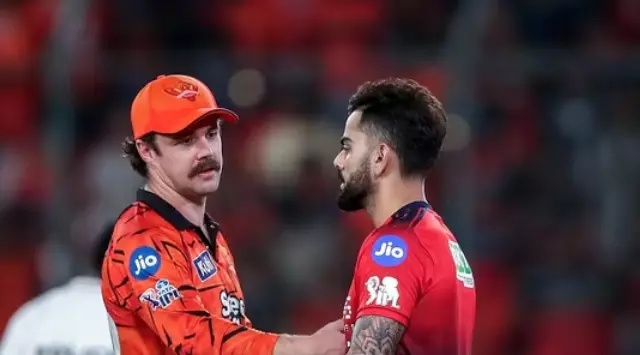
The latest Virat Kohli-Travis Head flashpoint lasted a few moments on the field. Online, it lasted much longer. Within hours, social media timelines were flooded with outrage, fan wars and abuse. Soon, the hostility spilled beyond the players, with Head’s wife and family becoming targets of online attacks.
For cricket followers, the pattern felt familiar.
Hardik Pandya endured months of trolling and public booing during the Mumbai Indians captaincy controversy. Mohammed Shami was subjected to communal abuse after India’s T20 World Cup defeat. Years earlier, MS Dhoni’s daughter Ziva received rape threats following a Chennai Super Kings loss.
Different incidents. Same pattern. Cricket’s biggest controversies are no longer ending when the match is over. They continue online — the outrage and abuse spreads quickly.
WHEN OUTRAGE BECOMES CONTENT
The latest spotlight on trolling around Indian cricket has renewed concerns about how social media rewards controversy.
A heated moment on the field sparks reactions online. Fan groups jump in. Influencers add their opinions. Anonymous accounts fuel the argument. Before long, the discussion becomes less about cricket and more about anger.
Every controversy generates clicks, shares and engagement. The louder the outrage, the greater the visibility. In that environment, abuse is no longer just a by-product of fandom. It has become a powerful tool for attracting attention.
Former India strength and conditioning coach Ramji Srinivasan believes much of what is presented as passion today has little to do with genuine support for the game. “Under the pretext of being passionate about cricket, all sorts of nonsense is being spewed on players and their families,” says the founder director, Sports Dynamix.
According to Srinivasan, the problem is that negativity attracts attention far more easily than balanced opinions. “Anything negative always sells,” he says adding, “People provoke reactions without being accountable. That is the most dangerous development.”
THE MENTAL TOLL
For sports psychologist Priyanka Sarkar, the damage goes far beyond offensive comments.There was a time when criticism faded with the news cycle. A poor performance would dominate discussions for a day or two before attention shifted elsewhere. That is no longer the case. “Digital platforms keep failure psychologically alive through clips, memes, reposts and outrage cycles,” Sarkar says. “Humiliation is no longer momentary. It becomes ambient.”
Athletes are now performing under constant public scrutiny. Every mistake can be replayed, discussed and criticised long after the match has ended. Repeated trolling can affect concentration, confidence, emotional regulation and recovery. Younger athletes may be particularly vulnerable because they are growing up in an environment where public judgment feels permanent. “We teach them how to play. We rarely teach them how to deal with online hate,” Sarkar says.
WHEN FAMILIES ENTER THE FIRING LINE
Perhaps the most disturbing trend is that abuse no longer stops with players. Spouses, parents and even children are increasingly being dragged into online battles. “When spouses and children become targets, the issue has moved beyond sport,” Sarkar says. “It reflects emotional dehumanisation, where outrage seeks maximum emotional impact.”
Srinivasan is equally clear. “Never attack family and friends. Recently, Travis Head’s family bore the brunt. That should never happen,” he says.
Former India cricketer Karsan Ghavri agrees: “Exchanges happen in the heat of the moment in almost every game. Mature players understand that,” he says. “Such controversies should stay on the field and should never bring families into the picture.”
FLASHPOINTS
· Hardik Pandya (2024): Faced relentless trolling and public booing after replacing Rohit Sharma as Mumbai Indians captain.
· Despite being India’s premier fast bowler, Jasprit Bumrah faced criticism from a section of IPL fans after going wicketless in the early matches of the season for Mumbai Indians, with many questioning his effectiveness on social media.
· Shresta Iyer, Shreyas Iyer’s sister faced online abuse after Punjab Kings’ playoff exit, with trolls targeting her over a light-hearted social media reel she had filmed with PBKS staff.
Multiple IPL seasons: Players, commentators and family members have repeatedly faced coordinated abuse campaigns fuelled by fan wars and social media rivalries.
