Gen-Z Hitchhikes To Cut CO2 Footprints

With a leap of faith, youngsters are thumbing a lift on holidays to reduce carbon footprints, connect with strangers, save money, and cherish memories
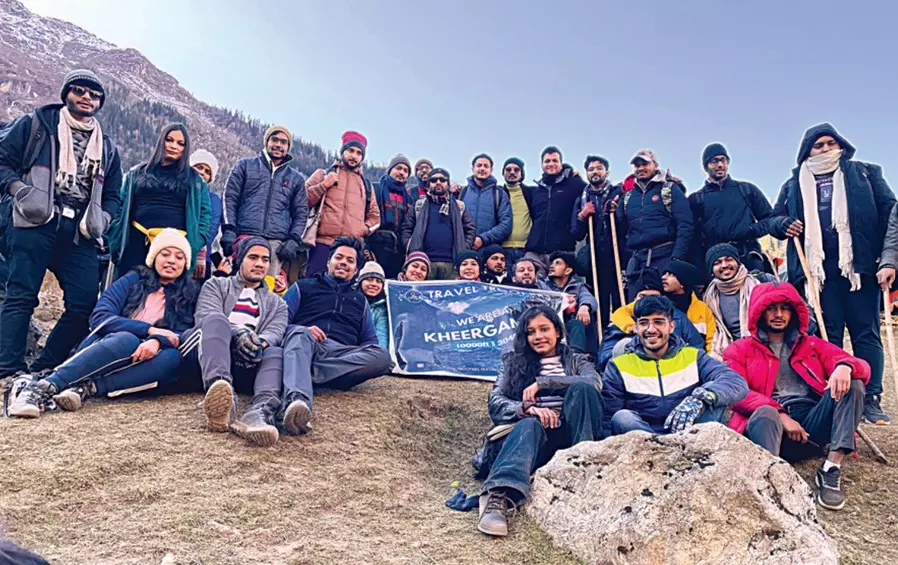
Standing by the side of a road with a backpack and an outstretched thumb once seemed reckless, even outdated. Yet today, hitchhiking, along with long-distance hiking, is quietly remerging as a symbol of climate-conscious travel. Young Indians are increasingly turning to slow, human-powered journeys that minimise their carbon footprints while deepening their connection with landscapes, people, and places. On Instagram alone, the hashtag #hitchhiking has nearly half a million posts.
Countless short videos and photo stories showcase travellers catching rides with strangers, camping in forests, discovering small towns, and forging unexpected friendships. Popular Indian routes include the Manali–Leh highway, Ziro to Tawang in the Northeast, and the Banga-lore–Mysuru stretch corridors, which are now filled with adventurous hitchhikers.
One For The Road
For many, hitchhiking appeal lies in both affordability and sustainability. Rising awareness of climate change has made flight-heavy, resort-based holidays less attractive to a younger generation. Apoorva Purohit (25), an IT professional from Bengaluru, says, “At some point you realise that the most authentic travel experiences aren’t always the ones listed on an itinerary. Hiking and hitchhiking force you to slow down and experience things as they are, not as a brochure wants you to see them.”
For students and young professionals, the economic argument is equally strong: a free ride can stretch a trip budget significantly, allowing them to travel further for less. Harsh Nagpal (21), a college student from Mumbai, sees hiking as therapy, but acknowledges the same pull towards
simpler, low-cost travel. “When I’m on a trail, it’s like a different universe. You’re with friends, but also alone in a very grounding way. Just you and the mountains,” he says.
A Leap Of Faith
Still, hitchhiking in India is far from straightforward. Unlike Europe, where it enjoys a cultural history, here it remains relatively alien, often raising eyebrows or concerns. Deep Sharma, a regular hiker, recalls his only experience: “It was late in the evening, and there were no other modes of transportation available. I asked for help from a small commercial truck, and the driver kindly dropped me closer to my destination. It was a relief, but it’s not something I’d make a habit of.”
Sheetal Deo, an international travel planner and agent from Mumbai, says that hitchhiking is common in Europe but still a budding concept in India. “Safety is a concern everywhere, since you’re taking lifts from strangers,” says Deo, advising youngsters and solo travellers to be cautious. Still, many enjoy the thrill of hitchhiking. “It can feel adventurous, but safety must come first. That’s why we promote group carpooling and coordinated pick-up points, with a travel leader on board,” adds a senior official from a Pune-based travel agency. Aneesh, a trek leader from IndiaHikes says, “Adventure and risk are not the same thing. Trekking teaches you to respect boundaries. With hitchhiking, the line can blur quickly. Safety must come first, no matter how sustainable the idea sounds.”
For many, concerns range from safety for solo travellers, particularly women, to the unpredictability of road conditions and the lack of formal support if something goes wrong.
A Double-Edged Sword
Social media has helped popularise hitchhiking and hiking as ‘sustainable travel’, but many fear it also fuels careless tourism. “I’ve learnt sustainable habits online,” says Apoorva, “but I’m not sure everyone who posts about eco-friendly travel actually follows it.” Deep recalls how Phe Phe Falls in Meghalaya, once untouched in 2022, became crowded and littered within two years. “People were blasting music, making reels—the sacredness was lost,” he says. This paradox extends to hitchhiking reels too: while they inspire, they rarely share practical advice or caution about risks.
Doing It Right
Travellers who hitchhike emphasise preparation: avoid going alone at night, stick to well-lit routes, inform friends of your ride, and carry essentials like ID and power banks. Anjali Patil (29), a trekker from Alibaug, recalls hitchhiking 10 km in a vegetable tempo near Ajinkyatara Fort and later riding 20 km on a sugarcane tractor. “Some women vendors even shared their lunch with me—it’s all about social skills and awareness,” she says.Green travellers like Deep carry extra pouches for companions who litter. “A gentle reminder is enough; no need to lecture,” he adds. Trip planners too see a shift: clients now prefer sustainable transport and community stays over resorts, with shared jeeps and bike-and-hike weekends gaining popularity.
The Road Ahead
For many, hitchhiking stands for sustainability, spontaneity, and freedom—but safety risks and environmental strain keep it a cautious choice. As Apoorva states, “Travelling like this isn’t just about reaching a viewpoint. It’s about understanding your place in the ecosystem.” Yet, for others, the gamble is too great. And so, hitchhiking, much like the roads it depends on, remains an unpredictable leap of faith best taken with both eyes open.
