What if starting over was never the point? From wellness systems to evolved family structures, today’s post-divorce journeys reveal a shift—from survival to self-authorship

At 52, Angélica Fuentes saw the foundations of her public life collapse. A high-profile divorce ended her marriage, stripped away her corporate leadership role, and dismantled the financial structures she had spent decades building. For a former multinational CEO and prominent advocate for gender parity, the loss was sudden—and intensely public
Fuentes did not respond with reinvention. Instead, she turned inward, committing to the unglamorous work of healing: journaling through grief, restoring trust in her body through movement, and building daily rituals around rest and reflection. Those practices became NOWFUL, a wellness framework designed not to repair women after rupture, but to help them regain clarity and presence.
NOWFUL reflects a broader cultural shift. Like Melinda French Gates or Gwyneth Paltrow, Fuentes represents a growing idea: life after divorce is no longer about starting over. It is about starting with depth, intention, and control.
From Rupture to Rhythm
For many women, divorce marks the collapse of multiple identities at once—social standing, financial security, and the invisible scaffolding of marriage that quietly shapes how women are seen, and how they see themselves.
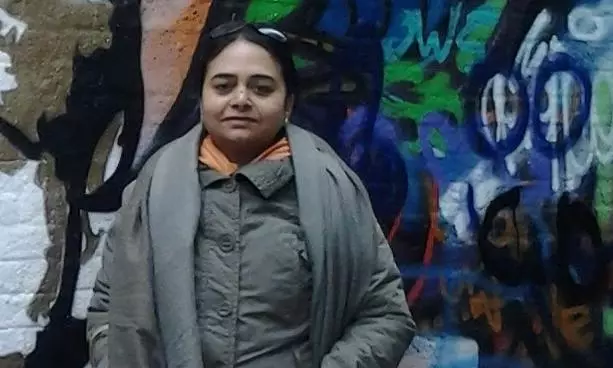
Indian storyteller and educator Deepa Kiran, founder of Story Arts India, describes this unravelling with rare clarity. When asked how she recognised that loss was not an ending but a turning point, her answer is stark: the real danger, she realised, lay in staying where she was.
“The future promised a different set of challenges,” she reflects, “but also deeper alignment with the self—and, as a consequence, harmony with life.”
When public identity falls away—especially identity rooted in marriage—the work becomes existential. For women in tightly bound social systems, the loss can feel total. Yet Deepa’s experience underscores something quietly radical: identity does not disappear when it is rooted in purpose.
Her work as a storyteller and educationalist continued to draw people to her, even when she had withdrawn from public life. “It was reassuring,” she says, “that the world desired my work regardless of my marital status.”
Validation, the story suggests, does not have to come from the institution we lose.
The Myth of the ‘Bounce Back’
In an age of curated resilience, women are often urged to “bounce back” quickly—to remain composed, productive, and strong through trauma. But healing does not move in straight lines.
“There is rushing,” Deepa admits, “and there is slowing down. Both have their place.”
Single parenting, caregiving for ageing parents, and financial survival often demand momentum, even when the heart is still bruised. It was her yoga teacher who reframed the guilt around urgency: sometimes, rushing is simply how we survive until we are ready to sit with the wound.
Healing, then, is not an event. It is a rhythm—shaped by responsibility, exhaustion, devotion, and grace.
Ritual as Refuge
For Deepa, healing returned through small, almost ordinary acts: yoga, meditation, journaling, walking, music, and time in nature. Oil massages. Warm salt-water foot soaks. Coffee dates with herself. Quiet trips to places that restored her centre.
This mirrors the philosophy behind NOWFUL. Healing does not arrive in dramatic epiphanies. It is practiced—daily, imperfectly, and with compassion.
Acceptance, as both Deepa and Fuentes suggest, is not resignation. It is clarity.
Not Reinvention—Continuation
Entrepreneur Darshana Balagopal, founder, CEO, and managing director of Adaia Lab Diamonds, offers a powerful counterpoint to the language of reinvention.
“I never came from a dependent background,” she says. “I simply continued doing what I always believed in.”
For many women, mindfulness, discipline, and self-respect were never acquired post-divorce—they were always present. Separation did not create strength; it revealed it.
What matters most, Darshana insists, is what children witness. Divorce should not fracture parenting, dignity, or emotional stability. “Careers continue. Self-respect remains. Family, in its evolved form, can still be strong.”
Growth does not pause because life changes. It sharpens.
The Deeper Legacy
What emerges from these stories, across cultures, continents, and circumstances, is a redefinition of success after divorce. Not spectacle. Not revenge. Not reinvention for applause. But systems are built from lived wisdom. These rituals serve to rejuvenate the nervous systems. Children grow up in an environment of emotional safety. Women who choose depth over drama.